 By st20113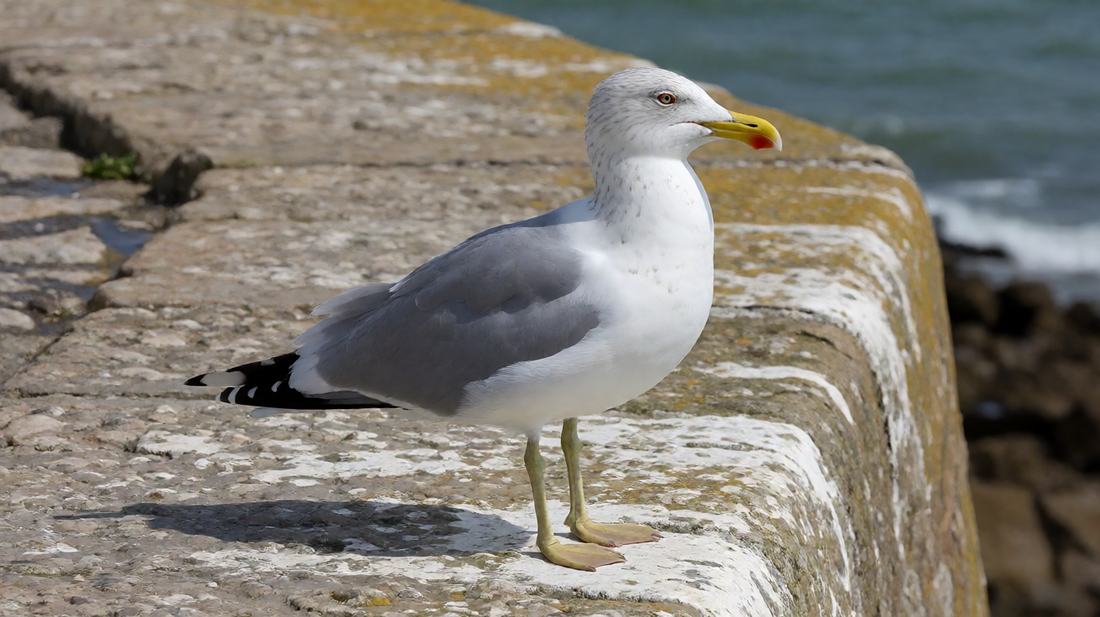
Larus argentatus | Herring Gull
Species Profile · Laridae
Herring Gull
A large, handsome gull of the coast and the town roof — pearl-grey backed, yellow-billed, and now a bird of boom and bust as the landfill has closed.
IUCN: Least Concern
Range
Length
Weight
Nest
Plumage
The gull of the roof
A coast bird turned town resident
The herring gull is a large, handsome gull of the family Laridae. It is among the most familiar and most divisive birds of the European coast. The same bird nests on the cliff of an Atlantic headland. In the last fifty years it has also colonised the roof of the town and the tip of the landfill. It is among the commonest birds that share the shore and the street with people. The bird is unmistakable among the large gulls. Its back is pearl grey. Its head and underparts are white.
Its bill is yellow with a red spot. Its legs are pale greenish. Its wingtips are black with white mirrors. It is a bird of the colony and the scavenge, not the solitary perch. It nests in the company of its own kind. It feeds on the refuse of the shore and the city. It roosts in flocks on the water. It gives a loud, laughing call as it flies.
This makes it a constant presence of the harbour and the roof. The smart adult and the mottled brown young show the clearest change among gulls. It takes four years to finish. The herring gull likes the coast and the food of people, not the open sea. In Europe its history has boomed and busted. Its numbers rose on the rubbish of the post-war town. They have since fallen as the landfill was sealed and the roof was netted. The species is now a concern in parts of its range, even as it stays common on the coast.
Family tree
Larus, the large gulls
The herring gull is in the genus Larus, the large gulls. It differs from the terns and skuas by the stout, hooked bill. It has a webbed foot. The herring gull is close to the Black-headed Gull (Larus ridibundus). That smaller, more slender gull shares the coastal habit and the scavenging way of feeding.
This shows that the gulls are a successful spread of web-footed predators. They have colonised the food of the shore and the shelf in several lines. Gunnerus described the bird in 1767. Experts now see a band of forms across the north Atlantic and the west of the palearctic. The large pale birds of the European west differ from the smaller dark-backed birds of the east.
The European form is the nominate argentatus. It differs from its kin by the colour of the back and the size of the eye. The spread to the Atlantic islands split the populations apart. Some treat them as distinct races of one bird. The old name of the herring gull refers to the closeness of the bird to the shoal of the sea that was once its main food.
Grey back, yellow bill
How to identify one
An adult herring gull is 54 to 60 centimetres long. Its wingspan is 123 to 155 centimetres. The female weighs about 0.7 kilogram. The larger male can reach 1.6 kilograms. This large size and the stout bill give it a powerful shape on the roof. Its flight is strong and effortless. It flaps and glides as it skims low across the water. The adult has a pearl-grey back and wing.
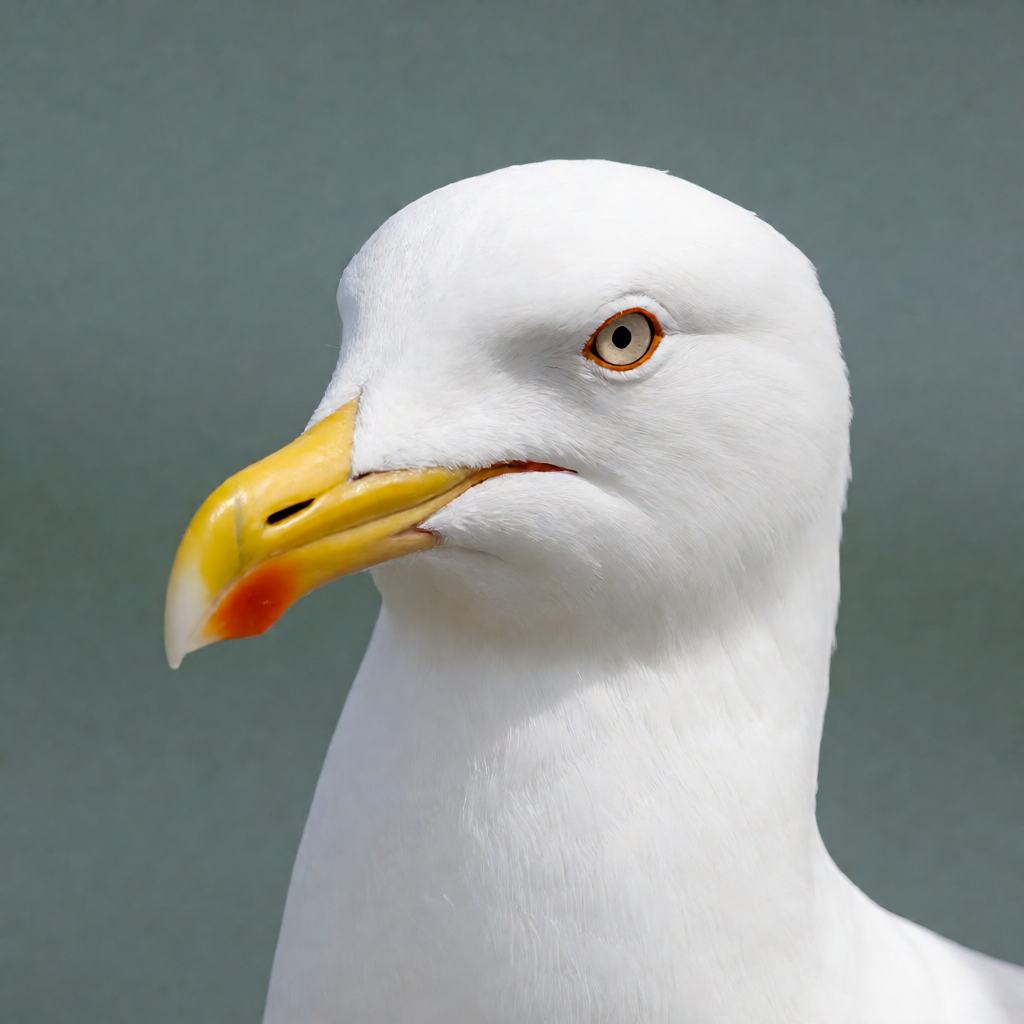
Its head and underpart are white. Its bill is yellow with a red spot on the lower mandible. Its leg is pale greenish yellow. Its wingtip is black with white mirrors. The young bird is mottled brown with a dark bill and a dark eye. It takes four years to gain the adult plumage. The two are told apart by the colour of the back and bill. The sexes look alike.
The wings are long and broad. Flight is strong and direct with a loose flock that twists as one. The voice is a loud, laughing call in flight and from the roof. It also has a soft set of notes for the disputes and greetings of the colony. The wing feathers moult soon after breeding. The birds then gather in the flocks that take them to the winter shore.
1
2
3
Cliffs, harbours and tips
Where it lives
The herring gull lives on the coast and on the food of people within reach of the sea. Above all it needs a ledge or roof to nest on. It also needs the shore, the estuary and the tip to feed on. The species is absent from the closed wood of the interior and the treeless mountain. It is a creature of the cliff, the harbour and the town alike.
In Europe the birds are resident across the milder west and north to the limit of the ice-free sea. They breed from the cliff of the south to the island of the north wherever the ledge is deep enough to hold the nest. In the colder east the birds move south and west in winter to the estuaries and landfills of the Mediterranean and Atlantic. The herring gull is a strong, regular migrant. It travels chiefly by day in flocks that twist as one.
Rings show a single bird may return to the same colony for the whole of a life that can exceed twenty years. The young disperse along the coast to find their own nest site. The growth of the town has let the bird breed well inland.
An omnivore of shore and street
What it eats
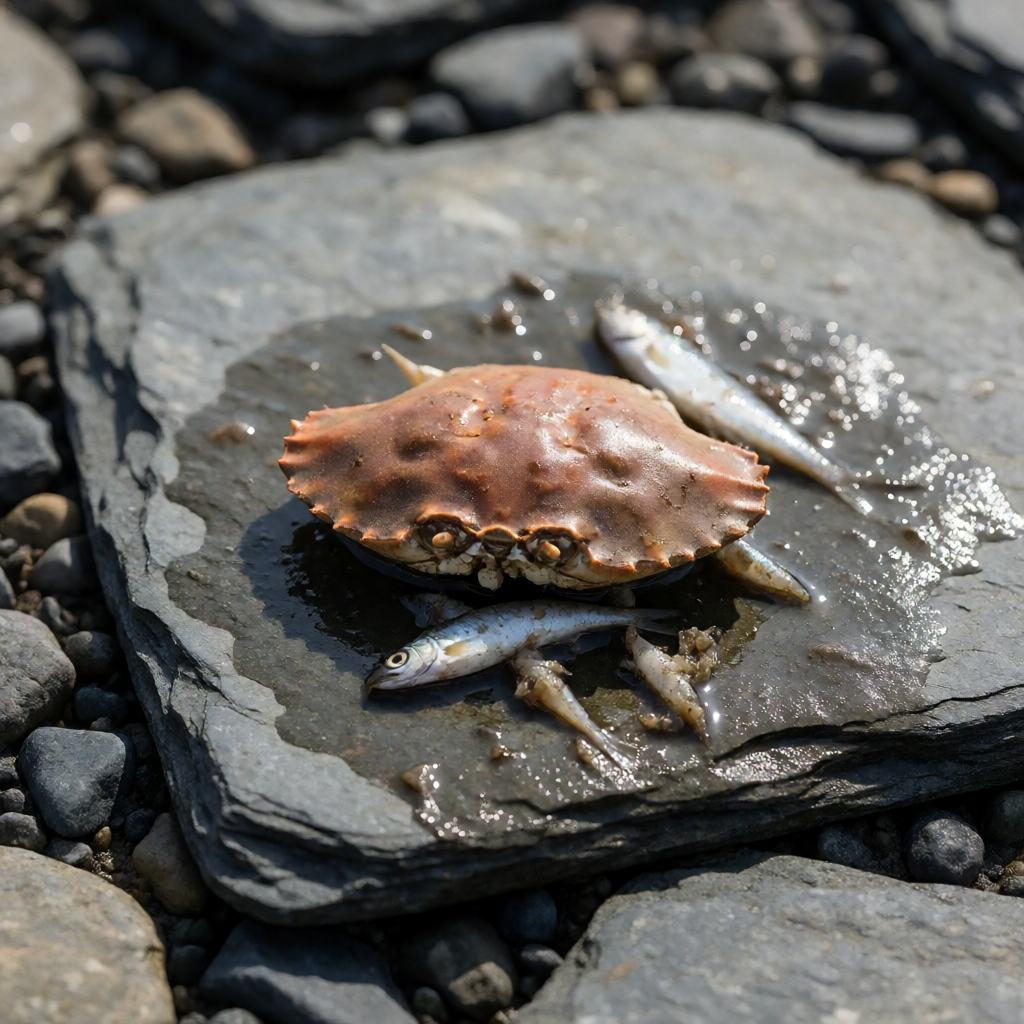
The herring gull is an omnivore of the shore and the street. Its diet mixes the fish and invertebrate of the sea. It takes them by dipping to the surface and probing the shore with a fine but strong bill. It also takes the refuse and scrap of the town. A bird on a tip eats discarded food. It eats the worm of the turf.
It eats the insect and larva of the dung. It eats the seed of the hedge. When it can, it takes the egg and nestling of other birds of the colony. The herring gull feeds by dipping and probing, not by diving. It swallows grit to help the gizzard crush the hard shell. It tolerates the polluted, disturbed ground of the town well.
This is why it thrives on the roofs and tips of the city. It is among the few large gulls that has grown, not shrunk, under the modern landscape. The building and the landfill are exactly the homes it favours. The spread of these let it reach country where it was once absent. Yet the taking of the egg and nestling brings it into conflict with the gamekeeper and the farmer.
A scrape on the ledge
The breeding cycle
Herring gulls pair for life in most cases. A bird picks its mate in its third or fourth year. It stays with that mate through every later breeding season. The pair bond is among the strongest of any gull. The two adults share the nest, the sitting and the care of the young. This lets the species raise a single family in the short northern summer.
Nesting starts in late April and runs into June. The site is a scrape on a ledge, a roof or a cliff. Most often it is the flat of a harbour wall or the chamber of a broken building. The pair builds a bulky cup of grass, seaweed and odd objects the bird collects. The female lays a clutch of two to three eggs. They are olive and spotted dark.
Both sexes sit on them for twenty-eight to thirty-two days. The adults take turns on the nest. The chicks are born downy and can walk. Both parents feed them and defend them against colony predators. They can fly at thirty-five to forty days. By then the family has split up and the young have joined the flocks that take them to the winter shore.
A bird in boom and bust
Conservation
The herring gull is Least Concern on the global Red List. Yet its recent history in Europe is one of concern. The breeding population of the west has fallen sharply over the last thirty years. The sealing of the landfill caused this. So did the netting of the roof. So did the cut in fishery discards. So did the control of the birds where they conflict with people. The continental populations of the east have held their numbers across the huge range.
The species is now listed on the red list of several European countries. It is still a common sight on the coast. The species is protected across its range. In Europe the key colonies have been left alone. The birds are managed by scaring them from the roof and diverting the tip. The international deals on migratory waterbirds have cut the shooting on passage and winter flocks. Yet the bird depends on refuse and the roof. It is vulnerable to the cleaning of the town.
It is listed on the European Union’s birds directive as a priority species. The main threats are the sealing of the landfill to the modern waste. The netting of the roof to the building is another. The cut in fishery discards to the sea hurts. The control of the bird at the point of conflict also hurts. The predation of the nest by the larger gull and the mammal of the colony remains. Managing the herring gull means keeping the cliff and the open tip across the coast and tolerating the bird on the town roof.
Quick hits
Five things to remember
- The adult is a clean white bird with a pearl-grey back and a yellow, red-spotted bill. The young bird is a mottled brown bird with a dark bill and a dark eye. It needs four years to reach this adult look.
- The red spot on the lower mandible of the adult is a target the chick pecks to make the parent regurgitate food. This simple signal has made the herring gull a classic subject of the study of the sign.
- The herring gull has colonised the roof of the town and the tip of the landfill in the last fifty years. It is now as much a bird of the street as of the cliff. Its numbers have boomed and then fallen with the waste of the people.
- The herring gull pairs for life. Both adults build the nest, sit on the eggs and tend the young. This shared care lets the species raise a single family in the short northern summer.
- The herring gull is now listed on the red list of several European countries even though it stays common on the coast. The sealing of the landfill and the netting of the roof removed the food and nest site its recent growth depended on.