 By st20113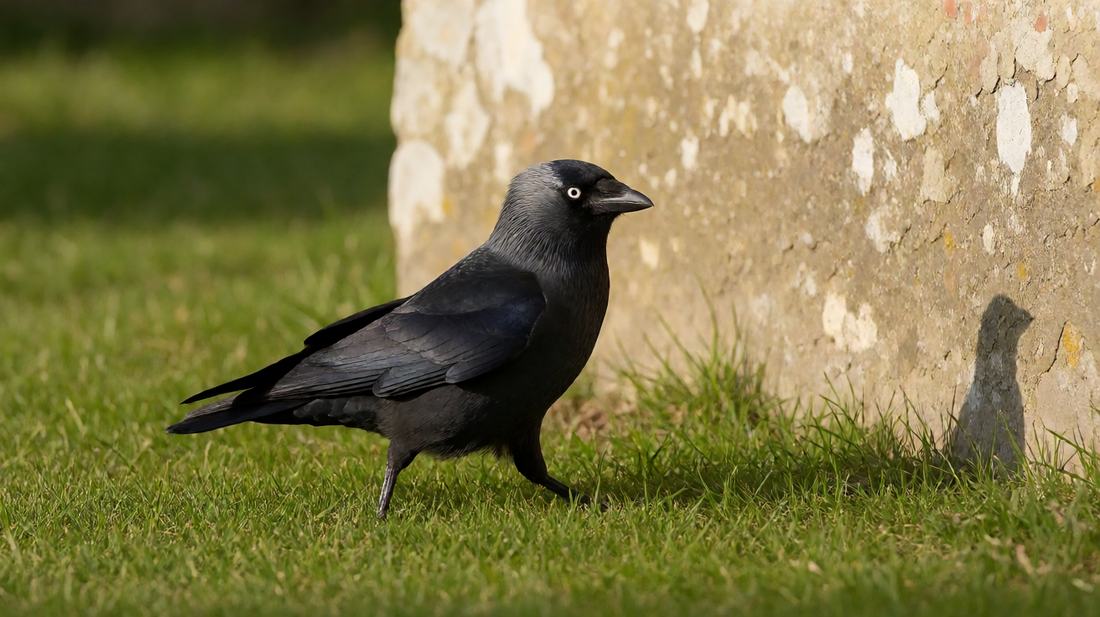
Corvus monedula | Western Jackdaw
Species Profile · Corvidae
Western Jackdaw
A small, sociable crow of the church tower and the town roof whose pale eye and grey nape set it apart — one of the few corvids that has gained from the modern landscape.
IUCN: Least Concern
Range
Length
Weight
Nest
Roost
The crow of the town
A colony bird of the rooftop
The western jackdaw is a small, sociable corvid of the family Corvidae. It is among the most successful and most human-linked crows of Europe. The same bird nests in the cleft of a church tower in a village. It also flocks on the roofs of the city and the stubble of the arable field. It is among the commonest and most familiar birds that live alongside people across the lowlands. The bird is unmistakable among the crows. Its black plumage is relieved by a pale grey nape.
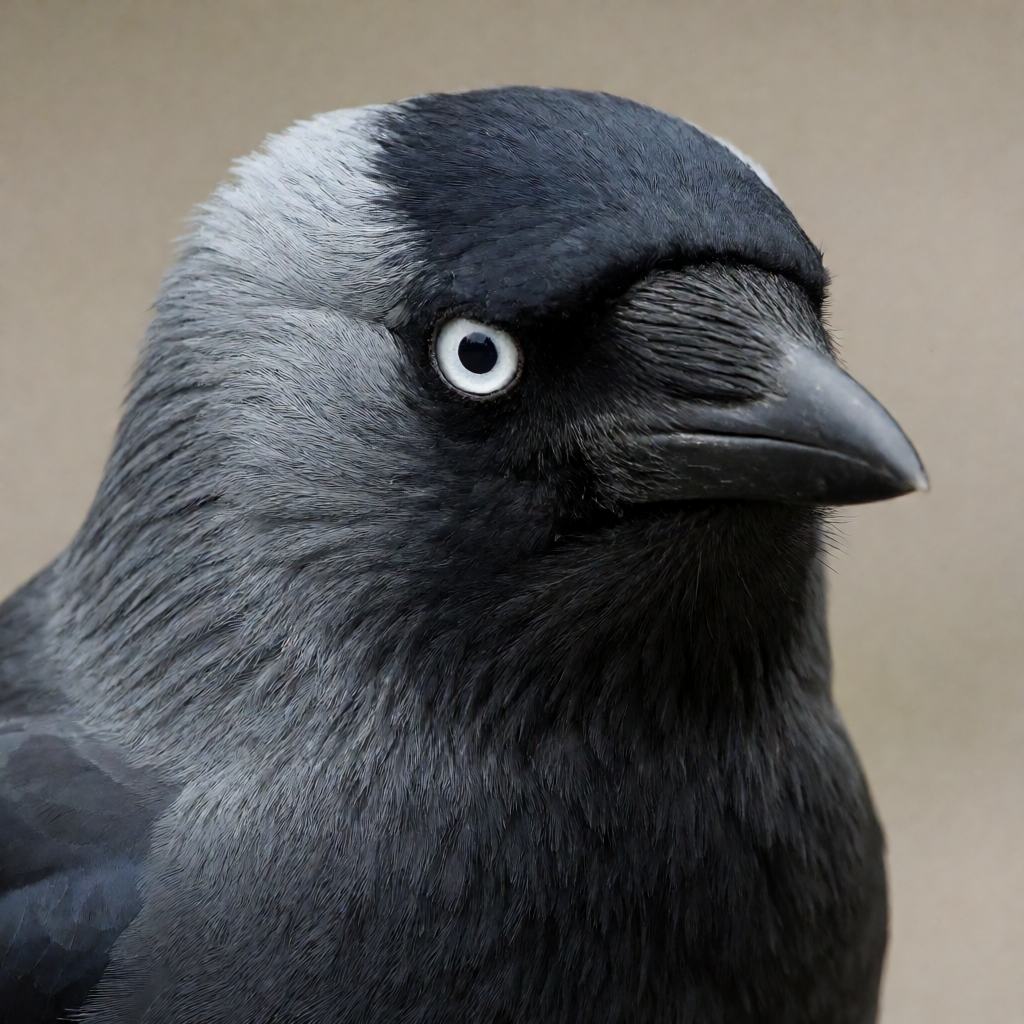
It has a pale silvery eye. Its bill is stout. It is a bird of the colony and the flock, not the solitary pair. It nests in the company of its own kind. It feeds in parties on the ground. It roosts in thousands on the buildings of the town. It gives a fast, chattering call as it flies.
This makes it a constant presence of the farm and the street. The young bird with its dark eye and the adult with its pale eye show the clearest change with age among corvids. The jackdaw likes open ground and cavities, not closed wood. In Europe its numbers have grown and spread. The building of the town and the farming of the lowland gave it more nest sites and food. It is now abundant across the lowlands. It is extending its range with the growth of human settlement.
Family tree
Corvus, the crows
The western jackdaw is in the genus Corvus, the crows. It differs from the choughs and nutcrackers by the straight, stout bill. Its body is wholly black. The jackdaw is close to the Carrion Crow (Corvus corone). That larger, more solitary crow shares the intelligence, the omnivory and the love of open ground.
This shows that the corvids are a successful spread of large-brained birds. They have colonised the food of the northern landscape in several lines. Linnaeus described the bird in 1758. Experts now treat the western jackdaw as one of several forms of the jackdaw of the Eurasian west. Some treat the birds of the east as a separate species, the eastern jackdaw.
The European form is the nominate monedula. It differs from its eastern kin by the colour of the nape and the size of the eye. The spread to the Atlantic islands split the populations apart. Some treat them as distinct races of one bird. The old name of the jackdaw refers to the pale mark on the nape that is its most obvious feature.
Grey nape, pale eye
How to identify one
An adult western jackdaw is 34 to 39 centimetres long. Its wingspan is 64 to 73 centimetres. The female weighs about 0.2 kilogram. The larger male can reach 0.27 kilogram. This small size for a crow and the stout bill give it a neat shape on the roof. Its flight is fast and rowing. It flaps and glides as the flock skims low across the field.
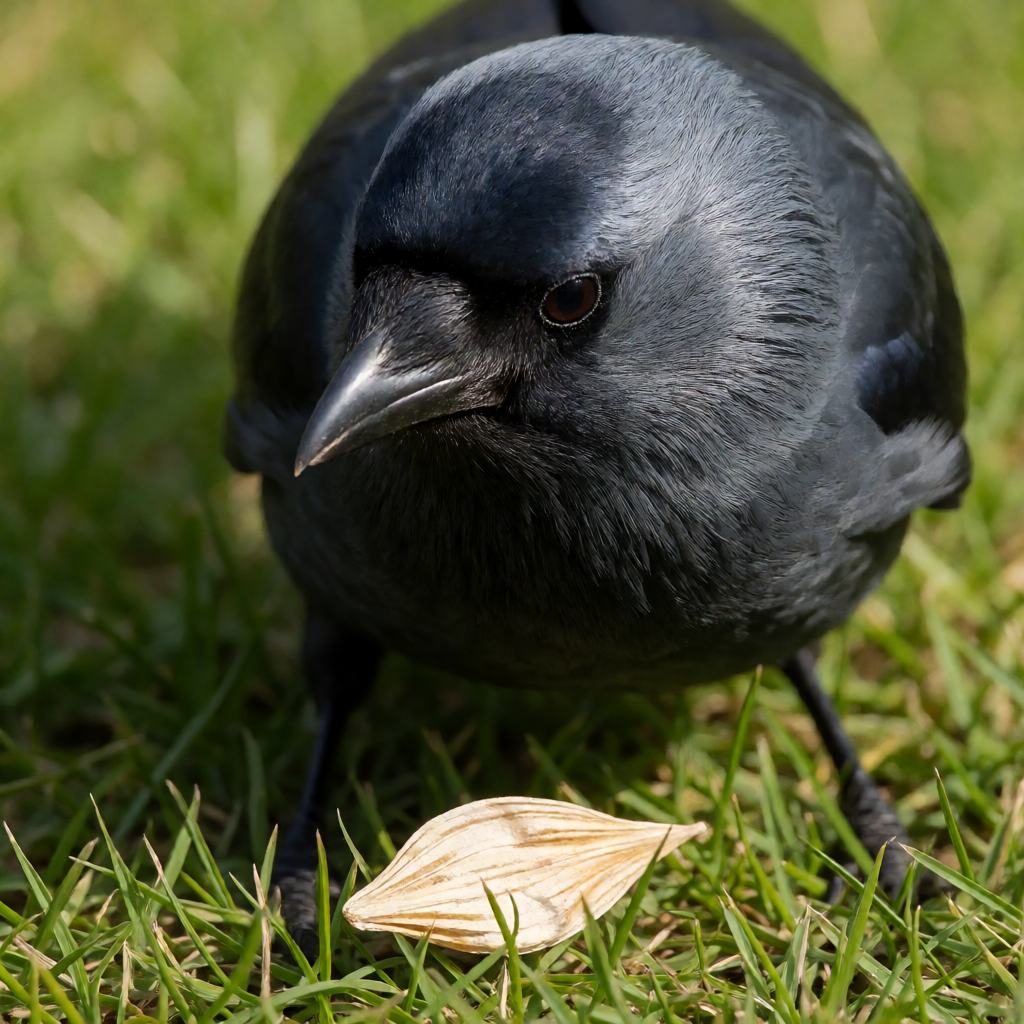
The adult has black plumage with a slight green and purple gloss. Its nape and the side of the neck are pale grey. Its cap and face are black. Its eye is pale silvery. Its bill is stout and black. The young bird is a duller version with a dark brown eye and a less clear nape. The two are told apart by the colour of the eye.
The sexes look alike. The wings are long and broad. Flight is strong and direct with a loose flock that twists as one. The voice is a fast, chattering call in flight and from the perch. It also has a soft set of notes for the disputes and greetings of the colony. The wing feathers moult soon after breeding. The birds then gather in the flocks that take them to the winter roost.
1
2
3
Church towers and stubble
Where it lives
The jackdaw lives on open ground and in cavities within reach of the farm and the town. Above all it needs a hole in a building, a tree or a cliff to nest in. It also needs the short turf and stubble to feed on. The species is absent from the closed wood of the interior and the treeless mountain.
It is a creature of the village, the city and the arable lowland alike. In Europe the birds are resident across the milder west and north to the limit of the mild winter. They breed from the church tower of the south to the sea cliff of the north wherever the cavity is deep enough to hold the nest. In the colder east the birds move south and west in winter to the towns and fields of the Mediterranean and Atlantic.
The jackdaw is a strong, regular migrant. It travels chiefly by day in flocks that twist as one. Rings show a single bird may return to the same colony for the whole of a life that can exceed ten years. The young disperse along the rooftops to find their own nest site.
An omnivore of the street
What it eats
The jackdaw is an omnivore of the farm and the street. Its diet mixes the seeds and grain of the arable field. It takes them by walking on the ground and probing the soil with a fine but strong bill. It also takes the small animals that live among them. A bird on a stubble eats the spilled corn. It eats the worm of the turf.
It eats the insect and larva of the dung. It eats the seed of the hedge. When it can, it takes the egg and nestling of other birds of the colony. The jackdaw feeds by walking and probing, not by diving. It swallows grit to help the gizzard crush the hard seed. It tolerates the polluted, disturbed ground of the town well.
This is why it thrives on the roofs and gutters of the city. It is among the few corvids that has grown, not shrunk, under the modern landscape. The building and the arable field are exactly the homes it favours. The spread of these let it reach country where it was once absent. Yet the taking of the egg and nestling brings it into conflict with the gamekeeper and the pigeon fancier.
A hole for a nest
The breeding cycle
Jackdaws pair for life in most cases. A bird picks its mate in its second year. It stays with that mate through every later breeding season. The pair bond is among the strongest of any corvid. The two adults share the nest, the sitting and the care of the young. This lets the species raise a single family in the short northern summer.
Nesting starts in late March and runs into May. The site is a hole in a building, a tree or a cliff. Most often it is the cleft of a church tower or the chamber of a broken trunk. The pair builds a bulky cup of sticks, hair and odd objects the bird collects. The female lays a clutch of four to six eggs. They are pale blue and spotted dark.
She sits on them alone for seventeen to nineteen days. The male feeds her on the nest. The chicks are born naked and blind. Both parents feed them and defend them against colony predators. They can fly at twenty-eight to thirty-five days. By then the family has split up and the young have joined the flocks that take them to the winter roost.
A bird that has spread
Conservation
The western jackdaw is Least Concern on the global Red List. Its recent history is mostly a win. The European population has grown and extended its range with the growth of the town and the farming of the lowland. The continental populations have held their numbers across the huge range. The species is now among the commonest birds of the European settlement. It is still spreading in many parts of its range.
The species is protected across its range. In Europe the key roosts have been left alone. The colonies have been tolerated on the buildings of the town. The international deals on migratory landbirds have cut the shooting on passage and winter flocks. Yet the bird depends on the cavity and open ground. It is vulnerable to the sealing of the building and the loss of the stubble.
It is listed on the European Union’s birds directive as a bird of interest. The main threats are the sealing of the church tower and tree to the modern building. The loss of weedy stubble to the improved crop is another. The taking of the egg and nestling by predator and keeper hurts. So does the poisoning of the bird at the bait put out for the vermin of the farm. Managing the jackdaw means keeping the cavity and open ground across the lowlands and tolerating the colony on the town roof.
Quick hits
Five things to remember
- The jackdaw has a pale grey nape and a pale silvery eye that set it apart from every other crow. The young bird has a dark eye. The colour of the eye tells the age of the bird at a glance.
- The jackdaw pairs for life. Both adults build the nest, sit on the eggs and tend the young. This partnership is odd among birds and has made the species a subject of study for its social life.
- The jackdaw is among the most sociable of the crows. It nests in colonies. It sleeps in flocks of thousands on the town’s buildings. It feeds in flocks on the ground. It is a bird of the flock, not the solitary pair.
- The bird is a noted collector of odd objects. It will carry a shine or a trinket to the nest. This habit has made it a favourite in the folklore and story of the European country.
- The jackdaw has grown across Europe as the town and the arable field have multiplied. It is now among the commonest birds of the human settlement. The larger crows have held their own alongside it.