 By st20113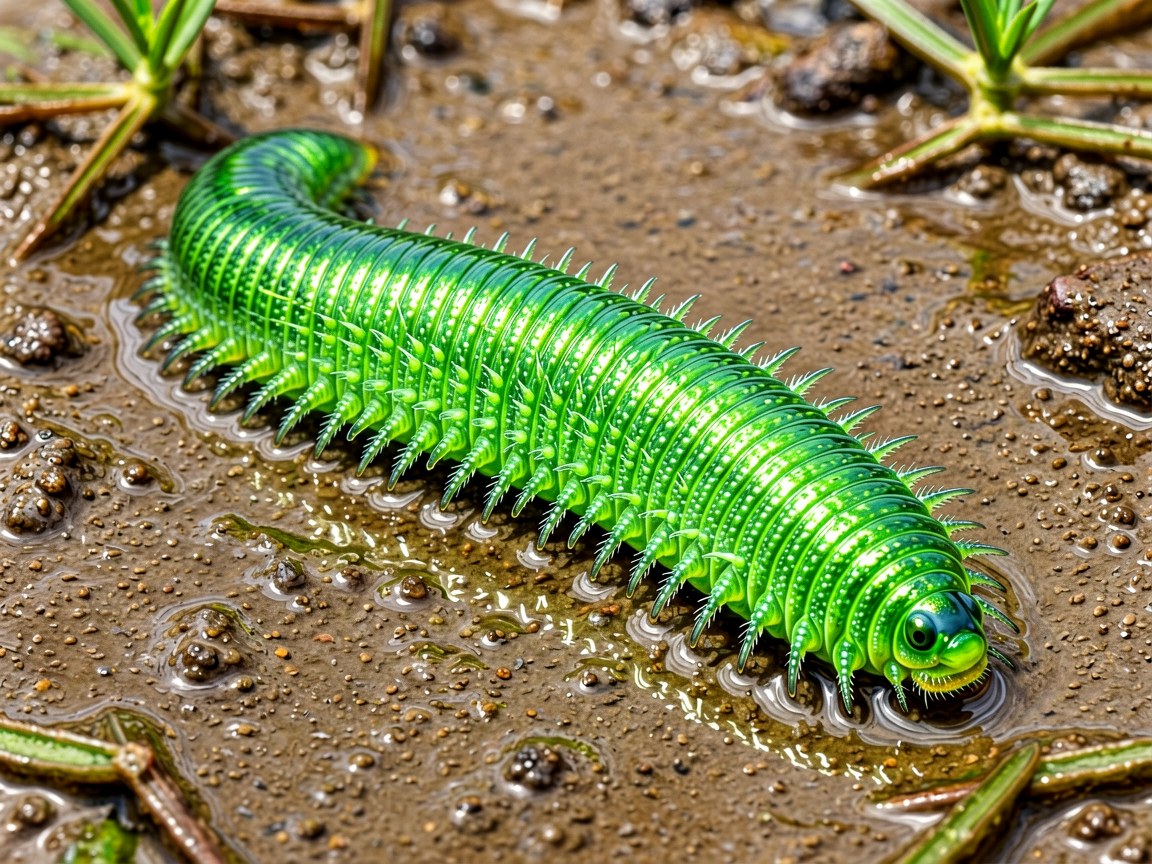
Nereis virens | King Ragworm
Introduction
Nereis virens, the king ragworm, is one of the largest and most familiar polychaete worms of the northern shores — a muscular, iridescent predator that lurks in burrows in mud and sand and emerges to hunt smaller animals and scavenge. Reaching lengths of twenty centimetres or more, it is a cornerstone of the estuarine and coastal food web and, because it is such effective bait, one of the most commercially important marine worms in the world. Anglers know it as “ragworm” for the ragged look of its many bristled segments, and its size earns the “king” title. A segmented worm like the earthworm of the garden, it belongs to a different marine branch of the annelids and shares the basic segmented body plan with the common earthworm, though it is built for a life of hunting in salt water rather than burrowing in soil. It ranges across the north Atlantic and adjacent seas, from sheltered estuaries to open coasts, and its sheer biomass makes it a key prey item for flatfish, crabs and wading birds as well as a cornerstone of bait markets. Because it bridges the microbial sediment community and the larger predators of the shore, the king ragworm is one of the species ecologists count first when judging the health of a mudflat, and its size, appetite and abundance together explain why it is so often the worm anglers reach for.
Taxonomy
The king ragworm is a member of the family Nereididae, the ragworms, a large group of predatory and omnivorous polychaetes found in seas worldwide. Its genus Nereis contains many similar species, and virens means “green” or “fresh-coloured”, referring to its often greenish, iridescent sheen. Polychaetes are distinguished from earthworms by bearing paired, fleshy appendages called parapodia on most segments, each tipped with bristles (chaetae) used in walking and burrowing. Within Nereididae, N. virens is identified by its large size, muscular body, and the toothed jaws at the tip of a retractable proboscis. It is a close relative of the sandworms used in aquaculture and of many smaller ragworms of mudflats, but its bulk and appetite set it apart as a top invertebrate predator of the sediment surface.
Physical Characteristics
The adult is a stout, cylindrical worm 10–30 cm long and a centimetre or more across when large, with perhaps a hundred or more segments. The body is greenish to brown with a metallic, iridescent shimmer, especially along the sides. Each segment bears a pair of parapodia, flattened lobed paddles edged with bristles that the worm uses to crawl, swim and anchor in its burrow. The head carries four small eyes, a pair of short sensory palps, and a proboscis that can be everted to reveal two black, hooked jaws used to seize prey. The body is divided into a short anterior region of larger segments and a longer posterior of smaller ones, and the tip bears a small tail. The bristles are stiff and can prick the hand, giving the worm its defensive “bite” feel, and the whole animal is surprisingly strong and restless when handled.
Habitat
King ragworms occupy burrows in soft sediment — mud, sandy mud and the margins of estuaries — from the upper shore down into the subtidal, across the north Atlantic and into adjacent seas. They favour sheltered, organic-rich bottoms where prey is abundant, and they tolerate a wide range of salinity, including the brackish mouths of rivers, though they do best in fully marine conditions. Each worm maintains a U- or J-shaped burrow lined with mucus, from which it emerges partly to forage at night and to which it retreats when threatened. They are most numerous in temperate shores with moderate wave exposure and a steady supply of detritus and small animals, and they are absent from clean mobile sand where there is no shelter to burrow or from severely polluted anoxic mud.
Diet
Unlike earthworms that swallow soil, the king ragworm is an active omnivore and predator. It emerges from its burrow to seize small crustaceans, other worms, mollusc larvae and carrion with its jawed proboscis, and it also scavenges dead fish and invertebrates on the sediment surface. The parapodia and palps help it locate and manipulate food, and powerful throat muscles pull prey inward. Plant material and detritus are taken when animal prey is scarce, making it a flexible feeder that thrives where the sediment food web is productive. Because it both hunts and scavenges, it sits as a mid-level consumer, converting the energy of smaller invertebrates and carrion into biomass that, in turn, feeds fish, crabs and birds. Its appetite and size make it a key link between the microscopic sediment community and the larger predators of the shore.
Reproduction
Reproduction in the king ragworm follows the dramatic polychaete pattern of epitoky. As adults approach maturity they undergo a transformation in which the posterior segments swell with gametes and develop enlarged, paddle-like parapodia for swimming, while the eyes enlarge. On certain warm nights, often around spring tides, vast numbers of worms leave their burrows and swarm at the surface, where males and females release sperm and eggs into the water in a mass spawning event. After spawning the adults typically die. The fertilised eggs develop into planktonic larvae that drift and feed for several weeks before settling to the bottom and metamorphosing into the burrowing juvenile form. This pulsed, synchronous spawning lets the species flood the habitat with offspring while swamping predators, and it is part of the reason ragworm populations can replenish so effectively.
Conservation
The king ragworm is abundant throughout its range and is not of conservation concern; indeed, its chief management issue is over-harvesting for bait, since demand from anglers is enormous. Hand-digging and mechanical pumping remove worms from estuaries, and repeated heavy exploitation can depress local densities and disturb the sediment community that depends on them. Sustainable bait collection favours limits, seasonal restraint and leaving breeding adults, and some areas restrict mechanical harvesting. Because the worm is so productive and widespread, well-managed coasts support both healthy worm populations and the fish, wading birds and crabs that eat them. Its role as bait also means it is farmed and cultured in several countries, easing pressure on wild stocks.
Modest bait limits and leaving breeding worms in place keep mudflats stocked with this useful, abundant predator.
Its mass spawning is one of the great spectacles of the shore, worth seeing on a warm spring tide.
Fun Facts
- It can grow to over twenty centimetres and is the largest common ragworm of northern shores.
- The worm swims up to spawn in mass “swarming” events on warm spring tides.
- Its eversible proboscis is armed with two black, hook-like jaws for seizing prey.
- It is one of the most valuable bait worms in the world for sea anglers.
- Despite living in the sea, it is a segmented worm kin to the garden earthworm.
[…] of more open coasts. It is the other main bait species. The ragworm shares the genus with the king ragworm. The two look much alike to an untrained eye. Size, paddle shape and habitat tell them apart. […]