 By st20113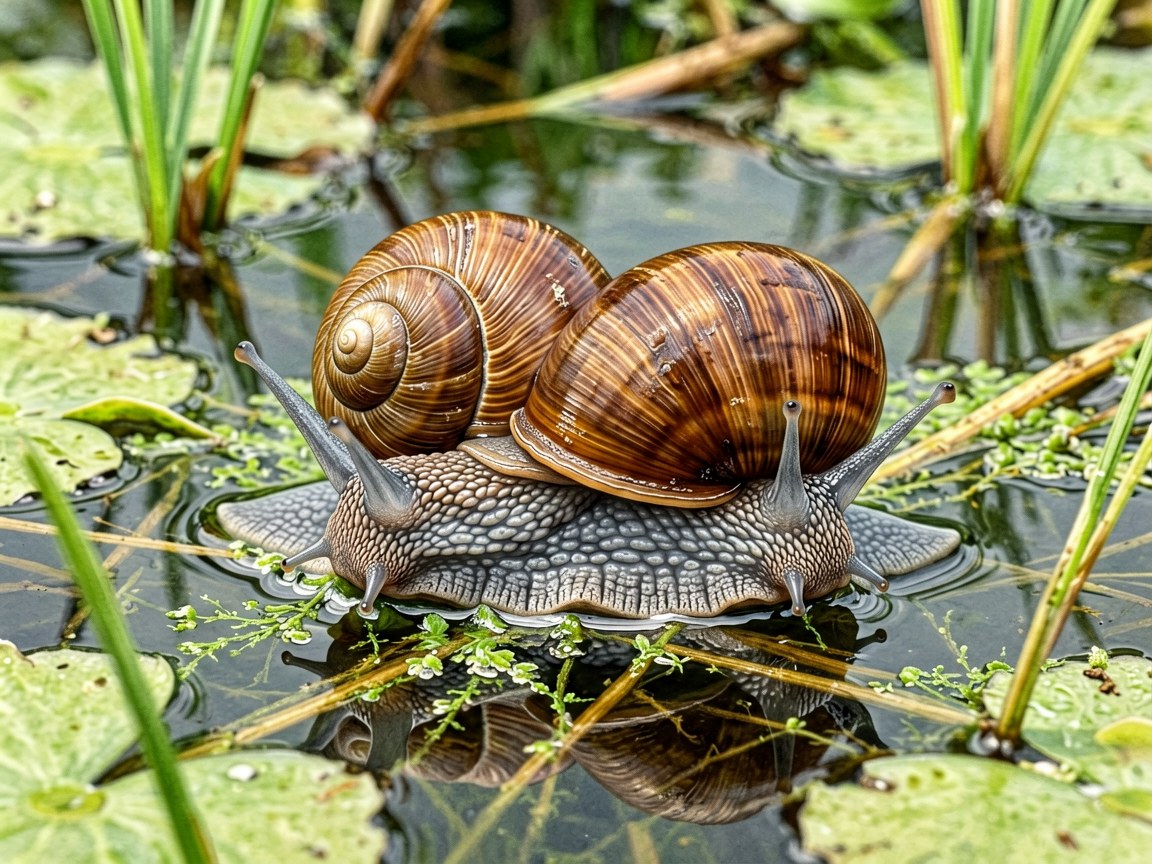
Radix balthica | Baltic Pond Snail
Introduction
Radix balthica, the Baltic pond snail, is a small, air-breathing freshwater snail found across Europe in ponds, ditches, slow streams and the margins of lakes. A member of the family Lymnaeidae — the pond snails — it is a familiar, unassuming mollusc whose shell is a delicate, elongated spiral barely two centimetres long, yet it plays an outsized ecological role. Because it grazes algae and decaying matter it helps keep freshwater clear, and because it is the intermediate host for liver flukes it sits at the centre of a parasitic cycle involving mammals and birds. Like all molluscs it is a cousin of the marine octopus, and the common octopus shares with this humble snail the same basic body plan of a soft body, a muscular foot and a mantle — though the pond snail has swapped the sea for a pond and a lung for a gill. Tolerant of a wide range of conditions, it is one of the commonest freshwater snails in much of its range. Its distribution covers most of Europe and extends into western Asia, and it has travelled with the aquarium and pond-plant trade to other continents. In ponds and ditches it is often the snail people notice first, gliding over leaves or hanging just beneath the surface film, and its ecological reach is out of proportion to its size. Because it links algae to the animals above it and carries parasitic flukes between them, it sits at a small but central knot in the freshwater web, quietly shaping both water clarity and the fortunes of the creatures that feed on it.
Taxonomy
The Baltic pond snail belongs to Radix, a genus of lymnaeid pond snails, within the family Lymnaeidae in the class Gastropoda. Its specific name balthica refers to the Baltic region where forms of the group were studied. Pond snails were long confused taxonomically, and R. balthica has often been lumped with the great pond snail Radix stagnalis or with Radix auricularia; modern work separates it on shell shape, size and genetics. Lymnaeids are pulmonate gastropods, meaning they breathe air using a lung-like mantle cavity and must surface to renew it, so they are tied to well-oxygenated, open water rather than deep, stagnant pools. As a gastropod it shares with other snails and slugs the defining twist of the body (torsion) and a single coiled shell in shelled forms. Its close relatives include the wandering pond snail and the tiny moss bladder snail, but R. balthica is distinguished by a relatively slender, elongated spire and a thin, light shell.
Physical Characteristics
The shell is 1.5–2.5 cm tall, dextral (coiled to the right), thin and fragile, with a long, gradually tapering spire of about five whorls and a moderately large body whorl; colour is pale brown to horny yellow. The aperture is oval and the lip is thin and sharp, with no operculum — the snail cannot seal the shell, relying on its lung instead. The animal inside is greyish, with a flattened head bearing two triangular tentacles that bear the eyes at their base rather than the tip, and a broad muscular foot used for gliding over surfaces. A dark, branched lung tissue shows through the translucent body. The snail moves by waves of muscular contraction across the foot and can also float just under the surface film, hanging upside down from the water’s tension. Its soft body is vulnerable, so the shell, though thin, is its main protection against small predators and desiccation.
Habitat
The Baltic pond snail inhabits a very wide range of fresh waters: garden ponds, roadside ditches, marshes, slow rivers, canal margins, lake edges and even mildly brackish coastal lagoons at the head of the Baltic. It favours still or slowly moving, vegetated water where it can graze on submerged plants and detritus and where oxygen levels stay adequate. It tolerates a broad span of temperature and some nutrient enrichment, which is why it thrives in human-made habitats such as cattle troughs and drainage ditches, but it avoids fast, turbulent streams and severely deoxygenated, polluted pools. Across Europe it ranges from the Atlantic fringe to western Asia, and it has been introduced elsewhere with the trade in aquatic plants. In winter it may burrow into mud or shelter among vegetation, becoming dormant in cold, ice-covered water and resuming activity as it warms.
Diet
This pond snail is a generalist grazer. It scrapes algae, diatoms and the thin biofilm of bacteria and organic matter from plant stems, stones and the water’s surface film using a ribbon-like tongue (radula) armed with tiny teeth. It also consumes decaying plant debris and the microbes on it, acting as a small-scale recycler that links primary production to the pond food web. Because it is herbivorous and detritivorous rather than predatory, it helps limit algal growth and breaks down dead plant material, contributing to water clarity in small ponds. It is itself food for a range of animals — ducks, frogs, beetles and leeches — so the energy it harvests from algae passes upward. Its flexible diet lets it exploit both clean and somewhat eutrophic waters, which underlies its broad distribution and abundance.
Reproduction
Like most lymnaeids, the Baltic pond snail is a hermaphrodite, carrying both male and female organs in each individual, though self-fertilisation is uncommon and most mating is between two adults that exchange sperm. After mating, the snail lays clumps of translucent, jelly-coated eggs on the undersides of leaves, stones and other submerged surfaces, often in several batches through the warm season. The eggs hatch into miniature snails that grow rapidly, and the species can complete several generations in a single year in warm water. This high reproductive rate lets populations boom after ponds fill or warm, and helps them recover from winter losses or from the drying of small habitats. Because every individual can breed, a single colonist arriving on a waterweed can found a new population, which is why the snail turns up so reliably in garden ponds and new wetlands.
Conservation
The Baltic pond snail is common and secure across its range, and it is not a conservation priority in itself. Its adaptability to artificial and disturbed waters means it often persists where rarer, more sensitive aquatic life has vanished, and it can even indicate mildly enriched but still-living water. The chief caveat is medical rather than conservation: it is a known intermediate host for the liver fluke Fasciola hepatica and related trematodes, so where livestock drink from snail-bearing ponds the parasite cycle is maintained, and management of grazing land may target snail habitats. For freshwater ecology the snail is a beneficial grazer and an important prey item, and its abundance is generally a sign of a functioning, if modest, pond community rather than of any threat.
Fun Facts
- Although it lives underwater, it breathes air and must surface to renew the lung in its mantle.
- Each snail carries both male and female organs, so any two can mate and lay eggs.
- It is a key intermediate host for the liver fluke that infects livestock drinking from ponds.
- Its eyes sit at the base of its tentacles, not at the tips like in many snails.
- It shares the basic mollusc body plan with the octopus, despite living in a pond rather than the sea.