 By Iris
Tiliqua scincoides | Blue-tongued Skink
Species Profile · Scincidae
Blue-tongued Skink
A heavy lizard walks across a path with a slow, rolling gait.
Least Concern
Length
Weight
Young
Tongue
Diet
Rating
The Blue-tongued Skink
A tongue the colour of a plum
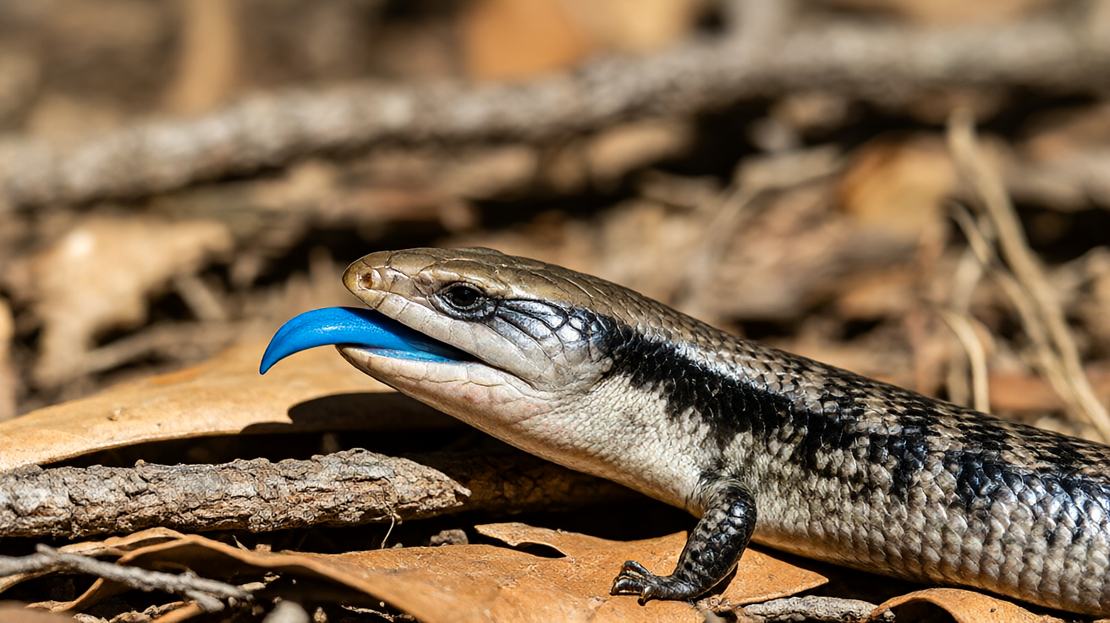
A heavy lizard walks across a path with a slow, rolling gait. Then it opens its mouth and shows a tongue the colour of a plum. The display lasts a second. Most predators back away.
Blue-tongued skinks live across much of Australia, and they do well in gardens and along roadsides. The animal carries short legs and a thick body, so it moves with more weight than grace. Because the tongue is the whole defence, the species invests in colour rather than speed.
Family tree
Scincidae, the skinks
Its proper name is Tiliqua scincoides, one of several blue-tongued skinks. Scincidae is the family, the skinks. A Five-lined Skink shows the other end of the family, since that animal runs fast and keeps a slender body.
A Nile Monitor hunts the same ground at a far larger size, though it relies on speed and a lash of the tail. Both are lizards of open country, and both end up in the same kind of trouble with people.
Blue tongue, thick body
How to tell one
Adults run 40 to 60 cm from snout to tail tip. Weight reaches 700 g in a large female. The body is thick and cylindrical, and the scales look smooth and glossy.
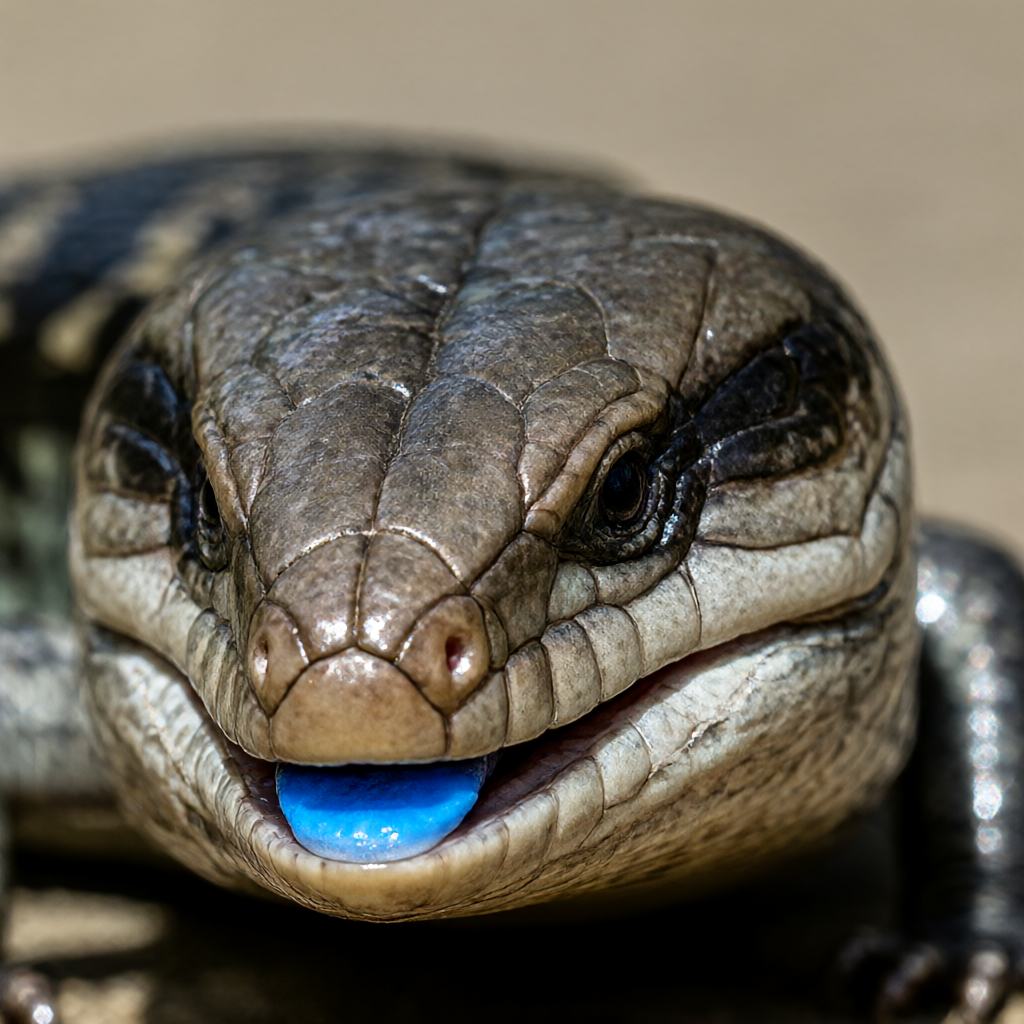
Its tongue is broad and bright blue, and the colour deepens as the animal ages. Because the legs are short, the animal drags its belly over rough ground. The head is broad and triangular, and the jaws close with real force.
1
2
3
Edges and gardens
Where it lives
Dry woodland, heath and suburban gardens across Australia hold the species. Leaf litter and tussock grass suit it. Because the animal needs cover and open sun within a short distance, it stays near edges.
Gardens work well, and compost heaps draw animals in. Rock walls and fence lines provide shelter.
Snails and fruit
What it eats
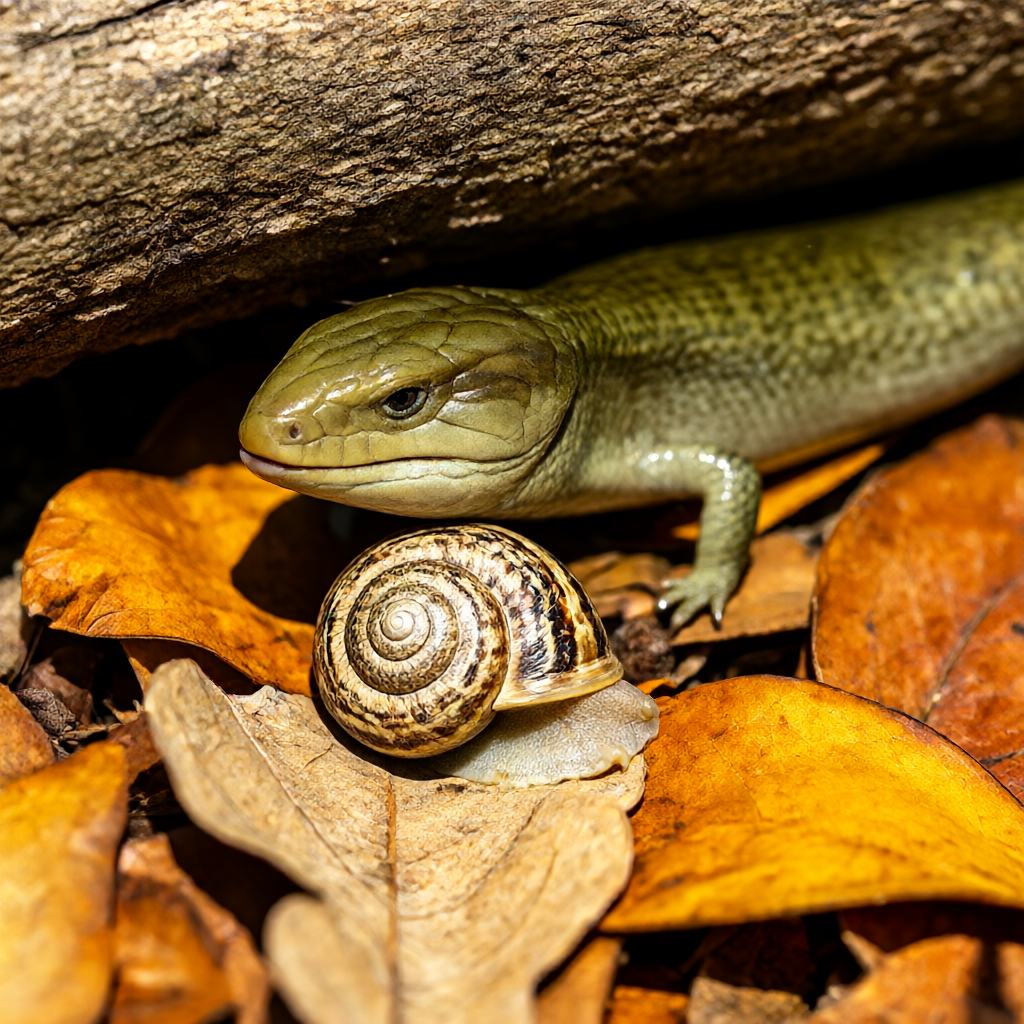
The animal eats almost anything it can swallow. Snails, slugs and insects come first. Fruit, flowers and carrion also go down.
Because the jaws crush a snail shell without trouble, the species controls garden pests better than most predators. A feeding skink may spend an hour working through one patch. Berries get taken whole, and the seeds pass through intact.
Young born live
The breeding cycle
Blue-tongued skinks give birth to live young, which is unusual among lizards. A female carries ten to twenty inside her for months. Because the young arrive fully formed, they need no nest and no incubation.
Births come in late summer, and the young scatter within hours. Mothers show no further care. Newborns look like small adults, and they can hiss from the first day.
Cats, dogs, cars
Conservation
Red List status is Least Concern. Its range covers a large part of Australia. Because the animal adapts to gardens, it holds on where other reptiles disappear.
Cats and dogs kill many adults each year. Road traffic takes a heavy share, since the animal crosses slowly. Pesticides still cut the snail supply, and snail shells make up much of the diet.
Side by side
How It Compares
| Trait | Blue-tongued Skink | Five-lined Skink |
|---|---|---|
| Family | Scincidae | Scincidae |
| Length | 40-60 cm | 15-20 cm |
| Young | born live | laid as eggs |
| Build | thick and slow | slender and fast |
| Defence | blue tongue display | tail shedding |
| Rating | Least Concern | Least Concern |
Common misreadings
What People Get Wrong
- Not a snake, despite the legs. Four short legs remain. The body runs long and the legs stay short, so a moving skink reads as a snake until the feet show underneath.
- Not an egg layer. Young arrive live. Females carry the clutch inside for months and give birth to fully formed young, which few lizards manage at all.
- Not a fast runner at any size. The body cannot manage it. Heavy scales and short legs suit a slow walk, and the species relies on colour and attitude rather than on escape.
Going further
Sources and Further Reading
Quick hits
Five things to remember
- The blue tongue appears only when the mouth opens wide, and the colour shocks most predators.
- A skink can drop its tail when grabbed, and the tail regrows slowly.
- Females give birth to live young, which few lizards manage.
- The animal hisses and inflates its body before it bites.
- Old animals often carry scars across the head from bites that healed badly.