 By st20113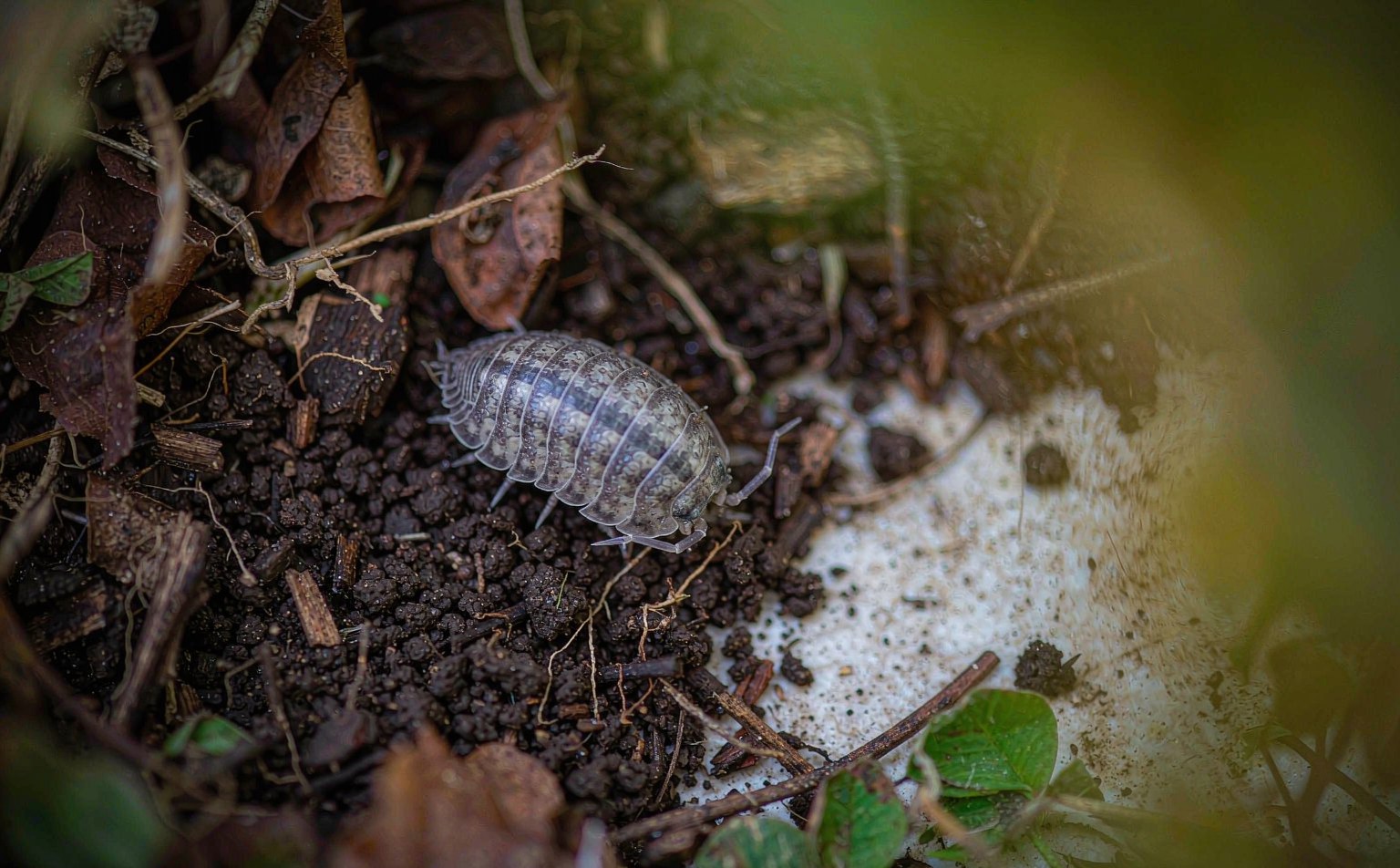
Armadillidium vulgare | Pill Woodlouse
Introduction
The Pill Woodlouse (Armadillidium vulgare) is the woodlouse that can roll into a ball, the little grey “pill bug” or “roly-poly” of gardens, paths and greenhouses. Roughly two centimetres long, it is a terrestrial crustacean like its flattened cousin the common woodlouse, but it is built to defend itself by conglobation: when touched it tucks head and tail together into a neat, armoured sphere that looks for all the world like a tiny pebble.
Native to the shores of the Mediterranean and western Europe, it has spread with human activity across Britain and much of the temperate world, thriving in dry, sunny places where the common woodlouse would dry out. It is a familiar garden resident, tottering across patios and hiding under pots, and a small marvel of an animal that has carried the body plan of a seaside crustacean far inland.
Taxonomy
The Pill Woodlouse is an isopod crustacean in the family Armadillidiidae, described by the French naturalist Jean Guillaume Audinet-Serville in 1838. It shares with the Cornu aspersum a place among the commonest animals of the garden floor, though the snail is a mollusc and the pill woodlouse a crustacean that still breathes through moist gill-like organs. Its ability to roll into a ball sets it apart from the common woodlouse and gives the genus Armadillidium its name, from the Latin for “little armoured one”.
The species is original to southern Europe but is now naturalised across Britain, where it favours drier, more open sites than most of its relatives. It is one of several “pill bugs” worldwide, all isopods that have evolved the same rolling habit independently.
Physical Characteristics
The body is a domed, segmented oval, grey to olive with paler mottling and a darker line along each side, and it is divided into a series of calcified plates that overlap like roof tiles. Seven pairs of legs and two pairs of antennae sit beneath a broad head, and the whole animal is built to close up: when it rolls, the head tucks under and the tail segment meets it, sealing the soft underside inside a smooth ball.
Underneath, like other woodlice, it bears gill-like pseudotracheae that must stay damp, so even this sun-loving species returns to humidity by night and shelters by day. The armour is partly calcified, which is unusual among woodlice and helps explain both its colour and its toughness; the rolling reflex is immediate and repeated handling simply makes it clamp shut the longer.
Armadillidium vulgare | Pill Woodlouse
Armadillidium vulgare | Pill Woodlouse
Habitat
Pill Woodlice prefer drier, more open ground than the common woodlouse: garden paths, rockeries, walls, pots, greenhouses, coastal shingle and the sunny edges of lawns and beds. They still need moisture to breathe, but they tolerate far drier air and will forage in the open where other woodlice cannot.
They are found across Britain and temperate Europe in towns and gardens as much as in the wild, and they travel readily with potted plants and garden goods, which is how they have spread so widely. A warm, slightly sheltered corner with a little leaf litter or a stack of pots is enough to support a population.
Diet
The diet is decaying plant matter: dead leaves, soft rot, compost and the occasional scrap of vegetable, which the pill woodlouse shreds and digests with microbial help. It is a recycler rather than a pest, and although it may nibble tender seedlings or ripe fruit it rarely does serious harm in a garden.
In the food web it is prey for ground beetles, toads, shrews, hedgehogs and birds that work the same ground. The common-blackbird-turdus-merula and other thrushes turning over litter will take pill woodlice as readily as any other, and the rolling defence is the animal’s main answer to being found.
Reproduction
As with other woodlice, the female carries her eggs in a brood pouch, the marsupium, on the underside of her body. The eggs hatch there into mancae, miniature adults that emerge to forage on their own, and there is no free-living larva. Several broods may be raised through a warm season.
The young grow by moulting, and because the armour is calcified they shed it in two halves, front and rear, often at different times. Adults live for a year or two and, being tolerant of dry conditions, tend to be active over a longer part of the year than their shadier relatives.
Conservation
The Pill Woodlouse is abundant, widespread and of no conservation concern, and it is one of the isopods most at home in human landscapes. Its only limits are extreme cold and the complete absence of shelter and moisture, and in most gardens it asks for nothing more than a few pots or a pile of leaves.
Its success is a small lesson in how a sea creature can adapt to land given the right microhabitats. Leaving odd corners, stacks of pots and a little litter in a garden sustains pill woodlice and, through them, the predators that depend on the ground-dwelling community.
Fun Facts
- It is a crustacean, not an insect, and is more closely related to a shrimp than to a beetle.
- When threatened it rolls into a perfect ball, tucking its head and tail together to armour the soft underside.
- Its plates are partly made of calcium, like a tiny suit of stone armour.
- It breathes through moist gill-like organs and must return to humidity by night despite loving sunny spots by day.
- It spreads around the world as a stowaway in potted plants and garden soil.
[…] the Mediterranean. The sea slater is the largest woodlouse in Europe. And a distant relative of the pill woodlouse. The familiar grey garden species of the same order. The pill woodlouse is a fully land animal of […]
[…] animal shares the family with the Pill Woodlouse. That animal also rolls into a ball. It is smaller and it lives in cooler lands. Our animal grows […]