 By st20113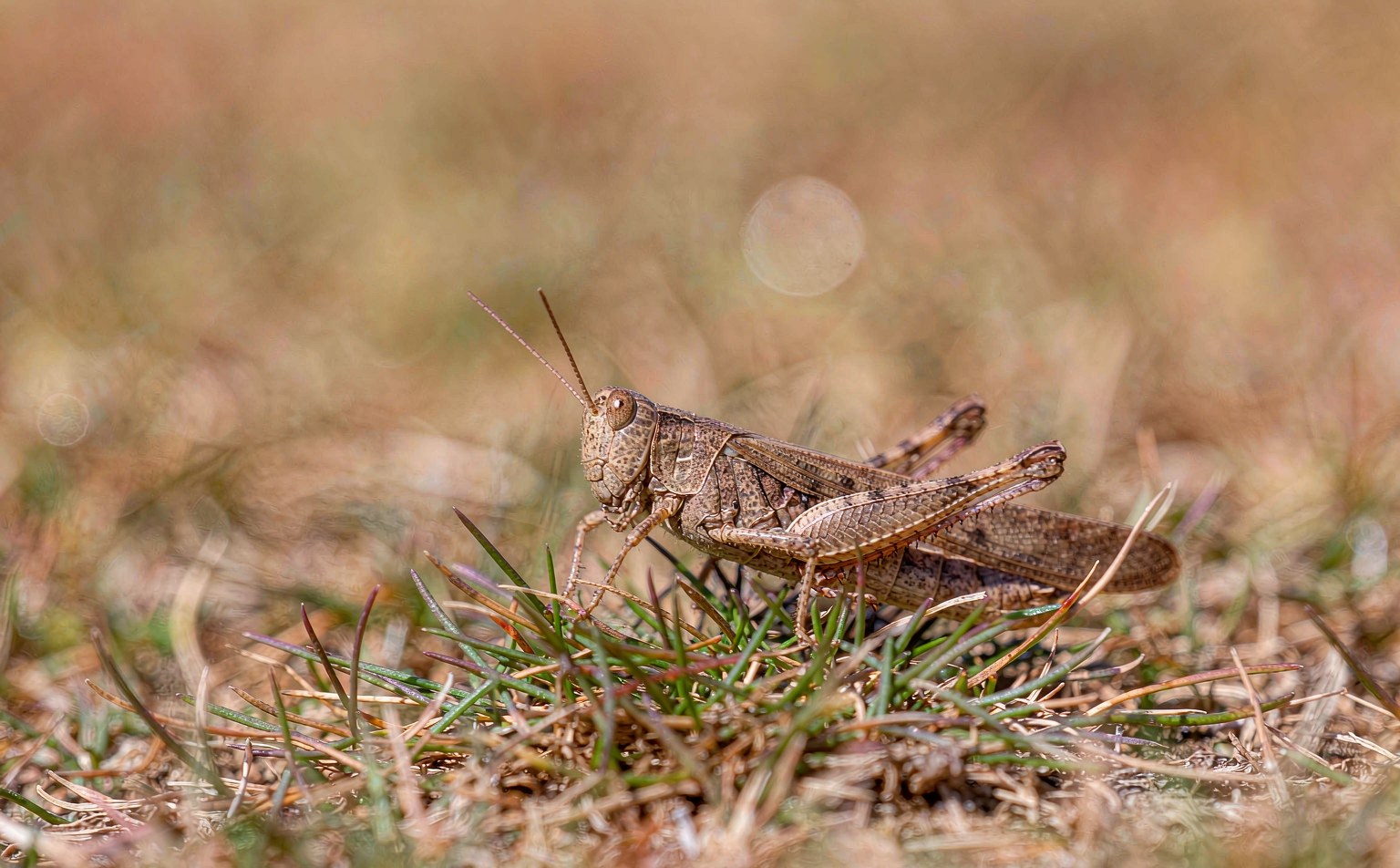
Chorthippus brunneus | Field Grasshopper
Introduction
The Field Grasshopper (Chorthippus brunneus) is the quintessential grasshopper of dry, sunny, short grassland in Britain and across temperate Europe, a small, plainly coloured insect whose loud, ringing song defines the sound of summer lawns, dunes, heaths and cricket grounds. Usually 14 to 22 millimetres long, it is one of the commonest grasshoppers in disturbed and managed grass, from amenity turf to coastal shingle.
Where the ground is hot and open it can be extraordinarily abundant, and its readiness to live in short, closely cut grass sets it apart from the meadow and heath grasshoppers that need taller swards. To many people the Field Grasshopper is simply “the grasshopper”, the one that leaps from a footfall on a sunny bank.
Taxonomy
The Field Grasshopper is a short-horned grasshopper of the family Acrididae and the subfamily Gomphocerinae, described by the German entomologist Charpentier in 1825. It sits in the genus Chorthippus alongside the Meadow Grasshopper and many other small grasshoppers of European grass, and it is an ecological counterpart of the Maniola jurtina and other sun-loving invertebrates of open ground, though it favours drier, barer turf than most.
Its close similarity to the Lesser Marsh Grasshopper and other Chorthippus species means that song, not colour, is the surest way to identify it; the precise pattern and rhythm of the stridulation differ between the species and are used by recorders across its range.
Physical Characteristics
The Field Grasshopper is most often a warm brown, but it also occurs in green and, more rarely, purple forms, with a pale stripe running along the top of the body. The wings are usually well developed and reach beyond the tip of the abdomen, and the antennae are short. The head is rounded and the body lightly built, with strongly banded hind legs built for leaping.
The song is loud and distinctive: a long, accelerating burst of sound, often described as a rising “cre-cre-cre-cre”, produced by the male rubbing the inner wing against a ridge while perched in the open. It is one of the most conspicuous grasshopper songs in its habitat and carries for several metres. The underside of the body is pale and the inside of the hind femur is yellowish to red.
Habitat
This is par excellence the grasshopper of dry, short, sunny grass. It thrives on lawns, playing fields, roadside verges, coastal dunes, shingle, heath and any warm, open turf kept short by mowing or grazing. It tolerates disturbance and poor, dry soils better than almost any of its relatives and is often the only grasshopper in a heavily managed amenity grassland.
It avoids damp, tall, shady swards and is replaced there by the Meadow Grasshopper. Its tolerance of short turf means it persists in places where other grasshoppers have vanished, and it is a frequent companion of human activity in the summer landscape.
Diet
The Field Grasshopper feeds mainly on the leaves of short grasses, nibbling the blades of fine turf species and low weeds. In lawns and close-cropped grassland it eats whatever grass is at hand, and it will take small broad-leaved seedlings and flower petals when abundant.
Feeding is by day and close to the ground. In the short swards it favours it does little noticeable damage, though very large numbers can trim the tops of grass, and it is an important prey item for birds, lizards and spiders in open ground.
Reproduction
Females insert their eggs in small pods into the soil of the short turf, usually in late summer, and the eggs overwinter. Nymphs hatch in spring and pass through a series of moults, each larger and more winged, becoming adults by mid-summer. Because the grass is short, the youngsters are unusually exposed and rely on their colour and leaping to escape.
The male’s loud song attracts females, and a single generation is produced each year. The timing of the adult flight tracks summer warmth, and in hot, dry sites the song can begin earlier and last longer than in cooler places.
Conservation
The Field Grasshopper is common and widespread and currently of least concern, and its tolerance of mown and grazed turf makes it one of the more secure European grasshoppers. It even benefits from the open, sunny conditions of amenity grassland that harm more specialised species.
Its main vulnerability is the loss of genuinely open, unsprayed dry ground to intensive management, paving or scrub. Leaving verges, banks and corners of playing fields uncut and unfertilised, and tolerating a little bare, sunny turf, sustains healthy populations and, with them, the summer song that many people associate with the countryside.
Fun Facts
- It is the grasshopper most likely to leap from a footfall on a sunny lawn or cricket pitch.
- Its loud, accelerating song is one of the most familiar insect sounds of a hot summer’s day.
- It will live in grass kept so short that taller-loving grasshoppers cannot survive there.
- Brown is the commonest colour, but green and even purple individuals occur in the same brood.
- Its scientific name brunneus simply means “brown”, the colour Linnaeus’s successors most often recorded.