 By st20113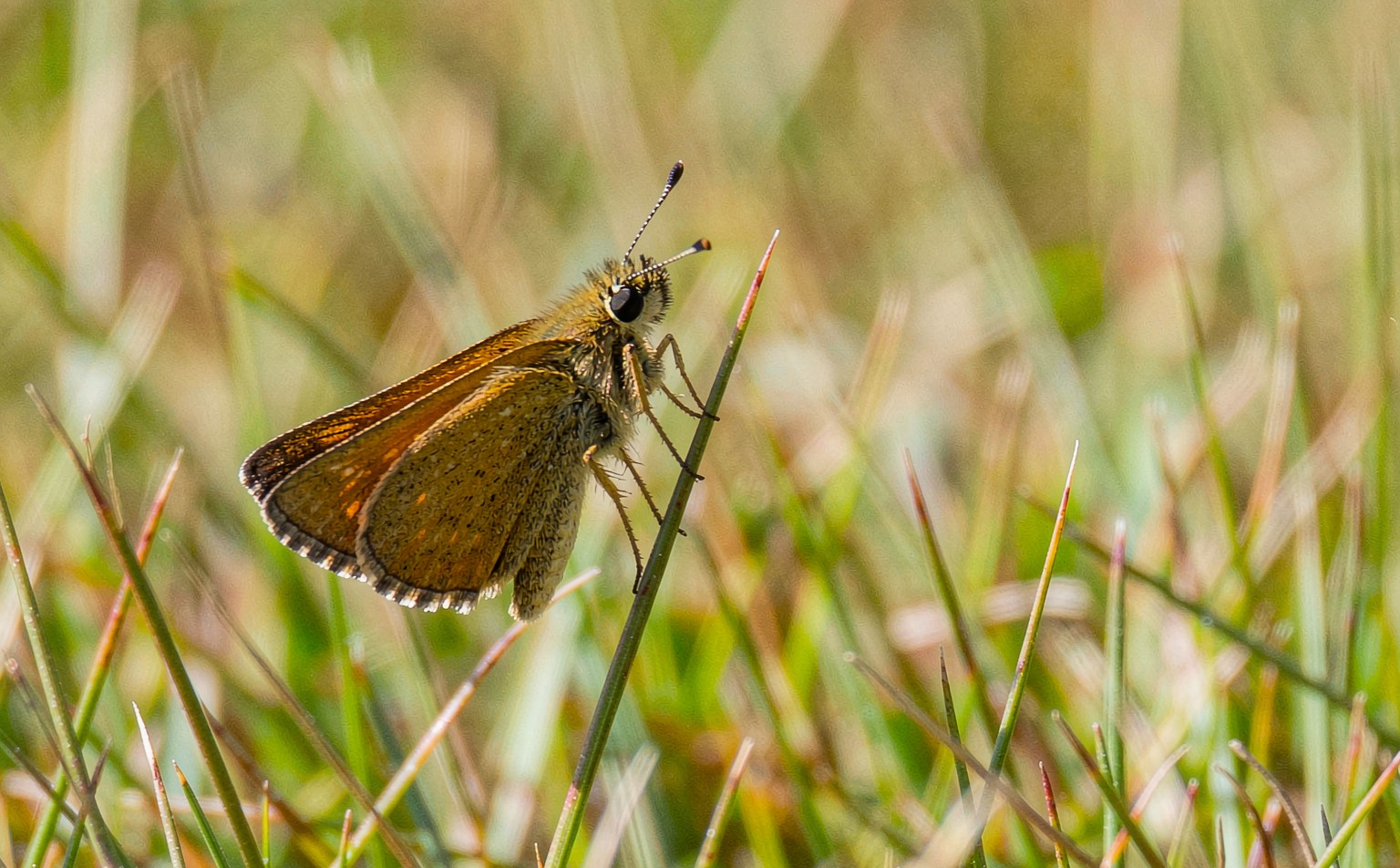
Ochlodes sylvanus | Large Skipper
Introduction
The Large Skipper (Ochlodes sylvanus) is one of the most familiar and vigorous members of the skipper butterfly family found across the grasslands, roadside verges and sunny woodland rides of Britain and much of temperate Europe. Although it bears the name “large”, it is only modest in size compared with many butterflies, yet it is the biggest of the skippers regularly encountered in its range, with a wingspan of roughly 30 to 38 millimetres. What sets it apart from the chaotic, darting flight of most skippers is a slightly more buoyant, powerful style of flight that carries it in quick bursts just above the grass tops.
Adults are on the wing from early June through to August, making the Large Skipper one of the first skippers to appear each summer. It is a creature of warm, sheltered grassy places where clumps of tall grass provide both food for the caterpillars and perches for the watching males. To the casual observer it is an orange-brown blur with a flickering, moth-like reluctance to settle, but when it does land it holds its wings at a characteristic shallow angle, revealing the subtle beauty of its markings.
Taxonomy
The Large Skipper was first described by the German entomologist Eugenius Johann Christoph Esper in 1780, who placed it among the skippers, a group of small, stout-bodied butterflies now recognised as the family Hesperiidae. Within that family it belongs to the subfamily Hesperiinae and the genus Ochlodes, a small assemblage of grass-feeding skippers. Its closest relatives in the field are the other “grass skippers”, though the broader community of Maniola jurtina and other sun-loving grassland butterflies share the same flower-rich habitat and are frequently seen in the same meadows.
The scientific name has shifted over the centuries as skipper classification was refined, but Ochlodes sylvanus is now the accepted combination. Morphologically the group is defined by the wide-set, hooked antennae tips and the thick thorax that powers the rapid flight, features that separate skippers from the more delicate true butterflies at a glance.
Physical Characteristics
The upper surfaces of both forewings and hindwings are a warm orange-brown chequered and bordered with dark brown to black margins, giving the butterfly a furry, golden appearance in bright sun. The hindwing underside is distinctive: a dusting of olive-green or grey-green scales with a scattering of small pale straw-coloured spots, a tone unlike the clear orange of the upper side and a useful identification clue when the insect is at rest.
Males are told from females by a thick black linear patch, the sex brand or androconial streak, running along the centre of each forewing. This patch is a cluster of specialised scent scales used to release courtship pheromones. Females lack the brand and are generally a slightly paler, brighter orange with broader dark borders. Both sexes have short, chequered antennae clubs that hook back like tiny crooked fingers, and the body is noticeably stout and furry compared with the slender waists of many other butterflies.
Habitat
Large Skippers favour tall, rank grassland where tussocks of coarse grasses grow undisturbed: neglected hay meadows, railway embankments, hedgerow margins, woodland rides and the rough corners of gardens and parks. They are a species of the grassy middle layer rather than open flower beds, and they thrive where management leaves plenty of standing vegetation through the summer.
They are less dependent on pristine habitat than many butterflies and will use quite small, sun-warmed patches so long as shelter from wind is available and nectar sources are close by. A south-facing bank of cock’s-foot and false brome, threaded with bramble and thistle flowers, is close to ideal. In northern and upland areas they become scarce, confined to the warmest, most sheltered valleys.
Diet
The caterpillars feed exclusively on grasses, with a strong preference for coarse tussock-forming species such as cock’s-foot (Dactylis glomerata), false brome (Brachypodium sylvaticum) and various fescues and bents. The young larva spins a loose shelter of silk amongst the grass blades and feeds from within, growing through the autumn before hibernating and completing its development the following spring.
Adults take nectar from a wide range of open, accessible flowers. Bramble is a particular favourite, along with thistles, teasel, ox-eye daisy, knapweed, lavender and bird’s-foot trefoil. Because the proboscis is relatively short, the Large Skipper favours shallow blooms and is often seen working the flat heads of umbellifers and thespikes of lavender in gardens.
Reproduction
A single generation is produced each year. Females lay their eggs singly, glued to the underside of a grass blade near the base of a suitable tussock, usually in July. The tiny pale green larva hatches within a few weeks and begins to feed, but as the days shorten it enters hibernation in a silken hibernaculum low in the grass and resumes eating the following spring.
The caterpillar is green with a pale stripe and a dark head, typical of grass-feeding skipper larvae. It pupates within a flimsy cocoon among the grass stems in late spring, and the adult emerges in early summer to begin the cycle again. This univoltine rhythm means the flight season is concentrated and predictable, peaking in late June and early July.
Conservation
Across its core European range the Large Skipper is common and currently of least concern, and in Britain it remains widespread in England and Wales with a stable overall population. Its tolerance of moderately managed grassland has shielded it from the worst declines suffered by more specialised butterflies.
The principal threat is the loss of tall, unstructured grass through over-intense grazing, early annual mowing or scrub clearance that removes the tussocks the caterpillars need. Because the species overwinters as a half-grown larva in the grass, autumn cutting is especially harmful. Light, rotational management that leaves some swards uncut until late summer benefits this skipper and a host of associated meadow insects.
Fun Facts
- The male’s black forewing streak is a scent patch that releases pheromones to attract females during courtship.
- Large Skippers are among the first skippers on the wing each year, often flying from early June.
- At rest they hold the wings at a shallow angle rather than flat or fully closed, a helpful identification cue.
- Males habitually perch on a tall grass stem and dart out to intercept rivals or passing females, then return to the same spot.
- The overwintering caterpillar is only half grown when it hibernates, finishing its development the following spring.