 By st20113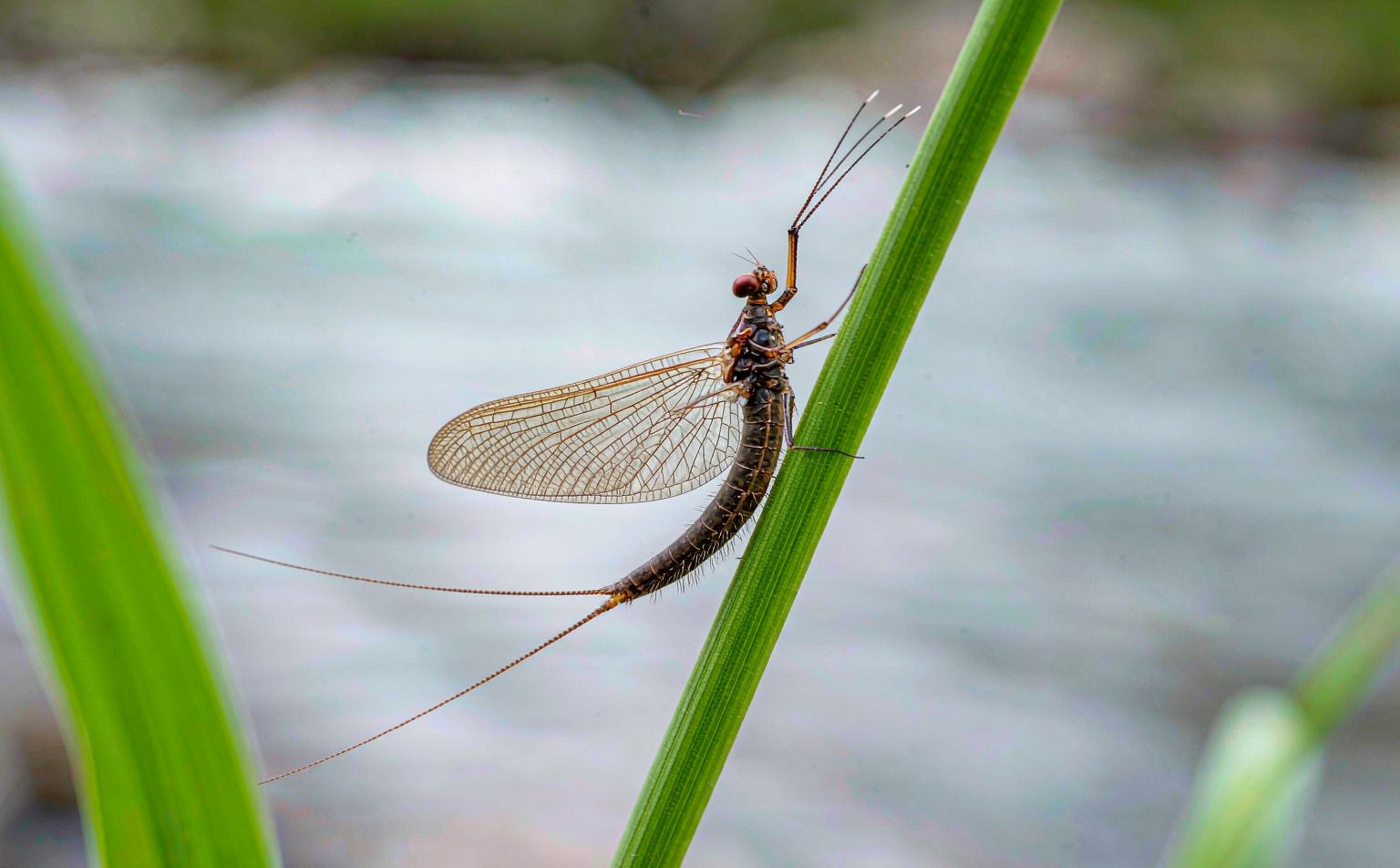
Ephemera danica | Mayfly
Introduction
The Mayfly (Ephemera danica) is the largest and perhaps best-known of the European mayflies, an insect famous for a life cycle that is mostly spent as a hidden nymph in the river bed and ends in a brief, shimmering adulthood measured in hours or days. In early summer the adults emerge in vast mating swarms above clean rivers and lakes, a spectacle that has inspired writers and anglers for centuries. The name “mayfly” hints at the season, though different species fly from spring to autumn.
A cornerstone of freshwater ecosystems, the Mayfly’s nymphs clean the water as they feed and its mass emergences feed trout, birds and bats. Its adult form, with two or three long tails and glassy wings, is among the most delicate insects of the European summer.
Taxonomy
The Mayfly was described by Carl Linnaeus in 1761 and belongs to the genus Ephemera, the type genus of the order Ephemeroptera, the mayflies. The order is ancient, with more than 3,000 species worldwide, and E. danica is the common large species of European rivers and lakes. The name Ephemeroptera means “short-lived wings,” a nod to the adult’s fleeting life.
Its nymphs share the river bed with the larvae of the Common Frog in connected waters and are preyed upon at the surface by the Grass Snake and by the Large Red Damselfly, which hunts the same hatching insects.
Physical Characteristics
The adult Mayfly has a slender body 15 to 25 millimetres long, with a pale, translucent thorax and a darker abdomen, and three long, delicate tails trailing behind. It holds two pairs of triangular, glassy wings upright over the back, the front pair much larger than the hind. The eyes are large, especially in the male, and the front legs are lengthened for use in the mating flight.
The nymph is very different: a flattened, olive-brown creature with three tail filaments and leaf-like gills along the sides of the abdomen, living burrowed in the sediment. It has strong legs for digging and a mask-like lower lip for feeding. The contrast between the long-lived nymph and the short-lived adult is the hallmark of the group.
Habitat
Mayflies need clean, well-oxygenated flowing or still water: rivers, streams, lakes and large ponds with a silty or gravelly bed in which the nymphs can burrow. They are highly sensitive to pollution and low oxygen, so their presence signals good water quality. They are absent from stagnant or contaminated water.
The nymphs live for up to two years in the sediment, and the adults emerge in warm weather to swarm above the water. Because they require unpolluted habitats, mayflies are widely used as bio-indicators of river and lake health across Europe.
Diet
The nymph feeds mainly on fine organic matter, algae and detritus swept from the sediment and from plant surfaces, helping to recycle material in the river bed. It is a grazer and collector rather than a hunter, and its feeding helps keep the bottom clean.
The adult Mayfly does not feed at all. Its mouthparts are reduced and its sole purpose is to mate; it lives on reserves built up as a nymph. This is why the adult life is so short, often a single day, a life spent entirely in the air and ending with the laying of the next generation.
Reproduction
In early summer the winged adults emerge in huge numbers, the males forming dancing swarms above the water at dusk. Females fly into the swarm, mating on the wing, and then settle on the surface or nearby to lay their eggs, which sink to the bed. The adults die within hours or a day, their brief lives ending where the next began.
The eggs hatch into nymphs that burrow into the sediment and grow through many moults over one to two years before climbing the weeds to shed their skins one final time and take wing. The mass emergence is timed so that predators cannot eat them all, ensuring enough survive to breed.
Conservation
Mayflies as a group are sensitive indicators of freshwater quality, and E. danica is generally common where its habitat remains clean. Local declines follow river pollution, siltation and the loss of natural bankside cover, since the nymphs need oxygen-rich, unpolluted sediment to survive.
Protecting river and lake water quality, reducing agricultural runoff and sewage input, and retaining natural, vegetated banks all help mayflies. Because their mass emergences feed fish, birds and bats, healthy mayfly populations are a sign of a thriving freshwater ecosystem that supports many other species.
Fun Facts
- The adult Mayfly often lives for less than a day, just long enough to mate and lay eggs.
- Its nymph can live underground in the river bed for up to two years before emerging.
- A mass emergence can fill the air with dancing swarms above a clean river at dusk.
- The adult does not eat at all, having no working mouthparts.
- Mayflies are so sensitive to pollution that their presence is used to judge river health.
[…] of them live in still water. The Pond Olive shares its order with the Mayfly, the large mayfly of rivers. That species is far bigger. Its nymph lives in a burrow in a river […]