 By st20113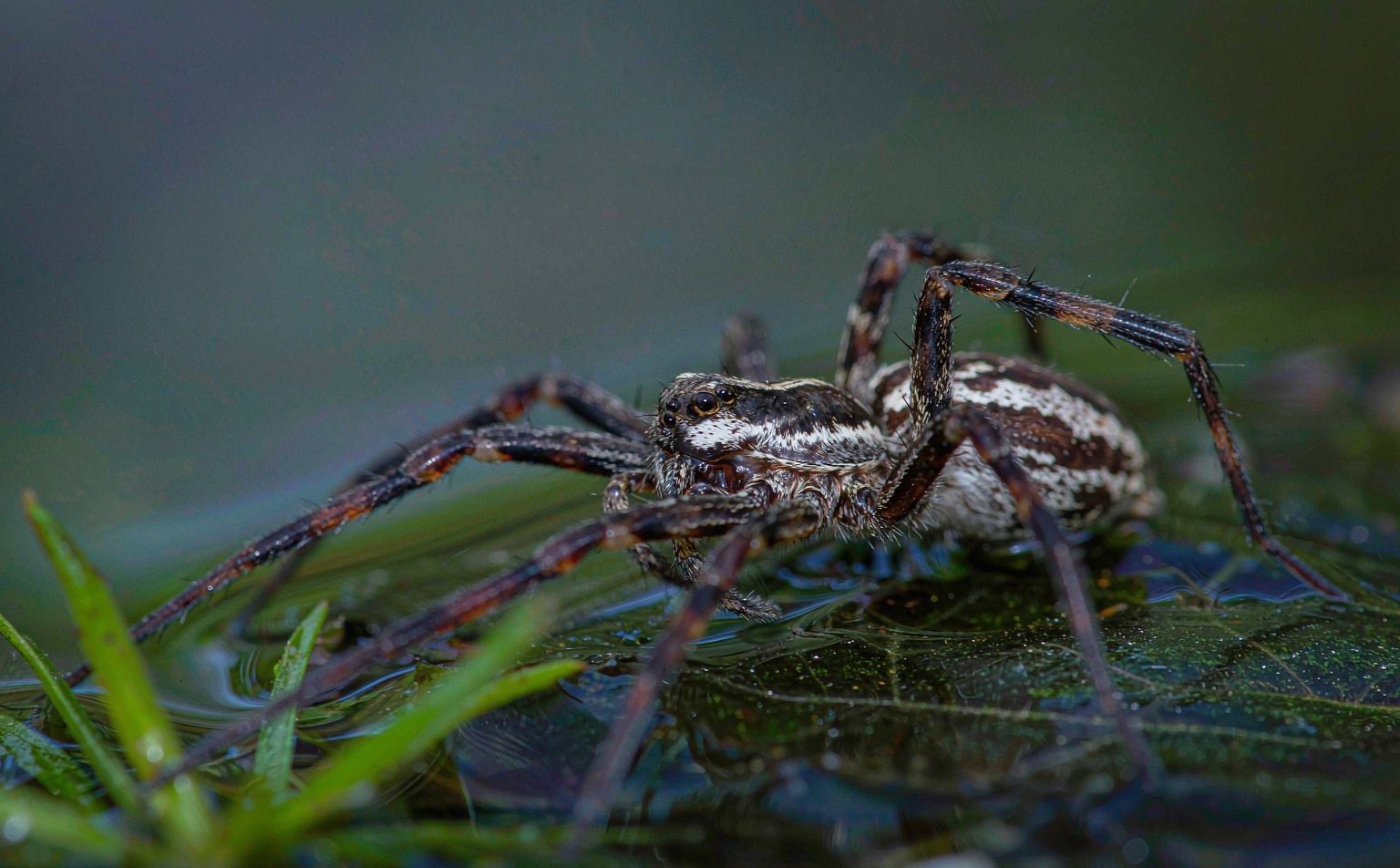
Dolomedes fimbriatus | Raft Spider
Introduction
The Raft Spider (Dolomedes fimbriatus) is a large, striking spider of lowland bogs, fens and the vegetated margins of ponds, known for its habit of standing on floating vegetation with its long legs spread wide, ready to dash across the water’s skin to catch prey. One of Britain’s biggest spiders, it can even run over the surface film and dive below it when alarmed. A specialist of wet, sunny mosaics, it is a charismatic inhabitant of healthy wetlands.
Closely related to the fen raft spider, the Raft Spider hunts at the boundary of water and land, taking insects, pond creatures and even small fish and tadpoles. Its size, banded legs and water-walking gait make it unforgettable to anyone who lifts a mat of pondweed in the right habitat.
Taxonomy
The Raft Spider was described by Carl Alexander Clerck in 1757 and belongs to the genus Dolomedes, the fishing spiders, within the family Pisauridae, the nursery-web spiders. The genus is worldwide, and D. fimbriatus is the widespread European raft spider of bog and pond margins. It is distinct from the rarer fen raft spider of a few coastal sites.
It shares its wet world with the larvae of the Common Frog and is hunted along the margin by the Grass Snake. Above the water it may be taken by the Common Blackbird and other waterside birds that probe the vegetation.
Physical Characteristics
The Raft Spider has a body 15 to 22 millimetres long, the female larger than the male, with a brownish body marked with a pale stripe along each side and conspicuously banded legs. The legs are long and held out flat, spreading the spider’s weight so it can rest on floating leaves and the surface film. Fine hairs repel water, helping it stay dry as it waits or runs.
The spider has large eyes suited to spotting moving prey, and strong fangs for grasping it. The male is slimmer and more lightly marked. When it stretches its legs, the whole animal can span the width of a hand, and its confident stance on the water is its hallmark.
Habitat
Raft Spiders need open, sunny, vegetated wet ground: the edges of ponds, lakes and canals, plus bogs, fens and wet heaths where bog moss and rushes grow. They require both water to hunt over and dense low plants for shelter and for building the nursery web. They shun deep shade and polluted water.
They are most active in warm, bright weather, hunting from a perch on floating vegetation. In cooler months they retreat into the vegetation or into a sheltered retreat among the roots, emerging again in late spring to mate and hunt.
Diet
The Raft Spider is an ambush and active hunter that takes a surprising range of prey for a spider. From its vantage on the water it seizes insects that fall or settle, and it can lunge at pond skaters, small beetles and even small fish and tadpoles at the surface. It senses vibrations through its legs, striking with speed when prey moves nearby.
It often hunts at the water’s edge, partly submerged, waiting with front legs resting on the film to feel ripples. This gives it access to both terrestrial and aquatic prey, making it a versatile predator of the wetland margin and a check on many small animals.
Reproduction
Mating takes place on the vegetation in late spring and summer. The male offers no web gift but must approach the larger female with care. After mating, the female spins a nursery web among the plants, guarding her egg sac within it and later carrying the sac in her fangs until the spiderlings disperse.
The young hunt near the water, learning to use the surface film as they grow. The species’ reliance on a mosaic of open water and dense low cover means that well-managed wetland margins are essential for the brood to survive and the population to persist.
Conservation
The Raft Spider is classified as Least Concern in many areas but is locally scarce, tied to diminishing bog and fen habitats. It is a good indicator of healthy, sunlit wetland margins, and loses out where ponds are shaded, drained or over-tidied. In some regions it is protected as a species of conservation interest.
Conservation that helps includes retaining open, vegetated pond and lake margins, restoring bogs and fens, and avoiding the clearance of rush and bog-moss stands. Because the spider needs both water and cover close together, lightly managed wetland mosaics are far more valuable than uniform banks for its survival.
Fun Facts
- The Raft Spider can run across the surface of the water and dive under it when threatened.
- It senses prey through vibrations felt in its outstretched legs, like a spider on a drum skin.
- One of Britain’s largest spiders, it can tackle small fish and tadpoles at the surface.
- The female carries her egg sac in her fangs until the spiderlings are ready to scatter.
- Its long, banded legs spread its weight so it can stand on floating leaves without sinking.