 By st20113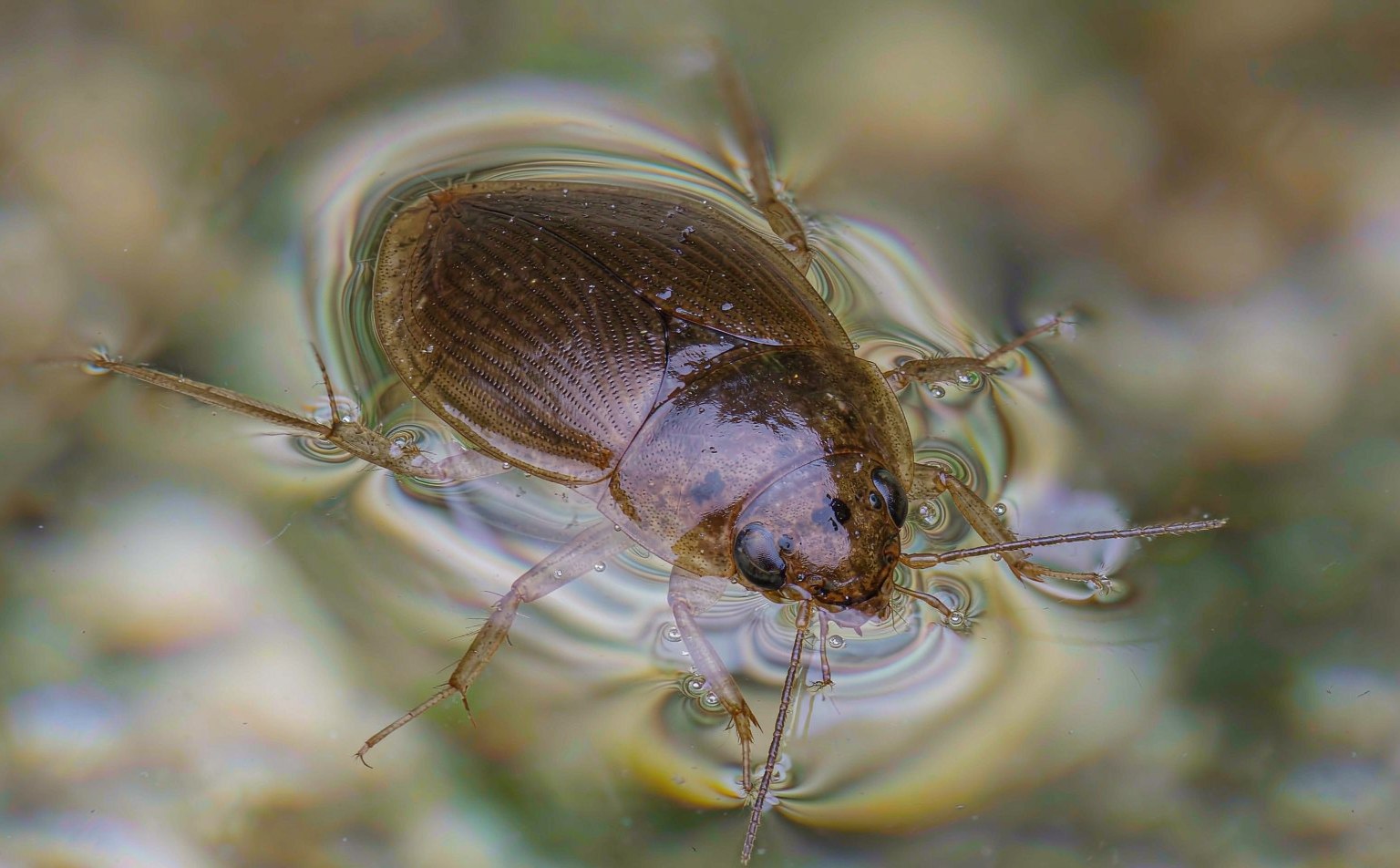
Acilius sulcatus | Lesser Diving Beetle
Introduction
The Lesser Diving Beetle (Acilius sulcatus) is a common, medium-sized predaceous beetle of ponds and slow streams across Europe, smaller and rounder than the Great Diving Beetle but no less accomplished a hunter. It is superbly built for life underwater, with paddle-like legs and a flattened body that lets it dart among pondweed in pursuit of prey. On warm days it may be seen skimming just under the surface or climbing out onto a leaf to bask.
A familiar subject of the pond-dipping net, the Lesser Diving Beetle is one of the most numerous diving beetles in garden ponds. Its broad, smooth shape and the male’s distinctive brush-like front feet make it a useful species to know, and it plays a steady role in controlling smaller pond life.
Taxonomy
The Lesser Diving Beetle was described by Carl Linnaeus in 1758 and belongs to the genus Acilius within the family Dytiscidae, the predaceous diving beetles. The genus is found across the Northern Hemisphere, and A. sulcatus is the common European pond species. Its rounder, more disc-like form separates it from the elongate Dytiscus beetles.
It shares still water with the larvae of the Common Frog and is hunted at the margin by the Grass Snake. Above the surface it may fall prey to the Emperor Dragonfly and other large dragonflies when it emerges to breed or bask.
Physical Characteristics
The Lesser Diving Beetle is 15 to 18 millimetres long, with a broad, flattened, oval body that is dark brown to black above with yellowish markings along the wing-case edges. The head is broad with large eyes and strong jaws. The legs are fringed for swimming, and the male’s front tarsi are expanded into broad, flat “brushes” used to grip the female during mating, a feature unique to the genus.
Like other diving beetles it carries an air store beneath the wing cases, replenished at the surface, so it can remain submerged while hunting. The larva is a slender “water tiger” with curved jaws and tail filaments, similar in form to that of the Great Diving Beetle but smaller, and it is an active predator among the weeds.
Habitat
Lesser Diving Beetles favour still or gently flowing fresh water with abundant vegetation: ponds, lakes, canals, ditches and the quiet margins of rivers. They need plants both for cover and for egg-laying, and a good supply of small prey. They tolerate garden ponds well and are often among the first beetles to appear in a new pond.
They are strong fliers and move between waters, especially at night in summer and autumn. In winter the adults rest in the mud or among roots, becoming active again as the water warms in spring.
Diet
The Lesser Diving Beetle is a predator of smaller aquatic life. The adult takes insect larvae, small crustaceans, worms, tadpoles and other soft-bodied prey, seizing them with its legs and injecting digestive fluids before feeding. It is an important control on midge larvae and other abundant pond invertebrates.
The larva hunts in the same way, ambushing prey among vegetation and piercing it with hollow jaws. Although smaller than the Great Diving Beetle, it is numerous and collectively has a real effect on the pond’s smaller animal community, helping balance the ecosystem.
Reproduction
Mating occurs in the water in spring and summer, the male gripping the female with his broadened front feet. The female lays her eggs singly, often inserted into the tissues of aquatic plants. The larvae hatch and develop through several stages in the water, hunting actively, before leaving to pupate in a cell in the damp bank soil.
The adult emerges after a few weeks and returns to the pond. There is typically one generation per year in cooler regions, with the new adults maturing to breed the following spring, tying the species’ life cycle to the pond’s seasonal rhythm.
Conservation
The Lesser Diving Beetle is common and secure, needing only clean, vegetated fresh water. It is a good sign of a healthy pond and thrives in well-planted garden and farmland ponds alike. Like its larger relative it is sensitive to heavy pollution and to the removal of marginal vegetation.
Creating and protecting ponds, avoiding pesticide and fertilizer runoff, and leaving reed and sedge margins unmanaged all support the beetle. Because adults fly between waters, thriving ponds act as sources that replenish others, strengthening freshwater biodiversity across a landscape.
Fun Facts
- The male has broad, brush-like front feet specially shaped to grip the female while mating.
- Its flat, disc-like body lets it slip easily between stems of pondweed.
- It breathes from an air bubble trapped under its wing cases while hunting underwater.
- The larva is a small “water tiger” that pierces prey with hollow jaws.
- It is one of the first diving beetles to colonise a newly dug garden pond.