 By st20113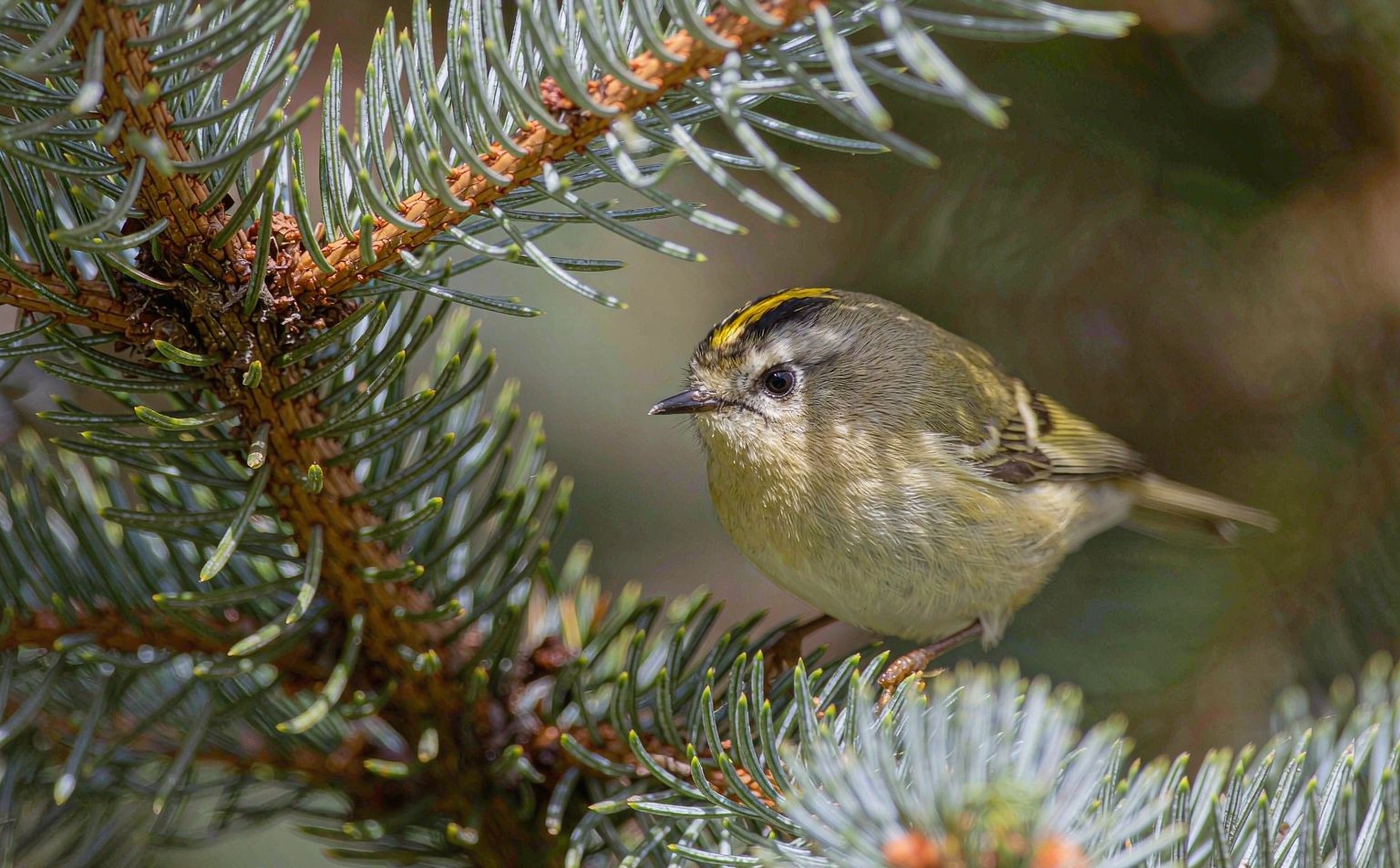
Regulus regulus | Goldcrest
Introduction
The Goldcrest (Regulus regulus) is the smallest bird breeding in Europe, a tiny, restless sprite of coniferous woodland and garden evergreens. Weighing little more than a paperclip, it is best known for the brilliant golden stripe on its crown, which gives the species its name. Its high, thin calls and constant flitting among needles make it easy to hear and hard to see.
Despite its minute size, the Goldcrest is a hardy resident and partial migrant, and in winter it can erupt southward in large numbers. It is one of the few birds that can subsist through cold European winters on a diet of tiny insects and spiders gleaned from evergreen foliage, and it shares the title of Britain’s smallest bird with the closely related Firecrest.
Taxonomy
The Goldcrest was described by Carl Linnaeus in 1758 and placed in the genus Regulus, from the Latin for “little king,” a reference to its jewel-like crown. The genus includes the world’s smallest passerines, the kinglets, which are now usually separated from the old-world warblers. The Golden-crested and Firecrest were once considered one species.
In coniferous groves the Goldcrest often forages near the Eurasian Wren in low cover, and it may mix with the Great Tit and the Eurasian Jay in winter flocks moving through the canopy.
Physical Characteristics
The Goldcrest measures just 8.5 to 9.5 centimetres in length, with a wingspan of 13 to 16 centimetres and a mass of 4.5 to 7 grams, making it lighter than a £1 coin. Its plumage is olive-green above and buff-grey below, with two pale wings bars and a plain face. The crowning feature is the central golden-yellow stripe on the head, bordered by black, which the male can flush orange-red when excited.
The bill is extremely fine and pointed, perfect for picking minute prey from needle clusters. The legs are pale and the toes long, aiding a secure grip on twigs. Juveniles lack the bright crown stripe, showing only a dull buff line until they mature. The bird’s minute size, dull colour and ceaseless motion make it one of the most easily overlooked woodland residents.
Habitat
Goldcrests are birds of conifers first: spruce, fir, pine and larch plantations and natural evergreen woods are their core habitat. They also use yew, cypress and well-grown garden conifers, and in winter they wander into broadleaf trees and hedges in search of food. They are found from sea level to the subalpine zone wherever suitable evergreen cover exists.
The species is largely resident in mild areas, but continental populations migrate, and autumn invasions can bring hundreds to coastal woodlands in some years. The spread of commercial conifer forestry has greatly expanded the Goldcrest’s breeding range across Europe, even as ancient broadleaf forest has declined.
Diet
The Goldcrest feeds almost exclusively on tiny invertebrates: spiders, aphids, scale insects, bark lice and the eggs and larvae of moths and beetles. It gleans these from the needles and twigs with rapid, hovering movements, often hanging beneath a branch to inspect its underside. In winter it takes whatever small prey is available, including the inactive stages of insects tucked into bark crevices.
Because it needs a near-constant supply of food to fuel its high metabolism, the Goldcrest suffers badly in prolonged cold, and harsh winters can cause sharp population crashes. Its ability to exploit the dense, sheltered microhabitat of conifer foliage is what allows it to survive when insects are scarce elsewhere.
Reproduction
Goldcrests breed from April to July. The female builds a remarkable suspended, globe-shaped nest of moss, lichen, spiders’ webs and feathers, hung beneath a conifer branch, and lays a large clutch of typically seven to twelve eggs. She incubates alone for about fourteen to seventeen days while the male feeds her.
Both parents feed the chicks, which fledge after roughly seventeen to twenty-two days. Given the small size of the adults and the large brood, the feeding demand is intense, and two broods are often raised in a season. The concealed, well-insulated nest helps protect the tiny young from cold and predators.
Conservation
The Goldcrest is rated Least Concern, with a huge and generally stable population supported by extensive conifer plantations. Its fortunes are nevertheless closely tied to winter weather and to the availability of evergreen cover, and severe cold can cause dramatic short-term declines.
Planting and retaining conifers in gardens, churchyards and along roadsides provides valuable habitat, as does leaving a layer of undisturbed evergreen foliage. Because the species is so small and energy-limited, even modest gains in winter shelter and insect refuge can improve local survival through hard weather.
Fun Facts
- The Goldcrest is Europe’s smallest bird, weighing about the same as a teaspoon of sugar.
- Its golden crown stripe can be raised and shown in display, flashing orange in the male.
- A single female may lay more than ten eggs, a huge clutch for such a tiny bird.
- In harsh winters Goldcrests can die in large numbers, yet populations recover quickly when springs are mild.
- The high, thin “see-see-see” call is often the first sign the bird is present in a conifer.