 By st20113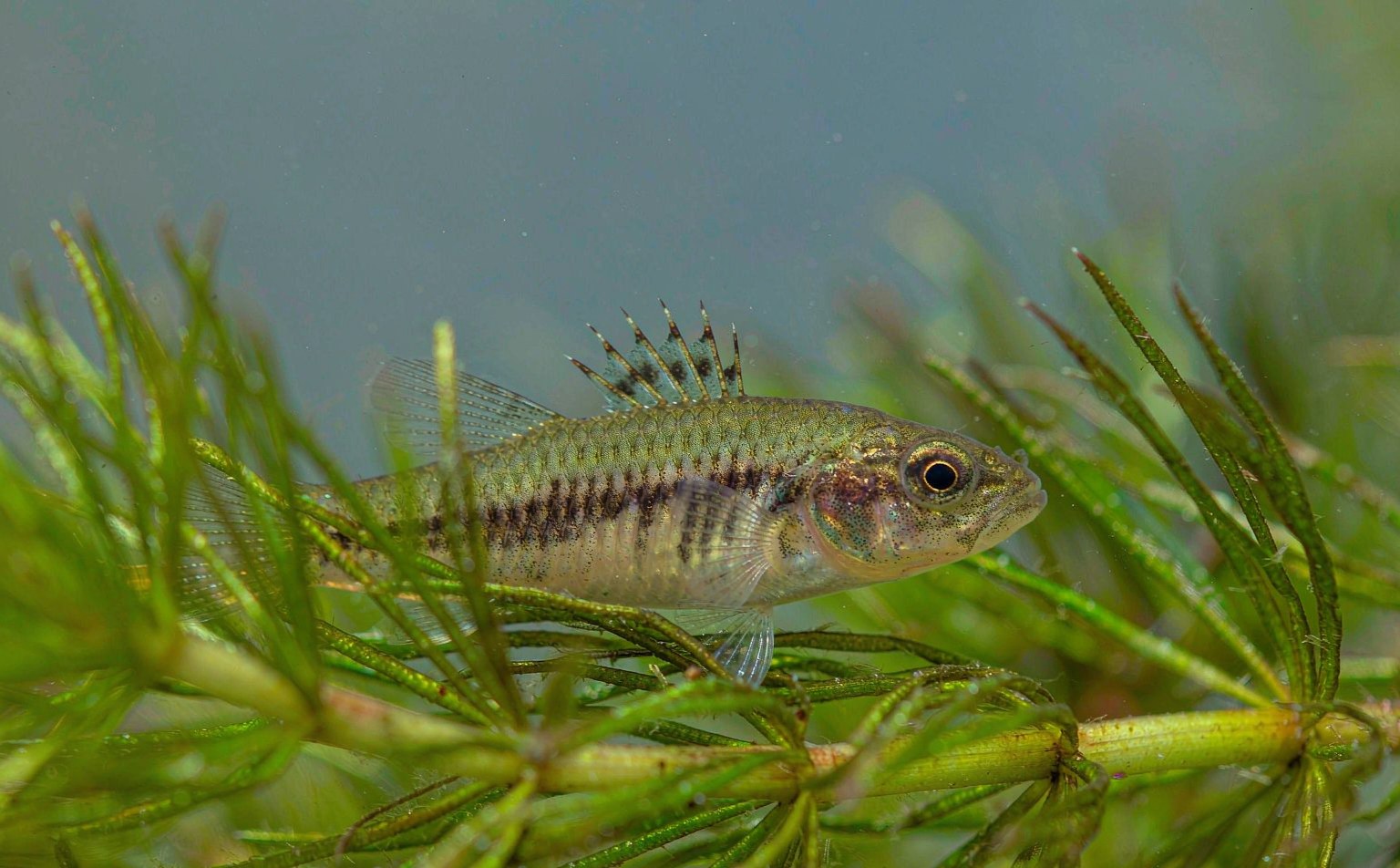
Pungitius pungitius | Ten-spined Stickleback
Introduction
The Ten-spined Stickleback (Pungitius pungitius) is a small, slender fish of the stickleback family that lives in the weedy margins of lakes, slow rivers, brackish coastal lagoons and even ditches across the northern hemisphere. Close cousin of the better-known three-spined stickleback, it is distinguished by the row of between seven and twelve tiny dorsal spines running along its back. Though seldom exceeding 6 centimetres, it is a bold, pugnacious little fish whose elaborate nesting behaviour has made it a favourite of freshwater naturalists. It thrives in habitats too weedy or too cool for many other small fish.
Taxonomy
Pungitius pungitius belongs to the family Gasterosteidae, the sticklebacks, and is the only member of its genus found across much of Europe and northern Asia. It is most often compared with the Three-spined Stickleback, which shares its nesting habits but carries just three spines; the ten-spined form is more elongate and has more dorsal armour. The genus Pungitius is ancient among percomorph fish, and several isolated populations—especially in lakes and on islands—show distinct local traits. No subspecies are formally recognised across its broad range, though Arctic and temperate forms can differ in spine count and body depth.
Physical Characteristics
Adults are usually 4 to 6 centimetres long, with a very slender, almost ribbon-like body. The most obvious feature is the series of 7 to 12 separate dorsal spines, each a small sharp plate, ahead of the soft dorsal fin; there is also a small spine before the pelvic fins. The body is lightly armoured with bony plates along the sides, fewer than in its three-spined relative. Coloration is drab olive to greenish-brown, paler below, with a faint dark stripe along the flank in some populations. In the breeding season the male develops a near-black throat and belly and may show a bluish sheen, while the female remains plain. The eyes are large relative to the head, aiding its darting, visual hunting.
Habitat
Ten-spined sticklebacks favour calm, vegetated water: the edges of lakes, slow canals, marsh drains, peaty pools and the brackish inlets of the Baltic and other northern coasts. They are more tolerant of low oxygen, cool temperatures and variable salinity than many cyprinids, which lets them colonise isolated and marginal habitats. They shelter among emergent and submerged plants, where the spines make them awkward prey. They are absent from fast, open rivers and from heavily polluted stretches, but they can persist in surprisingly small, weedy ditches so long as plants and oxygen remain.
Diet
These sticklebacks are active, visual predators of small prey. They feed on tiny crustaceans such as water fleas, insect larvae and pupae, and small worms, picking items from leaf surfaces and the water column with quick darting strikes. In turn they are eaten by larger fish, including the European Perch, and by wading birds. Their appetite for mosquito larvae makes them useful in controlling nuisance insects in ponds. In weedy shallows they overlap with the Minnow-style small fish community and with the Bitterling that share dense vegetation.
Reproduction
Breeding is the species’ most remarkable trait. The male builds a small nest from plant fragments glued with a kidney secretion, usually hidden among weeds close to the bottom. He courts females, who lay eggs inside the nest; the male then guards and fans the eggs, keeping them oxygenated, and may attract several females to the same nest. After the young hatch he continues to tend them briefly before they disperse. This paternal care is unusual among fish and is shared with the three-spined stickleback, making the group a classic study system for animal behaviour.
Conservation
The ten-spined stickleback is considered Least Concern across its extensive range. It is adaptable and tolerant of habitats that suit few other fish, so it is not generally threatened; local declines can follow drainage of marshes, removal of aquatic plants and eutrophication that strips oxygen from shallow water. Because it depends on submerged vegetation for nesting, measures that protect wetland plants and keep water clear indirectly help it. It is not the subject of major conservation programmes but benefits from general wetland and shoreline protection.
Fun Facts
- It can have anywhere from seven to twelve separate dorsal spines, not ten exactly.
- The male alone builds the nest and then guards the eggs like a devoted father.
- It tolerates brackish water better than most of its pond neighbours.
- Its sharp little spines make it a unpleasant mouthful for predators.
- A single male may raise the eggs of several different females in one nest.