 By st20113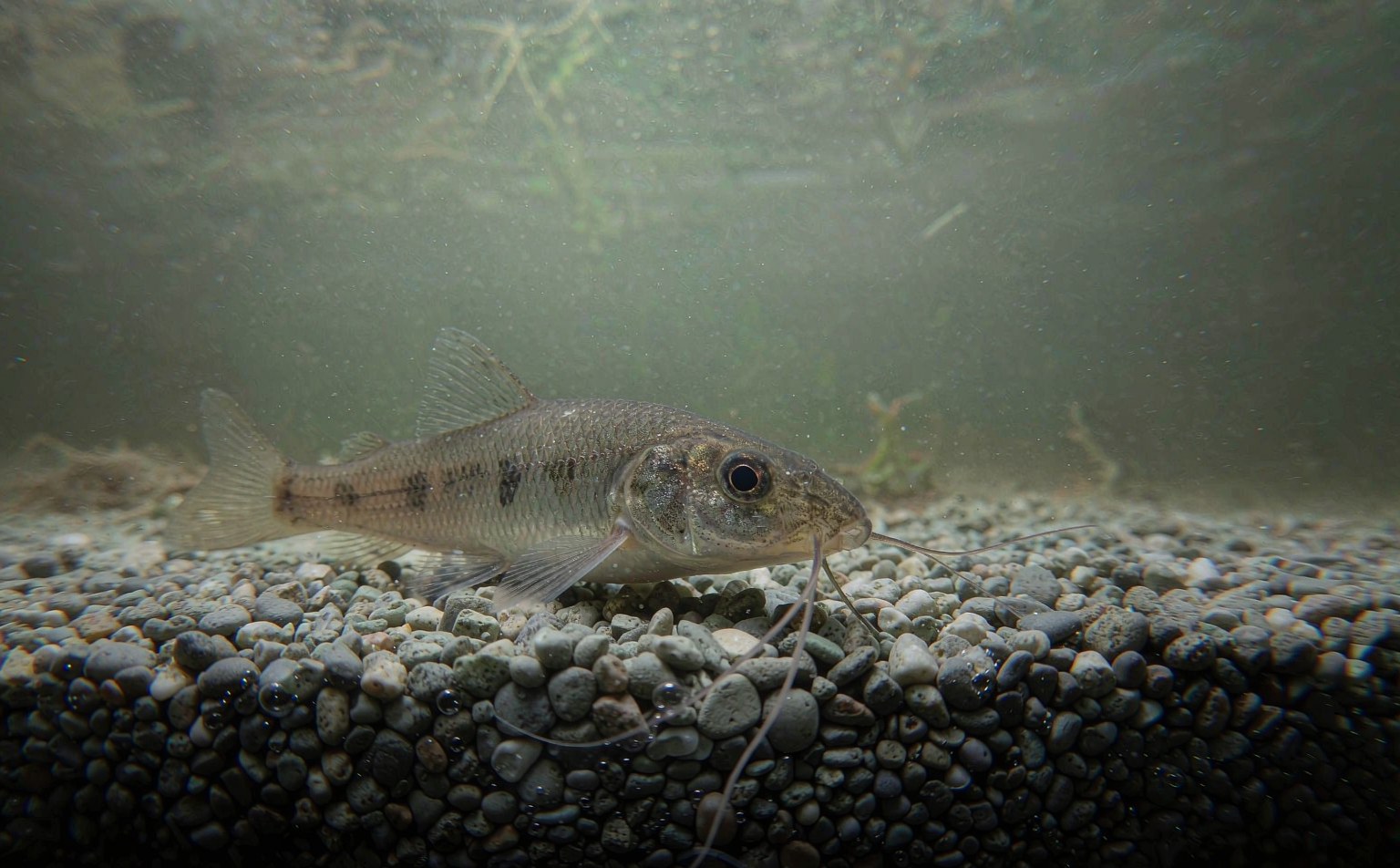
Gobio gobio | Gudgeon
Introduction
The Gudgeon (Gobio gobio) is a small, slender freshwater fish of the carp family found across much of Europe, prized by anglers as both a bait fish and a lively inhabitant of clear streams and rivers. It is easily recognised by its elongated body, a row of dark blotches along the lateral line, and a distinctive pair of whisker-like barbels at the corners of its mouth. A bottom-dwelling species, the gudgeon spends much of its time resting on sand and gravel, from where it darts up to snatch passing invertebrates. Although modest in size, it plays an important role in the food web of healthy rivers, linking small prey to larger predatory fish and birds.
Taxonomy
Gobio gobio belongs to the family Cyprinidae, the minnows and carps, and is the type species of the genus Gobio, which contains a number of similar gudgeon species across Eurasia. It is most closely related to other small European cyprinids such as the European Perch‘s fellow river fishes and is often studied alongside the Common Roach, another abundant shoaling fish of lowland waterways. Several regional forms were once described as separate species, but most of these are now treated as variations of a single widespread species. The gudgeon has no widely recognised subspecies in the strict taxonomic sense, though populations differ slightly in spotting and body depth from one river basin to another.
Physical Characteristics
Adults normally reach 8 to 12 centimetres in length, though exceptional individuals may approach 15 centimetres. The body is elongate and slightly compressed, with a rounded snout and a terminal mouth equipped with a single long barbel on each side. The back is olive-brown to grey-green, the flanks are paler silver, and a series of 6 to 12 dark, saddle-like blotches runs along the lateral line. The belly is whitish. The scales are small and the fins are rounded; the dorsal and caudal fins carry faint speckling. A sticky pad on the underside of the male’s head develops during the spawning season. Gudgeon are slender enough to slip between stones yet muscular enough for strong, darting bursts of speed.
Habitat
Gudgeon favour clear, slow- to moderate-flowing rivers, streams and the margins of lakes with sandy or gravely bottoms and only light weed cover. They avoid muddy, deoxygenated or heavily shaded water and are notably sensitive to siltation and pollution, which makes them a useful indicator of good water quality. During the day they often lie half-buried in gravel or shelter in the lee of stones, becoming more active at dusk. They can occur from lowland valleys up into cooler foothill streams, and they tolerate a wide range of temperatures so long as oxygen levels remain adequate. Where rivers are connected, gudgeon may also turn up in cleaner canals and gravel pits.
Diet
Gudgeon are opportunistic bottom feeders. Using their sensitive barbels, they probe the substrate for mayfly and caddisfly larvae, small crustaceans, worms and the eggs of other fish, which they suck from the surface of stones. They also take drifting aquatic insects and, occasionally, tiny plant matter. Because they feed close to the bed, they help recycle invertebrates that would otherwise stay hidden in the gravel. In turn they are an important food source for larger fish such as the Minnow‘s predators and for the Bitterling-sharing perch and trout that hunt the same shoals.
Reproduction
Spawning takes place from late spring to midsummer, when water temperatures rise above about 16 °C. Males establish small territories on clean gravel and develop the characteristic breeding tubercles and sticky head pad used to cling to females during egg-laying. Females scatter sticky eggs among the stones, where they adhere and develop without parental care. A female may release several thousand eggs over repeated spawnings. The larvae hatch within a week or so and quickly join shoals of young fish that drift downstream to milder nursery stretches before returning as adults to faster gravel runs.
Conservation
The gudgeon is classified as Least Concern across its wide European range, but local populations have declined where rivers have been straightened, dredged or choked with fine sediment. It benefits strongly from riparian restoration that returns gravel shoals, reduces agricultural runoff and reconnects side channels. Because it is sensitive to low oxygen and silt, a thriving gudgeon population is a good sign that a river is in reasonable ecological health. It is not currently the focus of targeted protection programmes, but it gains indirect benefit from wider efforts to improve river water quality and fish passage.
Fun Facts
- Each gudgeon has just two barbels, but they are packed with taste and touch sensors for finding food in the dark.
- The fish can half-bury itself in gravel in seconds to hide from predators.
- Anglers have long used live gudgeon as bait for larger predatory fish.
- Males grow a sticky pad on the head in summer to help them hold onto females while spawning.
- A shoal will often all face upstream, ready to snatch food drifting down on the current.