 By st20113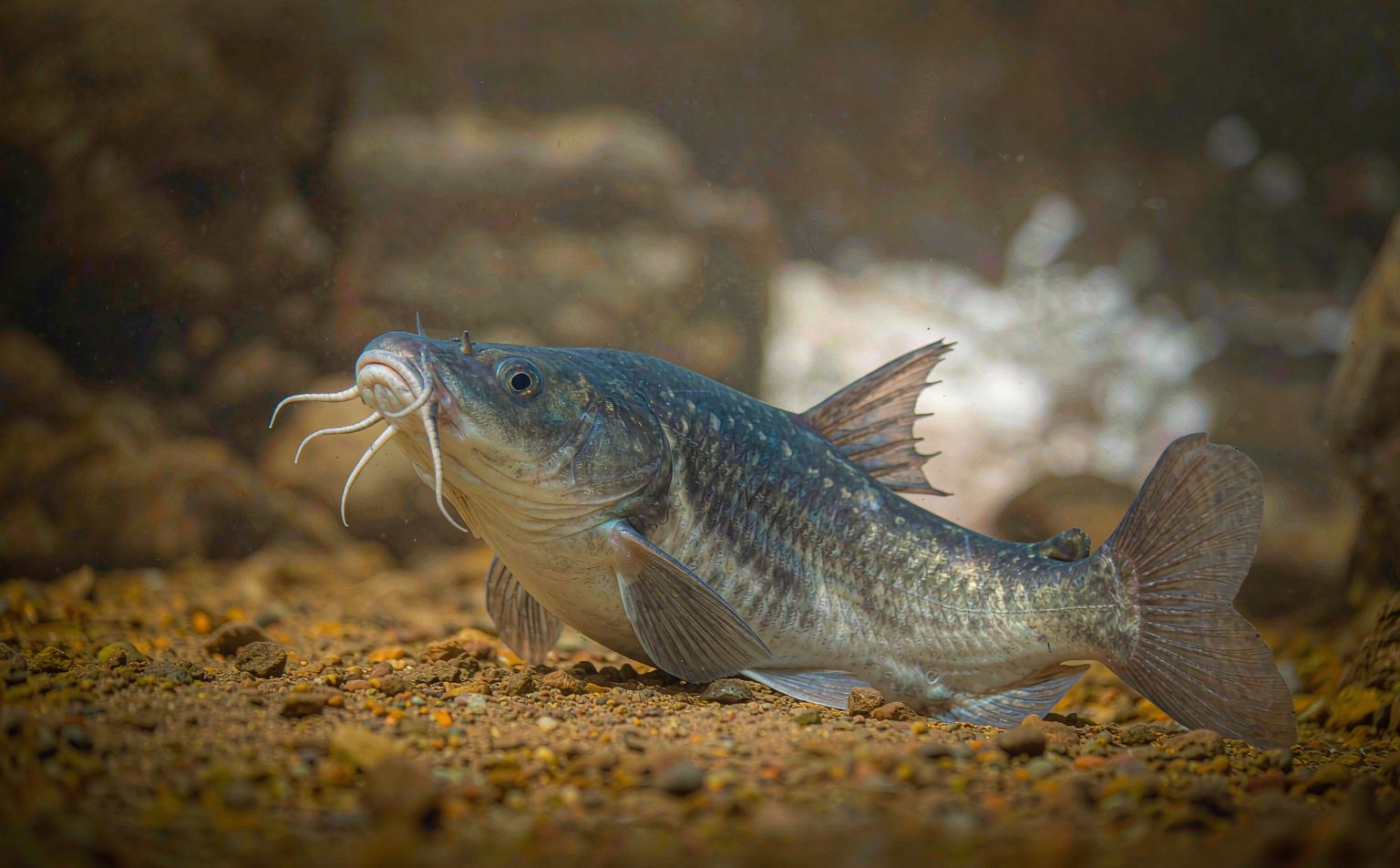
Barbus barbus | Barbel
Introduction
The Barbel (Barbus barbus) is a robust, whiskered cyprinid of central and western European rivers, built for life on the fast, stony bottom. Four fleshy barbels around the mouth give the fish its name and help it locate food in murky, turbulent water. A favourite of specialist coarse and fly anglers, the barbel is a powerful fighter on light tackle and a characteristic inhabitant of clear, flowing rivers from the Rhône and Rhine basins eastward. It is a bottom-dweller that rarely breaks the surface, yet forms the backbone of many healthy river ecosystems.
Taxonomy
Barbus barbus was described by Linnaeus in 1758 as the type species of the genus Barbus, the barbels. The genus belongs to the carp family Cyprinidae, alongside the Goldfish and common carp, and is distinct from the salmonids such as Brown Trout. Several other European “barbels” were once lumped under this name but are now separate species (for example the Italian and Greek barbels). The barbel’s closest relatives include the gudgeon and the tench within the broader cyprinid radiation.
Physical Characteristics
Barbel are elongated, cylindrical fish with a broad, flattish head and a downward, suctorial mouth armed with four barbels—two short at the front and two longer at the corners. Wild adults commonly reach 30 to 60 centimetres and 1 to 3 kilograms, with large river specimens exceeding 70 centimetres and 8 kilograms. The back is olive-brown to dark, fading to pale yellow on the belly, and the scales are large with a dark边缘 on each. The dorsal fin bears a strong, serrated spine—a defensive adaptation. The eyes are small and set high. Coloration darkens in mature males during the breeding season, when pearl organs (small breeding tubercles) appear on the head and fins.
Habitat
Barbel are quintessentially river fish, favouring clear, moderately to strongly flowing water over gravel, cobble and sand, with adjacent deeper runs and pools for resting. They avoid still or heavily vegetated water and are absent from most lakes and ponds. They tolerate a range of temperatures better than trout but need well-oxygenated water and clean substrate for spawning. They shelter by day under banks, boulders and weed beds and become active feeders at dawn, dusk and through the night.
Diet
The barbel is an omnivorous bottom feeder. It uses its barbels to probe sediment for mayfly and caddisfly larvae, small molluscs, worms, crustaceans and fish eggs, and supplements this with plant matter, seeds and detritus. In rivers it competes little with surface-feeding fish because it works the bed. Larger barbel may take small fish and actively hunt invertebrate prey in the current. Feeding intensifies in warm months and slows in cold winter.
Reproduction
Spawning takes place from May to July in shallow, fast gravel riffles. Males gather in numbers and chase ripe females, who broadcast sticky eggs among the stones; there is no parental care. The eggs adhere to gravel and hatch in about a week. Fry move to slower margins to grow. Barbel mature in three to five years and can live more than fifteen years in undisturbed rivers, growing slowly but steadily.
Conservation
The barbel is widespread and of Least Concern, but it has suffered locally from weirs and dams that block spawning runs, from dredging that destroys gravel, and from pollution. It is a popular angling species managed through close seasons and catch limits in many countries. Restoring river continuity with fish passes and protecting spawning riffles are the main steps that sustain strong barbel populations.
Fun Facts
- The four “whiskers” are taste-and-touch organs that let the barbel feed in near-darkness on the riverbed.
- The dorsal spine is serrated and can lock upright, making the fish awkward for predators to swallow.
- Old river barbel can live past fifteen years and grow heavier than a house cat.
- It often shoals with chub and dace, sharing the same fast runs.
- Specialist anglers prize it as one of the hardest-fighting fish per kilogram in European rivers.