 By st20113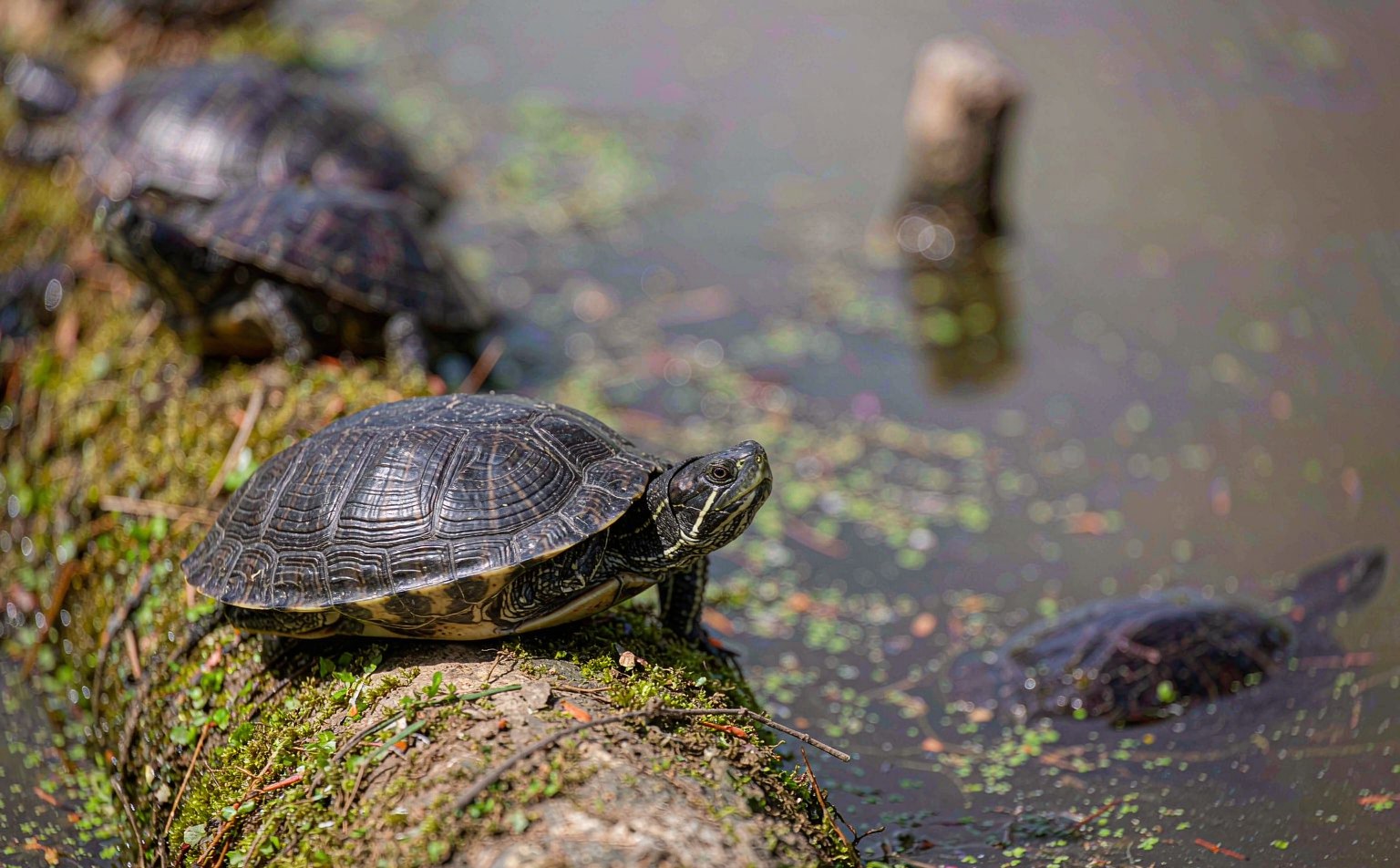
Mauremys rivulata | Balkan Pond Turtle
Introduction
The Balkan Pond Turtle (Mauremys rivulata) is a small, unobtrusive freshwater turtle of the Balkans, Greece, Turkey and the eastern Mediterranean coast. Until recently it was confused with the better-known European Pond Turtle and treated as the same species, but genetic and morphological study now recognise it as distinct. A patient basker, it spends much of the day hauled out on logs and rocks with its neck outstretched, slipping silently into the water at the slightest disturbance. Though shy, it is often the most common turtle in the wetlands where it lives, and an excellent indicator of healthy, unpolluted freshwater.
Taxonomy
Mauremys rivulata was originally described by Valenciennes in 1832 and is now placed in the genus Mauremys alongside several Asian pond turtles. It was long sunk within Emys orbicularis, the European Pond Turtle, and the two are still frequently mistaken for one another where their ranges meet. Within the family Geoemydidae, the Balkan Pond Turtle is part of a largely Old World group of pond and river turtles, separate from the typical emydine terrapins of the Americas. Its closest relatives include the Caspian and Chinese stripe-necked pond turtles of the same genus.
Physical Characteristics
Adults are small to medium, with a shell (carapace) length of 12 to 25 centimetres, females larger than males. The carapace is oval, low-domed and dark olive to brown or nearly black, sometimes with faint yellowish streaks. The plastron (underside) is dark with a pale central seam. The head is olive or grey-brown with a pale yellowish stripe running back from behind each eye, and the limbs are dark with lighter striping. Males are distinguished in the breeding season by a longer, thicker tail and elongated claws on the front feet, used to grasp the female’s shell. The skin is rough and the neck is only moderately retractable, characteristic of geoemydid turtles.
Habitat
Balkan Pond Turtles inhabit a wide variety of slow or still freshwater bodies: ponds, lakes, marshes, canals, rivers with quiet backwaters, and coastal lagoons and estuaries where freshwater mixes with salt. They favour sites with abundant aquatic vegetation and plenty of low basking perches such as branches, rocks and reed stems. They tolerate some human disturbance and are found in village pools, urban parks and fishponds, but they avoid fast, cold, heavily shaded streams. In warmer regions they may aestivate in mud during dry spells and hibernate in soft substrate through winter.
Diet
This is an omnivorous turtle with a broad diet. Animal food dominates and includes aquatic insects and their larvae, tadpoles, small fish, snails, worms and carrion. Plant matter is also taken readily: algae, pondweed, fallen fruit and soft leaves. Young turtles feed more heavily on prey animals to fuel rapid growth, while adults shift toward a more balanced mix. Foraging is mostly in shallow water, by probing among vegetation and bottom sediment, though the turtle will also snap at prey at the surface.
Reproduction
Mating occurs in spring and autumn in warm water. Females leave the water to lay 4 to 12 elongated, leathery-shelled eggs in a sunny, well-drained nest scrape a short distance from the bank, usually in loose soil or sand. Depending on latitude they may produce one or two clutches a year. Incubation lasts about two to three months, with warmer nests producing faster-developing young; temperature can influence the sex ratio of the hatchlings. The tiny, disc-shaped juveniles dig to water on hatching and grow slowly, maturing in four to six years.
Conservation
The Balkan Pond Turtle is classified as Least Concern but is increasingly threatened by wetland drainage, pollution, introduced predators such as terrapins and rats, and collection for the pet trade. Hybridisation with introduced Mauremys species is a growing concern in parts of its range. It is protected under national legislation in several Balkan states and benefits from Natura 2000 wetland sites. Simple measures—retaining basking logs, restricting pesticide runoff and preventing the release of pet turtles into the wild—help keep populations stable.
Fun Facts
- It was only formally split from the European Pond Turtle in the 21st century, after DNA evidence settled a long debate.
- A basking group will often line up in size order along a single branch, like commuters on a rail.
- The pale stripe behind each eye is one of the fastest ways to tell it apart from its look-alike cousin.
- It can absorb oxygen through the lining of its throat while resting underwater in summer.
- Hatchlings are barely larger than a coin yet already expert at vanishing into reeds.