 By st20113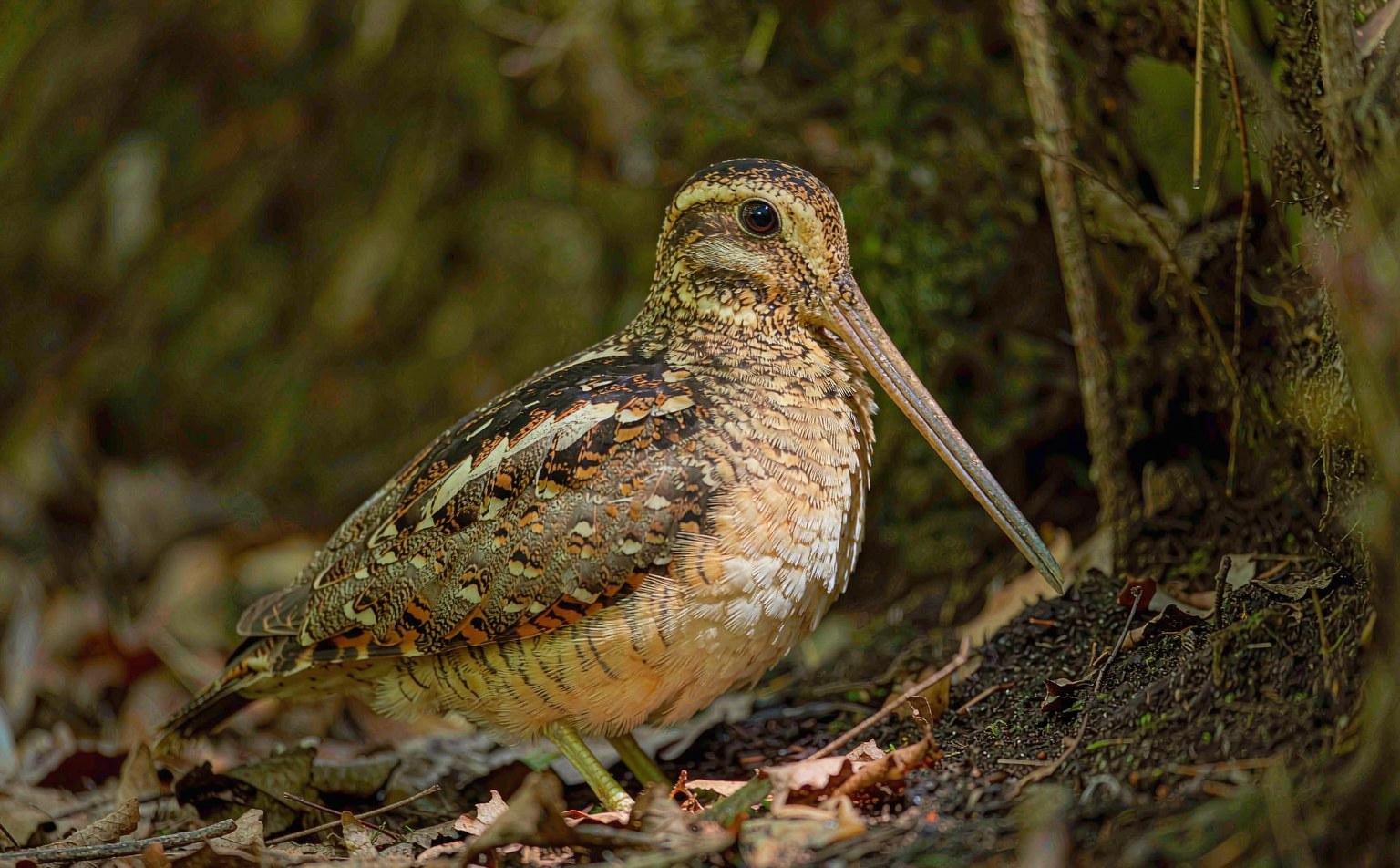
Scolopax rusticola | Eurasian Woodcock
Introduction
The Eurasian Woodcock (Scolopax rusticola) is a shy, nocturnal wader of mature woodland, remarkable for being a shorebird that has abandoned the shore. Plump, short-legged, and cloaked in intricate russet-and-grey camouflage, it spends the day hidden among leaf litter and flies only at dusk. Its long, sensitive bill is specialised for probing soft woodland soil for earthworms, its principal food.
Best known for the male’s crepuscular “roding” display, a slow, wavering flight through the trees at dawn and dusk, the woodcock is a bird of mystery and quiet woodland paths. It is a prized subject for naturalists and a species of considerable conservation interest as forests are managed and fragmented. It shares its wooded world with the Western Capercaillie, another bird of mature forest.
Taxonomy
The Eurasian Woodcock is the only member of the genus Scolopax found across most of Eurasia, and it belongs to the family Scolopacidae, the sandpipers and snipes. It was first described by the Swedish naturalist Carl Linnaeus in 1758 under the binomial Scolopax rusticola. The genus name Scolopax is Latin for a woodcock or snipe, while rusticola means “dweller in the woods”.
Unlike most of its relatives, which are birds of open mudflats and shores, the woodcock has adapted to life on the forest floor, a shift reflected in its stocky build and cryptic plumage. Its closest relatives include the American woodcock and the various snipes, all of which share the long, tactile bill used to locate prey by touch.
Physical Characteristics
An adult Eurasian Woodcock measures 33 to 38 centimetres in length, with a wingspan of about 55 to 65 centimetres and a weight of 250 to 450 grams. The plumage is a masterpiece of camouflage: a mixture of rufous, chestnut, grey, and black barring and mottling that blends perfectly with dead leaves and dappled forest light. The underparts are pale buff, heavily barred.
The head is large and rounded, with eyes set far back and high, giving the bird almost all-round vision to watch for predators while its bill probes the ground. The bill itself is long, straight, and flexible at the tip, packed with nerve endings that detect earthworms moving underground. The legs are short and feathered at the top, and the wings are broad and rounded for manoeuvring through trees.
In flight the woodcock shows a rounded, moth-like silhouette and a twisting, erratic path that makes it hard to follow. Females are larger than males and have longer bills, a reversal of the usual pattern among waders.
Habitat
The Eurasian Woodcock breeds in damp, mature broadleaved and mixed woodland, especially where the ground is soft, leaf-littered, and rich in earthworms. Coppiced woods, wet alder and willow carr, and conifer plantations with open leafy floors all provide suitable conditions, provided there is cover for nesting and roosting.
Outside the breeding season it uses a broader mosaic of habitats, including heathland, hedgerows, parks, and even gardens with sufficient leaf litter, roosting by day and feeding in nearby fields or woodland at night. Northern populations are strongly migratory, moving south and west to milder regions, while others are resident where the ground does not freeze. The species avoids treeless open country and upland moorland, relying on the concealment only woodland affords.
Diet
Earthworms dominate the woodcock’s diet, often making up the great majority of its food. It probes soft, moist soil with its bill, using the sensitive tip to feel for worms and then extracting them whole. When worms are scarce it takes other invertebrates such as beetles, ants, spiders, and insect larvae, and occasionally a few fallen seeds or berries.
Feeding is almost entirely nocturnal, with the bird leaving its roost at dusk to forage on worm-rich ground, sometimes far from the woodland where it rests. Like the Eurasian Nuthatch and the Common Blackbird, the woodcock depends on the invertebrate abundance of healthy woodland, and a hard frost that drives worms deep can force it to move or starve.
Reproduction
Woodcocks nest on the ground, placing a shallow saucer lined with dead leaves against the base of a tree, stump, or tussock. The female lays typically four creamy eggs marked with brown blotches and incubates them alone for about 21 to 24 days. The male takes no part in incubation but defends a display territory used to attract females.
Chicks hatch downy and leave the nest within a day, able to walk and feed themselves, though the female broods and guards them. If disturbed, she may carry a chick away from danger clamped between her body and raised wing, a behaviour unique among European waders. The young fledge at roughly three weeks and soon become independent.
Conservation
The Eurasian Woodcock is currently listed as a species of Least Concern by the International Union for Conservation of Nature, with a large global range and substantial population. However, trends vary sharply by region, and some western European breeding populations have declined because of the loss of suitable wet woodland and the afforestation of open ground with dense, sterile plantations.
The species is also hunted across much of its range, and the sustainability of harvests depends on international cooperation because birds move between countries. Conservation focuses on maintaining a mosaic of mature, damp woodland with open leafy floors and protecting roosting cover. Its fortunes are tied to those of other woodland specialists such as the Great Tit, which also need structural diversity in the forest.
Fun Facts
- The woodcock’s eyes sit so far back on its head that it can see almost directly behind while its bill probes the ground ahead.
- Males perform a crepuscular “roding” flight at dawn and dusk, giving a low croak and a sharp tick as they drift through the canopy.
- A female woodcock may carry her chicks, one at a time, tucked against her body to move them from danger.
- Despite being a wader, the woodcock nests and feeds in woodland rather than on mudflats or shores.
- Its plumage is so cryptic that a motionless bird on the forest floor is almost impossible to spot until it flushes.
[…] buried then. Gallinago belongs to the family Scolopacidae. The snipe is the close relative of the Eurasian Woodcock (Scolopax rusticola). That bird is larger and lives in […]