 By st20113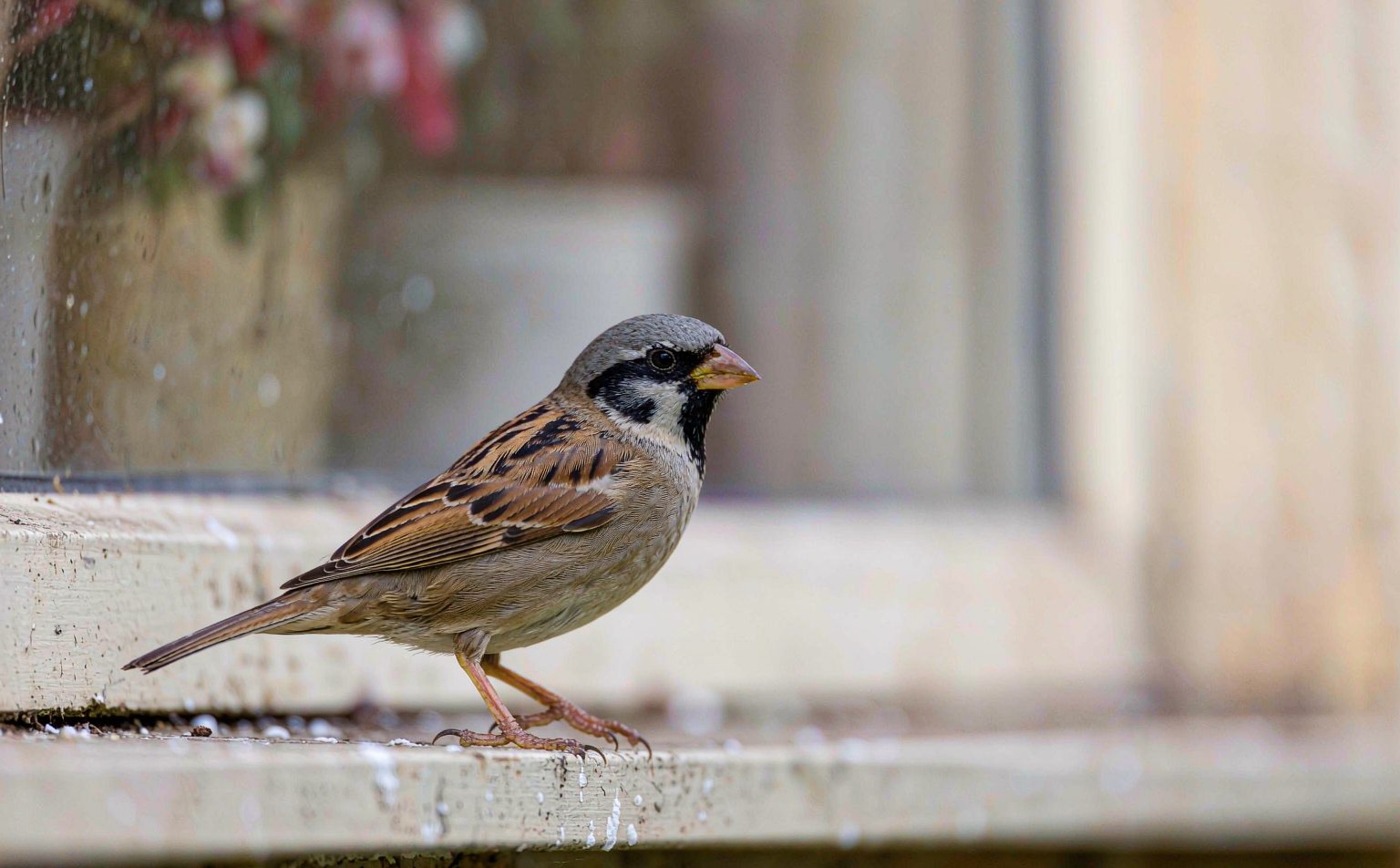
Passer domesticus | House Sparrow
Introduction
The house sparrow, Passer domesticus, is one of the most widespread and familiar birds in the world, having spread from its Eurasian homeland to nearly every inhabited continent alongside people. A small, gregarious passerine of towns, farms, and villages, it has lived in close association with human settlement for thousands of years. Once abundant, it has declined sharply in parts of Europe even as it remains common elsewhere, making it a focal species for urban biodiversity research.
Cheerful, noisy, and adaptable, the house sparrow is a quintessential bird of courtyards and marketplaces, yet its recent losses in some cities have prompted wide concern about the state of urban nature.
Taxonomy
Passer domesticus was described by Carl Linnaeus in 1758 and is the type species of the genus Passer. It belongs to the family Passeridae, distinct from the true finches, though long grouped with them in popular accounts. Its close ecological counterpart in gardens is the Common Blackbird, which shares its tolerance of human presence.
Physical Characteristics
The house sparrow is a compact bird of 14–16 cm with a wingspan of 21–26 cm and a weight of 24–40 g. Males are distinguished by a grey crown, chestnut nape, black bib, and streaked brown back, while females and juveniles are plainer buff-brown with a pale eyebrow stripe and no black bib. The stout, conical bill is adapted for cracking seeds.
The legs are pale brown and the tail is short. In flight the bird shows a broad, rounded wing and a characteristic whirring, direct motion. The sexes are easy to separate at a glance, the male’s black throat patch being the most obvious marker.
Habitat
House sparrows are essentially commensal with humans, breeding and feeding in and around buildings, farms, railway yards, and city centres. They require cavities for nesting — under roof tiles, in wall crevices, behind signage, or in shrubbery — and open ground nearby for foraging. They are absent from dense forest, desert interiors, and treeless tundra.
In winter they form flocks that roam farmland and field margins, returning to roost communally in dense hedges or ivy. The species’ fortunes are closely tied to the availability of both nest sites and insect food for raising young.
Diet
The house sparrow is an omnivorous generalist. Adults eat primarily seeds and grain, supplemented by buds, fruit, and scraps, while nestlings are fed a high proportion of insects, especially caterpillars, aphids, and beetles, which provide essential protein. This reliance on insects for breeding is a key reason why urban declines often coincide with reduced insect abundance.
Foraging is mostly on the ground in flocks, hopping and scratching for fallen seed. Sparrows readily exploit bird feeders and spilled grain but depend heavily on natural invertebrate prey during the breeding season.
Reproduction
Breeding is prolonged and can produce multiple broods from spring through late summer. The nest is a bulky, domed structure of dry grass, feathers, and paper, placed in a cavity or dense shrub. The female lays three to five pale grey-green eggs speckled with brown, incubating them for about twelve days while the male helps feed the chicks.
Chicks fledge after roughly two weeks but remain fed by the parents for some days afterward. Pairs may reuse and enlarge the same nest across successive broods, and colonies can be densely packed where nest sites are concentrated.
Conservation
Globally the house sparrow is listed as Least Concern owing to its enormous range, but it has undergone steep, well-documented declines in the United Kingdom, the Netherlands, and parts of Mediterranean and Asian cities. Causes include loss of nesting sites to building renovation, reduced insect prey from pesticide use, and changes in urban green space management.
Conservation measures focus on retaining nesting opportunities in buildings, planting native shrubs that support insects, and reducing chemical inputs in parks and gardens. The house sparrow’s visibility makes it an effective flagship for the wider “insect decline” narrative in urban areas.
Fun Facts
- The house sparrow has followed humans to almost every continent, intentionally or by stowaway.
- Only the male wears the black bib, and its size reflects his social status.
- Chicks are fed largely on insects, not seeds, during their first days.
- Sparrows take dust baths to keep their feathers free of parasites.
- They can raise several broods in a single summer where conditions are good.