 By Iris
Corvus frugilegus | Rook
Species Profile · Corvidae
Rook
A colonial crow with a bare grey face patch that nests in noisy rookeries and feeds almost entirely on the ground.
IUCN: Least Concern
Range
Length
Weight
Nest building
Rookery
The crow that nests in crowds
The rook
The rook is a large black member of the crow family. Its habits set it apart from its relatives. It nests in colonies. It feeds almost entirely on the ground. It often flies several kilometres between the two each day.
A rookery of a hundred untidy nests is a familiar sight in late winter. Rooks are among the cleverest of all birds. They store food in scattered caches. They learn from their neighbours. They solve problems that defeat most birds of their size.
They have lived beside farming for thousands of years. Farmers have shot and poisoned them as pests. Yet rooks also eat huge numbers of soil pests. So the argument over whether they help or harm has made them very well studied.
Family tree
A cousin of the carrion crow
The rook is in the family Corvidae. That family holds the crows, ravens, jays, magpies and nutcrackers. It sits in the genus Corvus with the crows and ravens. Its closest European relative is the carrion crow. The two look very alike in shape and size. But the crow keeps a fully feathered black face all its life.
Hybrids between the two do occur. Even so, rookeries and crow territories rarely overlap in the same way. A Swedish naturalist described the species in 1758. Its scientific name refers to its habit of gathering food from the ground. It is neither the largest nor the smallest member of its genus. It sits near the middle of a group that is very flexible in behaviour and diet.
One bird of the same great order shares the same farmland. That is the House Sparrow. It is much smaller and belongs to a different family. The two feed on the same stubble in winter. The rook probes deep into the soil. The sparrow picks grain off the surface.
Face patch, bill and sheen
How to identify one
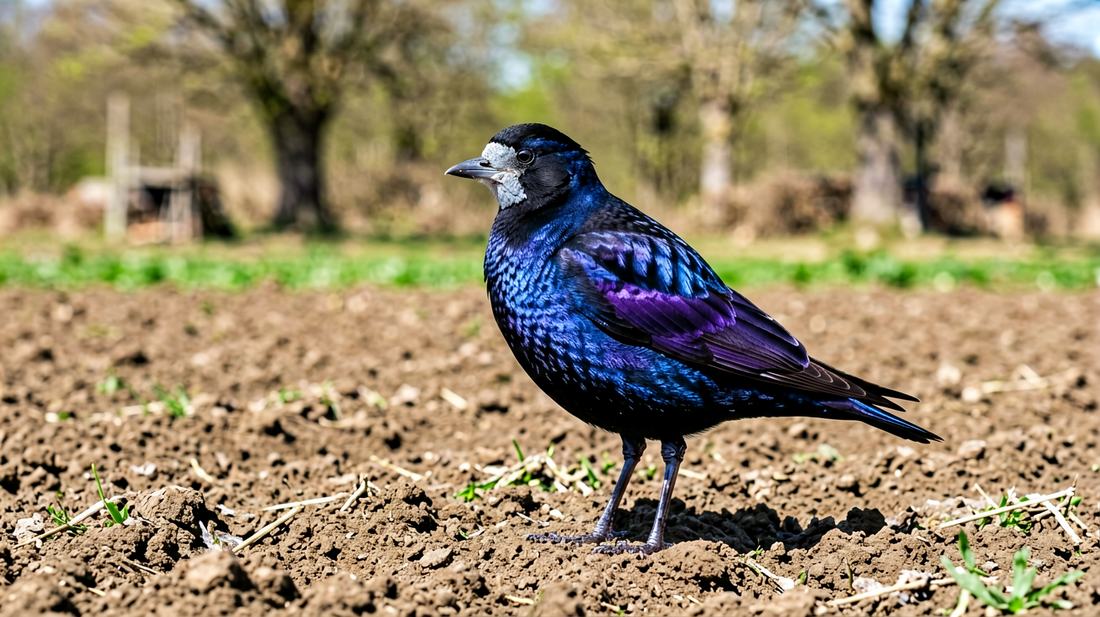
An adult rook is 44 to 46 cm long. Its wingspan is 81 to 99 cm. It weighs about 280 to 500 grams. Males are usually larger than females. It is a heavy bird with a thick neck and a steep forehead. Its bill is long, pointed and slightly curved. Its plumage is all black. In good light the feathers show blue, purple and green. The colour comes from the structure of the feathers, not from pigment.
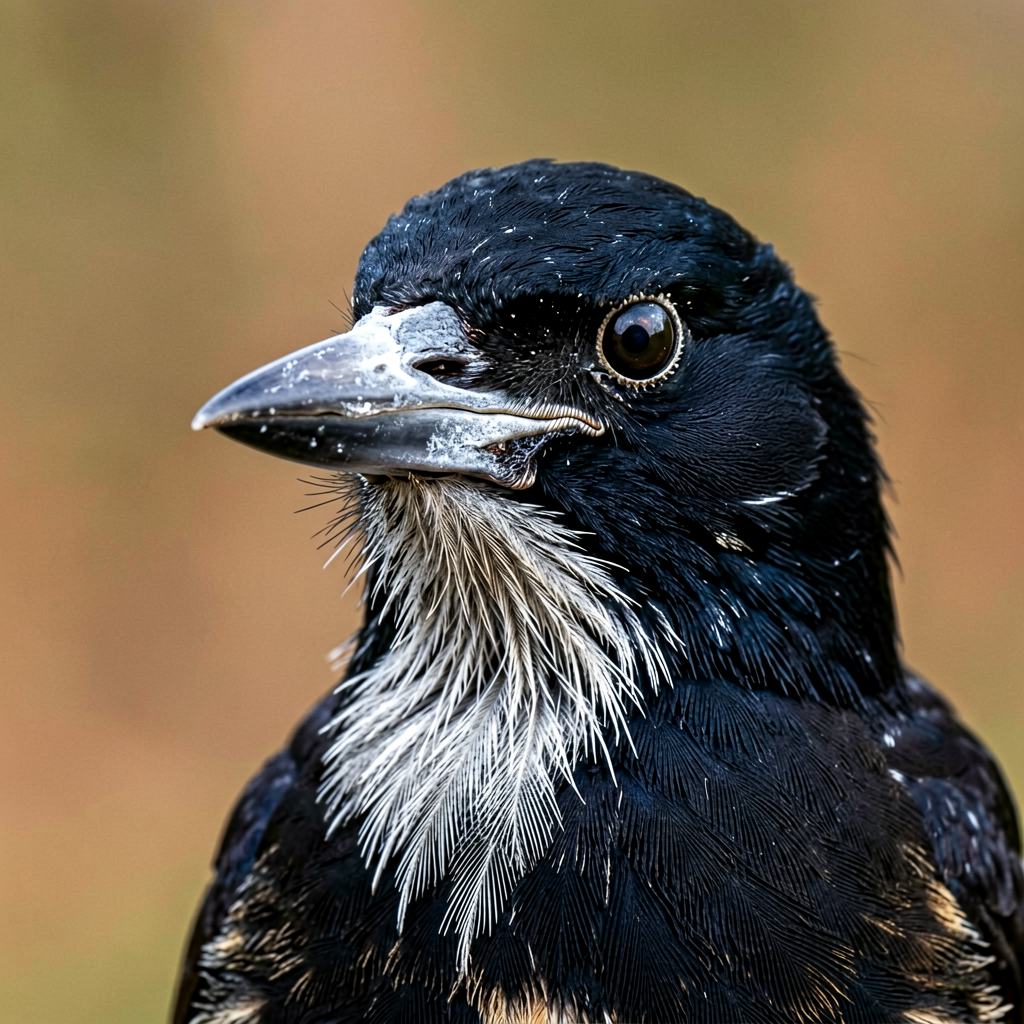
Its wings are broad. Its tail is long and slightly rounded. So the bird looks front-heavy in flight. The easiest way to identify an adult is the face. A patch of bare greyish-white skin covers it. The patch runs from the base of the bill to behind and below the eye. It appears after the first moult. Young rooks in their first summer still have a black feathered face. That is why they are often mistaken for crows.
Its bill is longer and thinner than a crow’s. The bird uses it as a probe, a chisel and a lever. It pushes the closed bill into the soil and opens it to break the ground. Its legs are black and strong. It walks with a rolling, waddling gait. Its flight is steady and rather slow. The wingbeats look deliberate and slightly loose.
1
2
3
Farmland with tall trees
Where it lives
The rook lives in open country with scattered trees. It is found across Europe. It is absent from the far north and the highest mountains. Its range runs east across Asia to the Pacific. It needs two things above all. It needs tall trees for its colonial nests. It needs open ground for feeding. Farmland with hedgerows and stands of mature trees supplies both. Parkland, village edges and the fringes of towns do too.
It is absent from the treeless tundra and from dense forest. Rookeries sit in the tops of tall trees. The birds often reuse the same clump for years. A rookery may hold a dozen nests or several hundred. Each spring the birds add sticks and soil to the old nests. So the structures grow into large dark masses visible from far off. Rooks feed in arable fields, pasture and meadows. They also use parks, playing fields, verges and gardens. They prefer short grass or bare soil.
That lets the bill reach the ground. Ploughed land is used heavily in spring. Stubble and pasture matter in autumn and winter. Rooks are gregarious all year. Outside the breeding season they gather at large communal roosts. These may draw birds from 20 km away. Feeding flocks often mix with jackdaws and other crows.
What it eats
Probing the soil
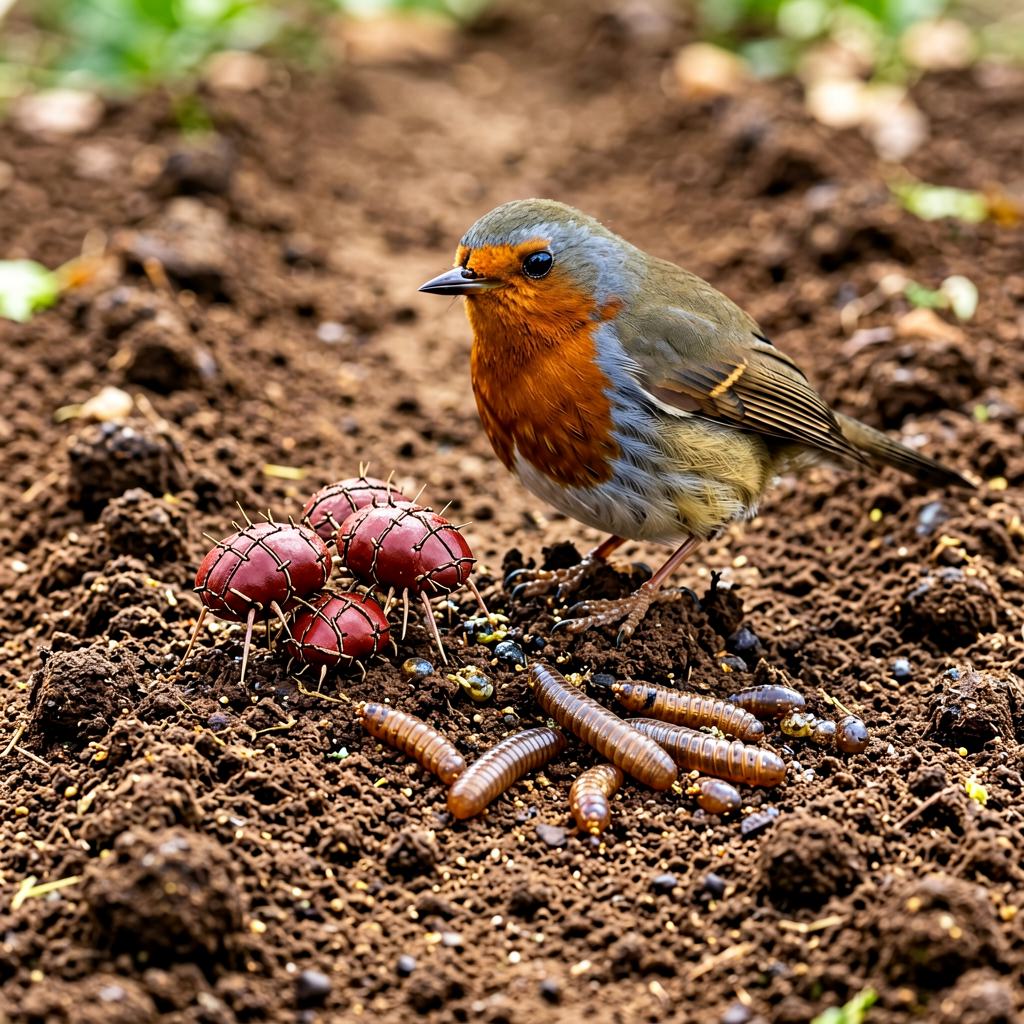
The rook feeds on the ground and eats almost anything. It is often called a pest of crops. But for much of the year its diet is mostly soil animals. Earthworms lead the list. So do the larvae of beetles and crane flies. The bird pushes its closed bill into the soil. Then it opens the bill and levers. That breaks the ground and exposes insects, worms and larvae.
The method works even in hard soil. It also reaches prey that is out of sight. Leatherjackets and wireworms are taken in large numbers. Chafer grubs, beetles, ants, slugs and snails are eaten too. The bird also takes grain and seeds, acorns and nuts. Berries, fruit and potatoes are on the menu as well. It eats carrion and the eggs and young of other birds. The balance changes with the season.
Soil animals dominate in spring and summer. That is when the birds are feeding young. Seeds and crops matter more in autumn and winter. Rooks store food in the ground or in grass. They return to collect it later. Experiments show they remember a cache for weeks. If another bird watched them hide it, they move it somewhere else.
The earliest nests of the year
Rookeries and young
Rooks nest in colonies. They are among the earliest breeding birds of the European year. Nest building starts in February and March. In mild years it starts in late January. The birds pair for life. Each spring the pair reinforces the bond at the nest. The male bows and spreads his tail and wings while calling. Both birds repair the previous year’s nest. They use sticks, twigs, roots and soil.
Over years it becomes a deep, solid bowl. The female lays 3 to 5 eggs in March or early April. She does most of the incubation. It takes 16 to 18 days. The male brings her food. The chicks hatch blind and naked. Both parents brood and feed them on insects and worms. They grow fast and leave the nest at about 29 to 30 days. The adults then feed them for a few more weeks.
The young birds join flocks of non-breeding rooks in summer. They usually do not breed until they are 2 or 3 years old. Established birds return to the same rookery for years. So a rookery is made up of the same individuals season after season. The whole colony nests at the same time and place. That makes it very vulnerable to bad weather in early spring. Late snow or a gale can destroy most nests in one go.
Persecution, then partial recovery
A mixed picture
The rook is Least Concern worldwide. The European population is large and numbers several million pairs. But the trend across the continent is mixed. Some regions have more rooks than before. Others have far fewer, especially parts of Britain, France and the Low Countries. Historically the bird was persecuted on a large scale. People believed it damaged crops and game birds.
Rook shoots killed young birds in the nest. Bounties were paid for bills or eggs in Britain into the 1900s. Today the main pressures come from farming. Hedgerows and mature trees are removed, so nesting sites go. Autumn sowing replaces spring sowing, so bare disturbed ground disappears. The birds need that ground for probing. The loss of pasture and the use of pesticides cut the supply of soil animals.
Ploughing in stubble removes the winter grain. Near towns, felling trees in parks and avenues can break up old colonies. The species is protected in most European countries. Some places still issue licences to control it for crop damage. Studies of its diet suggest the damage is often smaller than the pests it removes. That has changed how the bird is seen. It is now used as an indicator of the health of farmland bird communities.
Quick hits
Five things to remember
- The bare greyish-white patch on an adult rook’s face is the easiest way to tell it from a carrion crow, which keeps a feathered black face all its life.
- Rooks are among the earliest nesting birds in Europe, with building often starting in February.
- They push a closed bill into the soil and open it to break the ground and expose larvae, a technique most birds cannot copy.
- Rooks remember the position of food caches for weeks and will re-hide food if they were watched while storing it.
- One rookery is often used by the same birds for decades, with the old nests rebuilt and enlarged every spring.