 By Iris
Tupaia glis | Common Treeshrew
Species Profile · Tupaiidae
Common Treeshrew
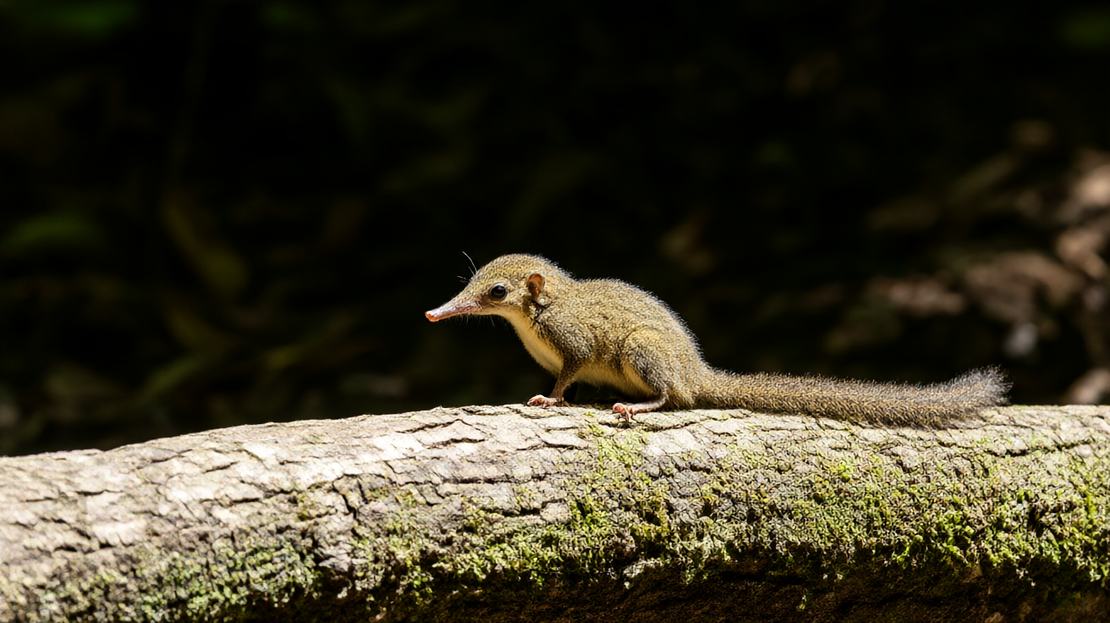
A small brown animal runs along a fallen log with its long tail held flat.
Least Concern
Length
Tail
Weight
Litter
Teats
Rating
The Common Treeshrew
Neither shrew nor squirrel
A small brown animal runs along a fallen log with its tail held flat. The snout runs long and pointed, and it never stops testing the air. Taxonomists once called this animal a shrew, and the name stuck.
It is neither a shrew nor a squirrel, though it looks like both. Because the treeshrew moves in quick dashes, an observer sees a blur and then nothing. A pale stripe marks each shoulder, and it catches the light.
Family tree
Tupaiidae, close to the primates
Its proper name is Tupaia glis, one of about twenty treeshrews. The group sits close to primates, and genetic work places it on the same branch. A Grey Squirrel fills the same niche in a northern forest, and both animals run along branches in daylight. Because the treeshrew kept a simple brain, early workers took it for a primitive primate.
Later study moved the family into a group of its own, beside the primates rather than inside them. Because the animal kept a small brain and sharp claws, early workers read it as a living model of the first primates. Several island forms were once lumped together, and the split stays open.
Snout, tail and claws
How to tell one
Adults run 13 to 19 cm from nose to rump. Its tail adds 16 to 20 cm. Bushy hair runs the whole length, and it never thins. Weight falls between 100 and 200 g.
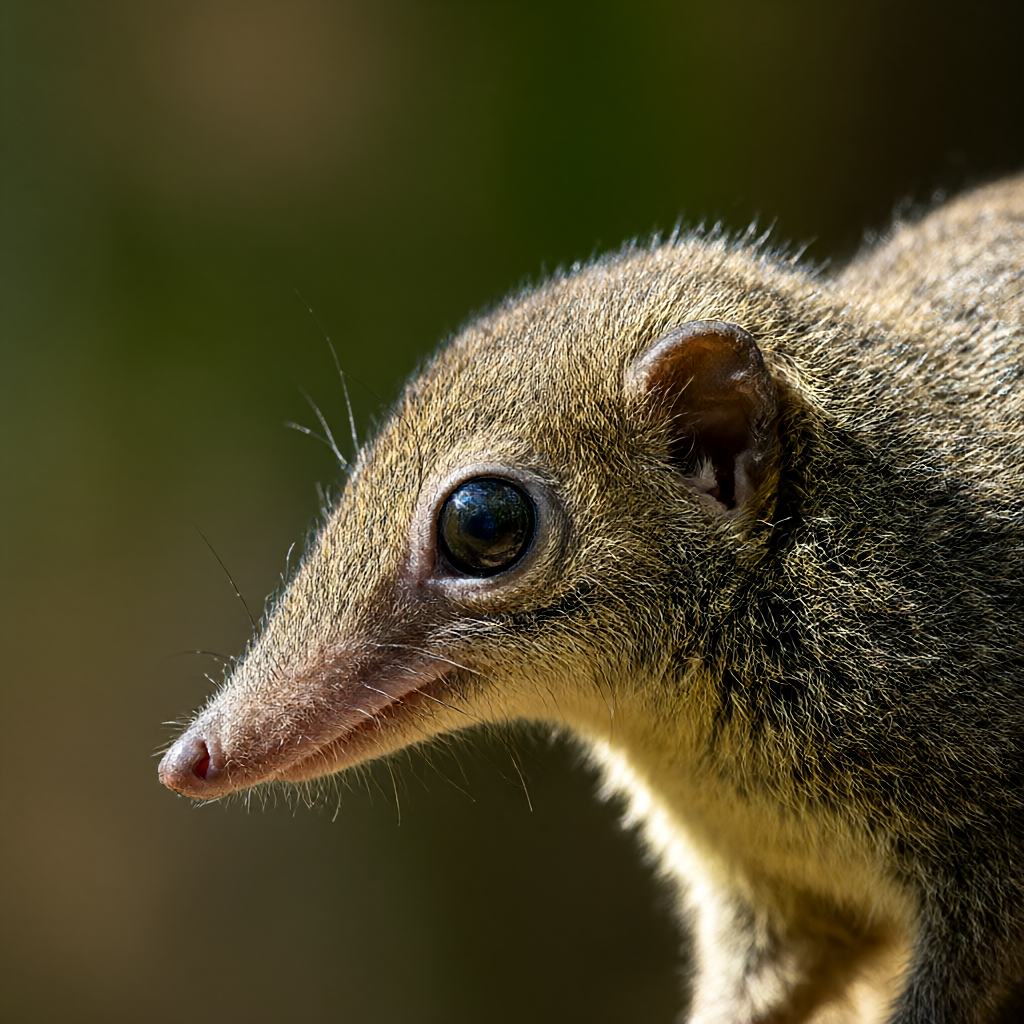
Fur runs olive brown above, and the belly stays buff. Its snout ends in a mobile tip. Whiskers spread wide from it, and they test the air. Eyes sit large and set forward, which gives a wide field of view.
Because the claws stay sharp, the animal climbs bark without slipping. Females carry two pairs of teats, which is few for a small mammal.
1
2
3
Forest understory
Where it lives
Lowland dipterocarp forest holds the species across the Malay Peninsula. Sumatra, Java and Borneo carry related forms, and the lines between them remain unclear. Understory matters more than canopy here.
It feeds close to the ground, and it rarely climbs. Because it needs cover, cleared ground stops it, and roads split populations. Fallen logs matter, since the treeshrew runs along them rather than over open soil.
A treeshrew that crosses a clearing does so in one dash, and it reaches cover before a hawk can turn. A Millet’s Shrew hunts insects in a European hedgerow, and both animals take insect prey from litter.
Insects, then fruit
What it eats
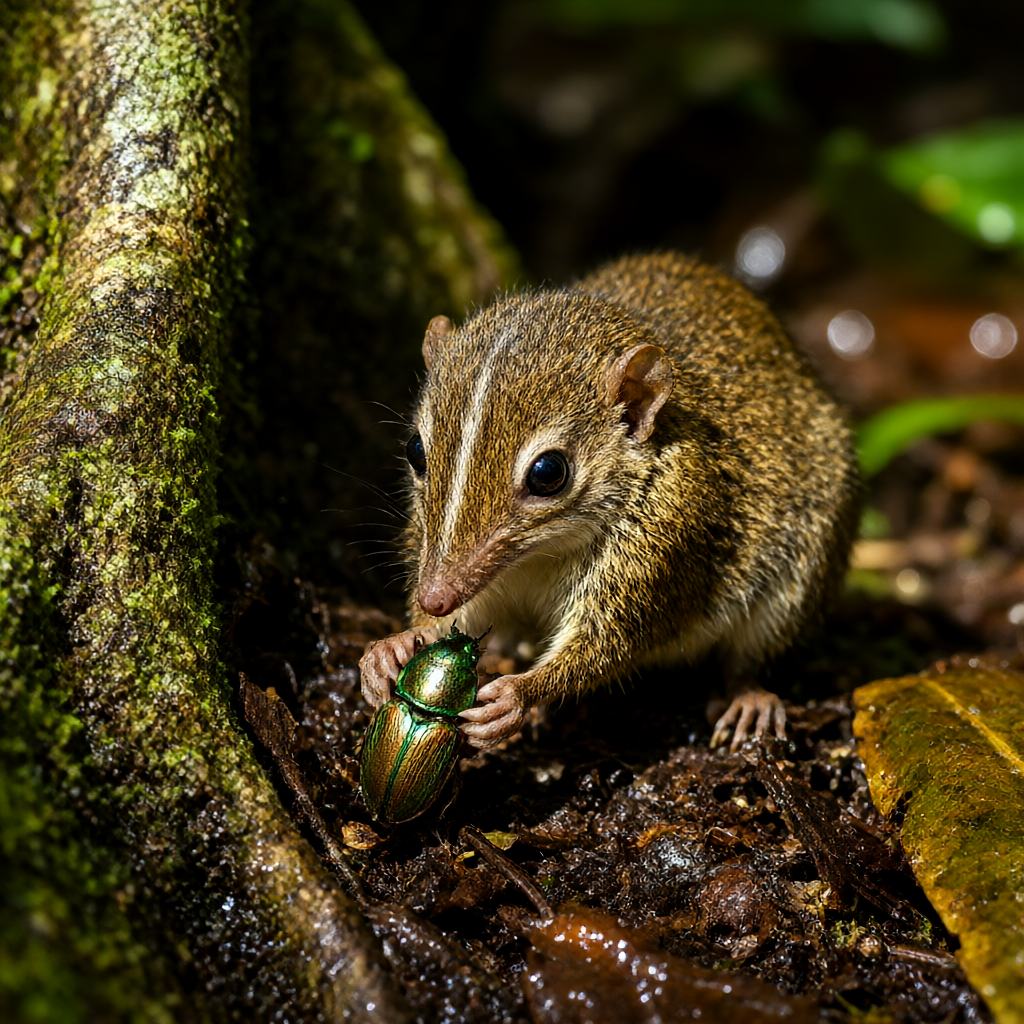
Insects and fruit make up most of the food. Beetles, ants and spiders get taken from bark and from leaf litter. Nectar gets taken as well. It visits flowers that open at ground level, and it drinks there.
Because the treeshrew feeds in short bursts, it moves between trees without a pause. A fruiting fig draws several animals, and they feed side by side without fighting. Water comes from fruit, so the species rarely drinks.
Fast and short
The breeding cycle
A male and a female hold a territory together, and both defend it. Females bear one to three young after about seven weeks. The newborn stays in a nest of leaves, and the mother visits to feed it. Because the young grow fast, they leave the nest within a month.
Two or three litters follow in a year, which suits a short life. Young animals disperse within weeks of leaving the nest, and because the forest carries many, few find a vacant patch. Adults rarely pass three years in the wild.
Logging hurts it
Conservation
The Red List calls the species Least Concern. Lowland forest is being cleared across the range, and that removes cover. Because the treeshrew lives in the understory, selective logging hits it harder than it hits canopy animals.
Nothing suggests a rapid fall, though the trend runs downward. Protected forest holds stable groups. Roads and plantations split the remaining habitat into small blocks.
Side by side
How It Compares
| Trait | Common Treeshrew | Grey Squirrel |
|---|---|---|
| Family | Tupaiidae | Sciuridae |
| Length | 13-19 cm | 23-30 cm |
| Weight | 100-200 g | 400-600 g |
| Diet | insects, then fruit | nuts and seeds |
| Litter | 1-3 young | 3-5 young |
| Rating | Least Concern | Least Concern |
Common misreadings
What People Get Wrong
- Not a shrew. Early naturalists made a mistake. Early workers put the animal with the insect eaters, and later work placed the family beside the primates, which makes the English name wrong twice over.
- Not a squirrel. The tail carries no brush for balance. A squirrel uses its tail as a rudder, while a treeshrew keeps its own flat along the log and relies on sharp claws instead.
- Short lived. Three years is unusual in the wild. Breeding starts within months of leaving the nest, and because the forest holds many, few of the young ever find a patch of their own.
Going further
Sources and Further Reading
Quick hits
Five things to remember
- It is not a shrew.
- It sits close to primates.
- It drinks nectar.
- Its tail stays bushy.
- It runs along fallen logs.