 By Iris
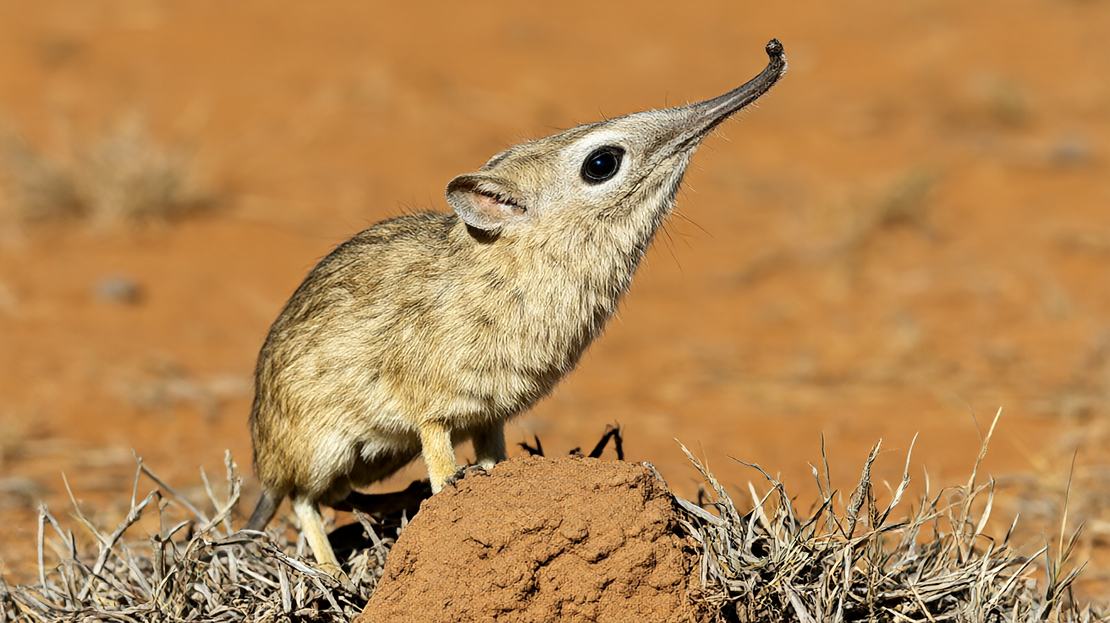
Macroscelides proboscideus | Round-eared Sengi
Species Profile · Macroscelididae
Round-eared Sengi
A tiny animal with a trunk for a nose runs across open ground and then stops dead.
Least Concern
Length
Tail
Weight
Litter
Teats
Rating
The Round-eared Sengi
Half mouse, half antelope
A small animal runs on four thin legs, and it looks part mouse and part antelope. Its nose ends in a long trunk that never stops moving. Round ears gave the species its common name. A sengi crosses open ground in short bursts, then freezes.
Paths run through the grass where the animal passes each day. Because the sengi keeps those paths clear, a walker can read its routes. Nothing in that shape prepares a visitor for the speed, since the animal clears five metres in a second.
Family tree
Macroscelididae, an old African line
Its proper name is Macroscelides proboscideus, one of about twenty sengis. Early workers grouped sengis with shrews, and later placed them with hedgehogs. Both guesses were wrong.
Genetic work put the group in Afrotheria, alongside elephants and golden moles, which no anatomist had predicted. The round-eared sengi sits alone in its genus, though two subspecies are sometimes named. Because the family never left Africa, every sengi alive today lives on that continent.
Trunk, ears and legs
How to tell one
Adults run 10 to 12 cm from nose to rump. Its tail adds another 10 to 14 cm. Weight falls between 40 and 50 g.
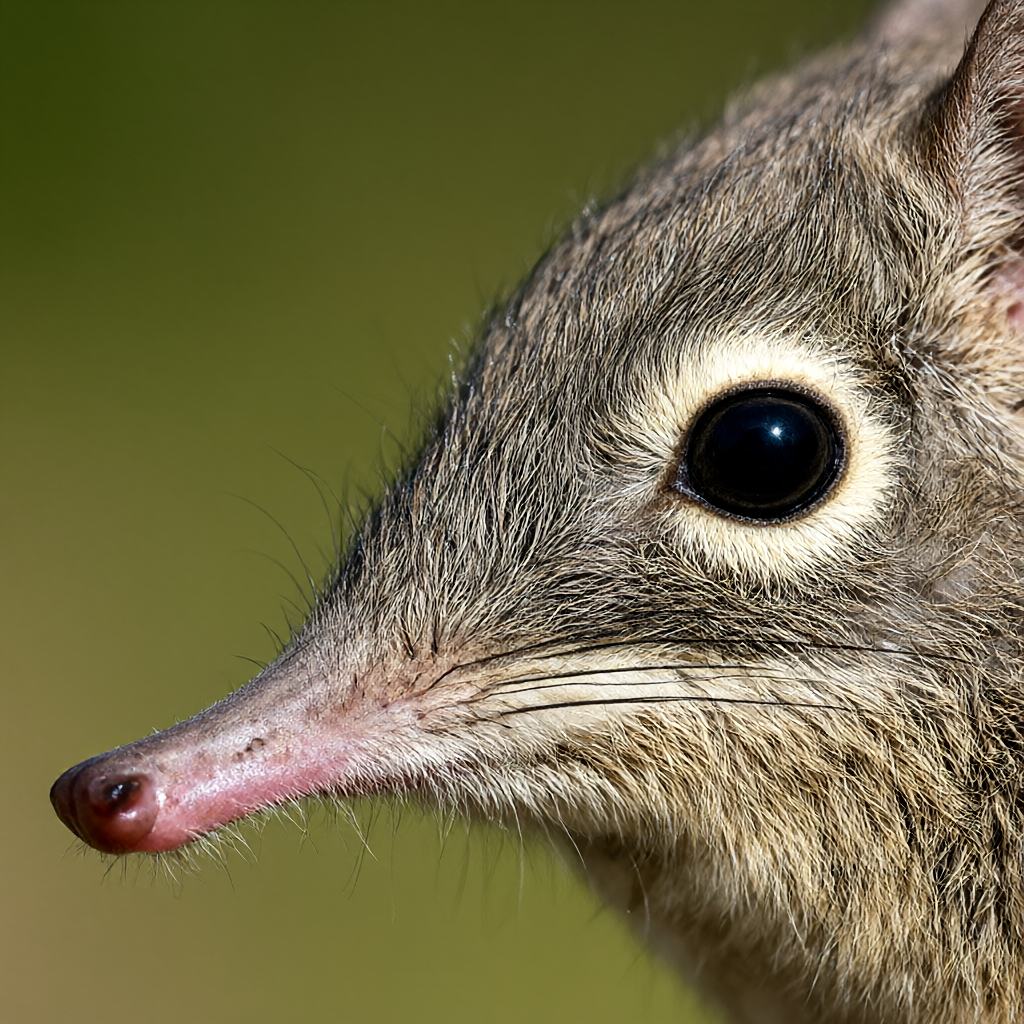
Fur runs soft and buff above, and it turns pale under the belly. Its snout bends and probes without pause, since the tip carries both touch and smell. Eyes sit large and dark, and they watch for a shadow from above.
Hind legs run longer than the front, and the feet stay narrow. Those legs work like small springs, and because the foot bones lock, the animal can run without tiring. Females carry three teats, which is few for a small mammal.
1
2
3
Dry open ground
Where it lives
Dry savanna and semi desert hold the species. Namibia, Botswana and northern South Africa make up most of the range. Open ground with scattered bush suits it best, since cover stays low and thin. It digs no burrow of its own, and it shelters in a hollow termite mound instead.
Gravel plains and red sand both carry trails. Livestock grazing helps the sengi, because short grass leaves its paths open. A Pen-tailed Treeshrew lives in Asian forest, and both animals hunt insects on the ground with a long snout.
Ants and termites
What it eats
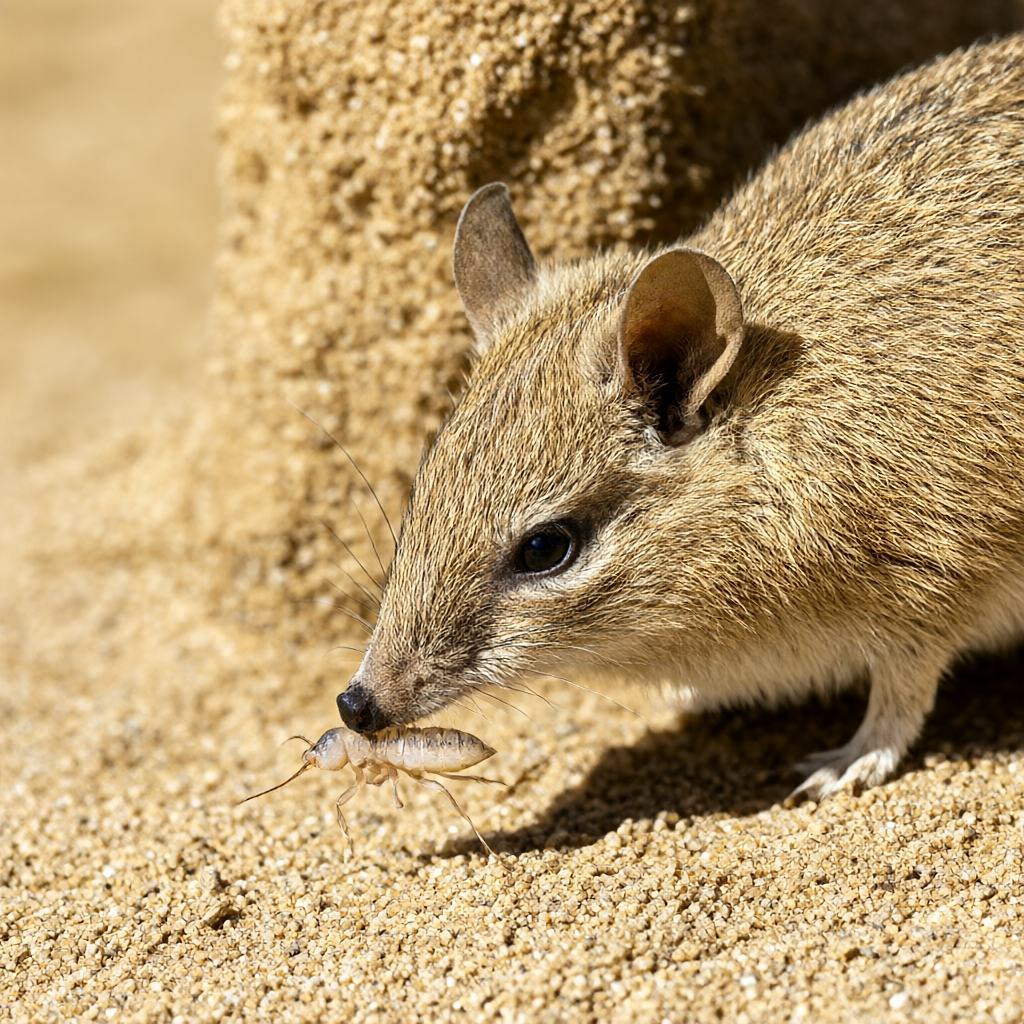
Ants make up most of the food. Harvester termites come second, and other insects fill the rest. The animal picks prey one item at a time, since it cannot chew a mass of small bodies. A sengi taps the ground with its snout, then flicks a termite into the mouth.
Because the food holds little water, the animal gets moisture from the bodies it eats. Feeding runs in short bouts through the day. A Greater White-toothed Shrew eats insects in the same way, though it hunts by night rather than by day.
One or two, twice a year
The breeding cycle
Pairs stay together through the breeding season. A female bears one or two young after about two months. The newborn arrives covered in fur, and its eyes open within hours.
Because the young can run soon after birth, the mother moves them instead of hiding them. Two or three litters may follow in a good year. Fathers stay near the den, though they take little part in rearing.
No great threat
Conservation
The Red List calls the species Least Concern. No survey finds a steep fall across the range. Because the animal tolerates dry ground, farmland does not remove it.
Cats and snakes take adults, and raptors take young animals from open runs. Roads kill a number at night, though the species crosses in daylight. Nothing suggests a decline large enough to worry about.
Side by side
How It Compares
| Trait | Round-eared Sengi | Common Shrew |
|---|---|---|
| Family | Macroscelididae | Soricidae |
| Length | 10-12 cm | 6-8 cm |
| Weight | 40-50 g | 8-15 g |
| Snout | long and trunk like | pointed and short |
| Speed | five metres a second | short dashes only |
| Rating | Least Concern | Least Concern |
Common misreadings
What People Get Wrong
- Not a shrew. The trunk settles it, and the two are not close. Sengis sit in an old African line of their own, while true shrews belong with the moles and the hedgehogs.
- Not a rodent. The old name said nothing about kinship. Early workers put the animal with the shrews, and later ones moved it beside the hedgehogs before genetics settled the question.
- Fast, but not long. Five metres a second comes in a burst. The animal sprints across open ground and then stops dead, and because the legs lock it can repeat that run all day.
Going further
Sources and Further Reading
Quick hits
Five things to remember
- It runs at 25 km an hour.
- Its snout moves without pause.
- It shares its line with elephants.
- It clears paths through grass.
- Young can run within hours.