 By Iris

Ptilocercus lowii | Pen-tailed Treeshrew
Species Profile · Ptilocercidae
Pen-tailed Treeshrew
A night treeshrew that drinks fermented nectar and never seems drunk.
Least Concern
Body
Tail
Weight
Habit
Range
Rating
Fifty grams of night work
A pen for a tail
Bare scales cover a tail that ends in a white tip. That tail gives the animal its name, because a bare white tip looks like the nib of a quill pen. Body length runs 13 to 14 cm, and the tail adds 16 to 19 cm. Weight sits near 50 grams.
Pen-tailed treeshrews live in lowland forest on the Sunda shelf. Unlike every other treeshrew, this one works at night and sleeps through the day. Daylight hours pass in a nest of leaves built inside a hollow trunk. Darkness brings the animal down to the palm flowers.
Such a visit looks ordinary, yet the nectar there carries alcohol from wild yeast. Few mammals take so much alcohol with so little effect, and the reason lies in the liver.
Family tree
Ptilocercidae, a family of one
Ptilocercus lowii stands alone in the family Ptilocercidae. Gray named the species in 1848 from a Bornean skin. Other treeshrews sit in Tupaiidae, a separate family. Two families split long ago, and this one keeps older features.
Teeth, skull and limbs all look less specialised than those of its cousins. Europe holds the Millet’s Shrew, while this animal stays in Asia. Both are small and fast, and both burn fuel at a high rate. Their eyes differ, though, since a shrew hunts by smell and a treeshrew hunts by sight.
Genetic work places the family at the base of the treeshrew line. No subspecies is named today.
An old branch of the treeshrews
How to tell one
Body length runs 13 to 14 cm. Tail length reaches 19 cm, and the upper side carries no fur. Skin on the tail is scaled, and the tip is white. Fur is soft grey brown above and pale below.
Snouts are long and pointed. Eyes sit forward and look large for the head. Ears are small and rounded. Claws are sharp and curved, which suits climbing.
Females carry two teats on the belly. Brains stay small for the group, though the senses are sharp.

1
2
3
Small brain, sharp senses
Where it lives
Lowland dipterocarp forest holds the species. Records come from the Malay Peninsula, Sumatra and Borneo. Small islands near the coast also carry animals. Forest must stay tall, since the animal nests high and feeds in the crown where the palms flower.
Bertam palm stands matter, because the flowers supply nectar. Swamp forest and hill slopes both suit the animal. Logging removes the tall trees and the palms together, and the animal then loses both its nest and its food. Plantations rarely hold the species for long, because the palms there carry no nectar.
One territory may cover less than a hectare, though the animal covers it every night. Night work keeps the animal away from monkeys and birds, which take the same food by day.
Lowland forest and bertam palm
What it eats
Nectar from bertam palm flowers forms the main food. Insects and small fruit fill out the rest, although nectar still makes up most of the diet. Nectar is licked for hours each night. Fermentation turns the nectar into a weak alcohol, which the palm keeps fresh each night.
One animal takes the equivalent of two glasses of wine in a night. No sign of drunkenness appears. Studies suggest the animal clears alcohol quickly, so the level in the blood stays low. Beetles and ants add protein, and spiders are taken whenever the animal finds one.
Hunting happens along a regular route. That route is checked every night, and the animal knows every flower on it.
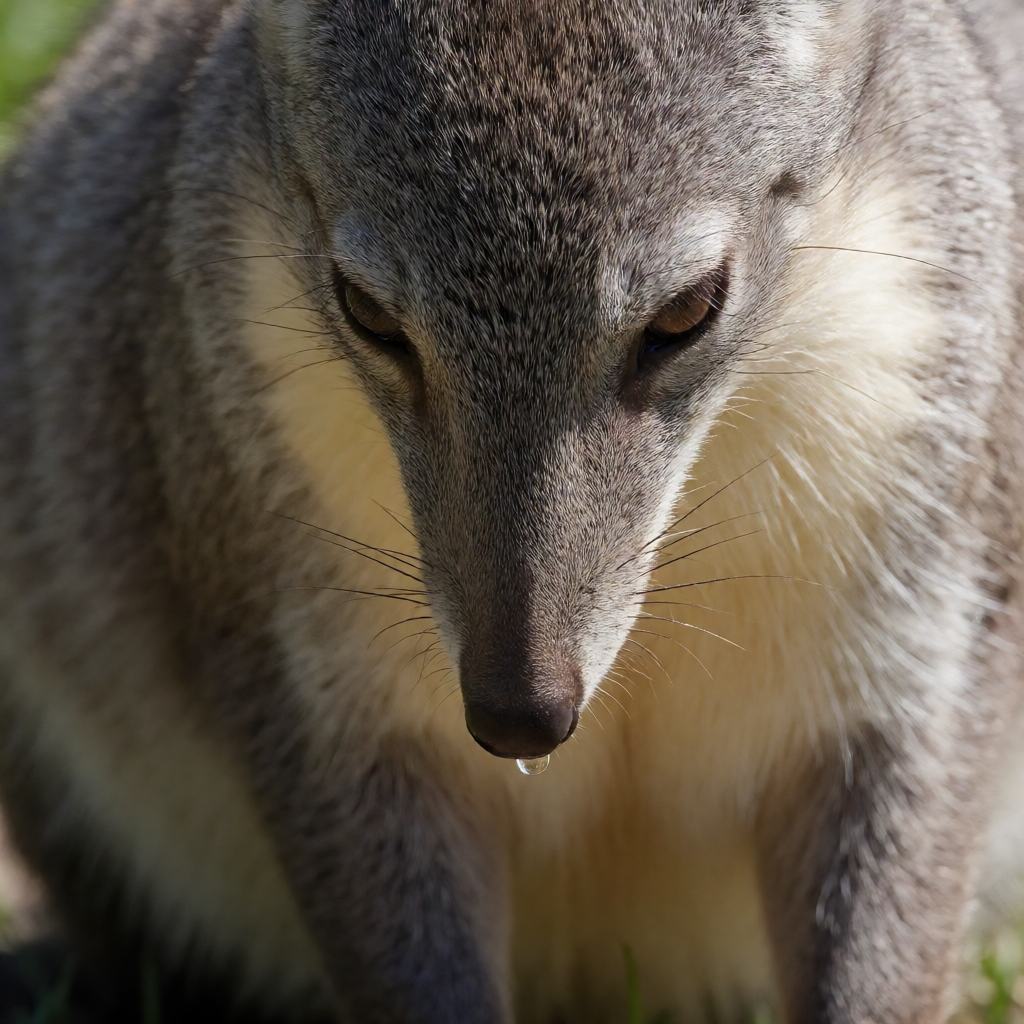
Nectar with alcohol in it
The breeding cycle
Breeding happens through the year. Females build a nest of leaves in a tree hollow. One or two young are born after about 50 days. Young stay in the nest for weeks.
Mothers visit to feed them. Weaning comes at around two months. Young then follow the mother along her route. Males take no part in raising the young, although they stay in the territory.
Females may breed twice a year. Short lives and fast breeding keep the numbers steady.
Least Concern, and forest bound
Conservation
IUCN lists the species as Least Concern. A wide range and a large count keep the rating low. Forest loss is the main threat across the range. Oil palm planting removes lowland forest at a fast rate, and the palms that fed the animal go first.
Fire adds damage in dry years, and the peat below burns for months and takes the trees with it. Protected areas hold part of the range in all three countries. This species tolerates logged forest better than many small mammals. Bertam palms survive in some disturbed ground, which helps.
No worldwide count exists, and the number stays a guess, since the animal is hard to trap. Keeping lowland forest whole is the surest path, since the animal cannot cross open ground.
Side by side
How It Compares
| Trait | Pen-tailed Treeshrew | Millet’s Shrew |
|---|---|---|
| Length | 13 to 14 cm body, with a 19 cm tail | 6 to 8 cm body, with a 4 cm tail |
| Weight | about 50 grams | 8 to 12 grams |
| Home | lowland forest from Malaya to Borneo | damp grassland and hedgerow in western Europe |
| Tail | bare and scaled, with a white tip | short and furred, with no white tip |
| Food | fermented palm nectar, plus insects | insects, worms and spiders |
| Habit | night, unlike every other treeshrew | night and day, in short bursts of hunting |
Common misreadings
What People Get Wrong
- Many people assume the alcohol makes the animal drunk, yet tests show no loss of balance.
- Some accounts call the species a squirrel, although it belongs to the treeshrews.
- A common claim says all treeshrews work by day, yet this one is strictly nocturnal.
Going further
Sources and Further Reading
Quick hits
Five things to remember
- Bare scales cover the tail.
- Adults weigh about 50 grams.
- It feeds at night, unlike other treeshrews.
- Bertam nectar carries alcohol.
- Two glasses of wine is a nightly dose.
[…] both carry trails. Livestock grazing helps the sengi, because short grass leaves its paths open. A Pen-tailed Treeshrew lives in Asian forest, and both animals hunt insects on the ground with a long […]