 By st20113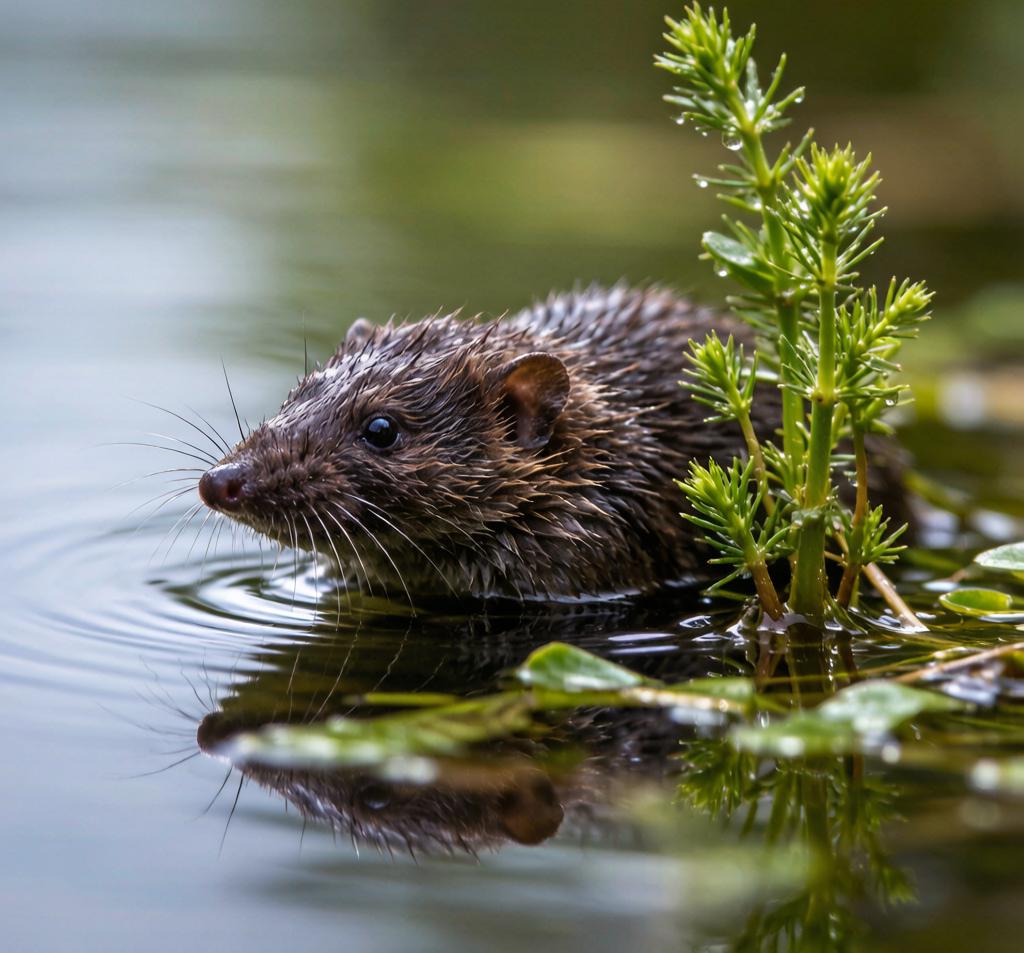
Introduction
The European water shrew is a small, semiaquatic mammal found along rivers, streams, oxbow lakes, and marshes across temperate Europe and into parts of western Asia.
Its dense, velvety fur is water-repellent, and its enlarged hind feet with stiff hair fringes make it an accomplished swimmer capable of hunting aquatic insects, small fish, and crustaceans underwater.
Despite its aquatic abilities, it nests and rests in burrows dug along soft riverbanks, emerging mostly at night to forage across a wide range of freshwater habitats.
With one of the highest metabolic rates of any mammal, it must consume its own body weight in food every day to survive the relentless energy demands of its semiaquatic lifestyle.
Like the red fox and the northern bat, the water shrew is an effective predator that shapes local food webs across riparian and wetland ecosystems.
Taxonomy
The European water shrew belongs to the family Soricidae, the largest family of mammals, which encompasses all shrews and mole-shrews worldwide.
Its scientific name is Sorex aquaticus, reflecting its fully aquatic habits and confirming its position within the Sorex clade, distinct from the common shrew.
The species forms part of a Holarctic radiation of aquatic and semiaquatic shrews that have independently evolved water-repellent fur, enlarged hind feet, and other adaptations for swimming.
No subspecies are currently recognized, indicating a genetically cohesive species across its wide range from the British Isles to eastern Europe.
Physical Characteristics
The species measures 67 to 95 millimetres in head-body length with a tail of 42 to 77 millimetres that provides crucial propulsion for swimming.
Its fur is dense and velvety, dark grey-brown above and lighter grey below, with a water-repellent quality that keeps the animal warm and buoyant underwater.
The hind feet are notably larger and broader than those of terrestrial shrews, fringed with stiff hairs that create an effective paddling surface for aquatic locomotion.
The long, highly sensitive snout bears Eimer’s organs that detect minute vibrations of invertebrate prey underwater, allowing efficient hunting in dark water.
Habitat
The European water shrew occupies the margins of freshwater bodies including slow-moving lowland rivers, streams, oxbow lakes, ponds, marshes, and peat bogs.
These habitats typically have muddy or gravelly substrates that support abundant populations of aquatic insects, crustaceans, and small fish on which the shrew preys.
Riparian corridors with dense vegetation, overhanging roots, and tree cover provide essential shelter from predators such as herons, raptors, and mustelids.
In mountainous regions it follows water courses up to approximately 2,000 metres elevation, and in northern Scandinavia it extends into subarctic birch woodlands where suitable wetlands occur.
Diet
The water shrew is a voracious, generalist predator of small aquatic and terrestrial invertebrates, feeding on caddisfly larvae, mayflies, water beetles, dragonfly larvae, small fish, tadpoles, and freshwater crustaceans.
Foraging occurs both in water and along the water’s edge, with prey captured underwater and consumed on land or in the burrow.
Unusual among mammals, the water shrew is mildly venomous, with salivary glands producing toxins that immobilize invertebrate prey and may allow it to tackle larger prey such as small frogs.
Its high metabolic demand drives near-continuous foraging, with individuals spending up to three-quarters of each 24-hour period actively hunting for prey.
Reproduction
Breeding occurs from early spring through late summer, with females producing one or occasionally two litters of four to eight young after a gestation of approximately 20 days.
Nests are constructed in burrows along riverbanks beneath tree roots or dense vegetation, lined with dry grass, moss, and leaves to provide insulation.
Newborn water shrews are blind and hairless, weighing approximately 1.2 grams, but develop rapidly and are weaned within three to four weeks at a weight approaching that of an adult.
Both parents participate in caring for the litter, which remains in the natal nest until the young are large enough to forage alongside adults in late summer.
Conservation
The European water shrew has a wide range and large global population, and is currently assessed as Least Concern by the IUCN.
Local population declines have been documented in regions with intensive agriculture, river channelization, and wetland drainage.
The species benefits from conservation of riparian corridors, protection of riverbank vegetation, and the maintenance of natural flow regimes in lowland rivers.
Pesticide run-off from adjacent farmland can reduce invertebrate prey availability and accumulate in shrew tissues, representing an ongoing concern for local populations.
Fun Facts
The European water shrew is among the few mammals capable of echolocation using high-frequency clicks, navigating dark submerged burrow systems.
Despite its tiny size it is an aggressive predator tackling invertebrate and even small vertebrate prey much larger than itself, including fish fry and frog tadpoles.
The venom in its saliva, harmless to humans, can immobilize prey quickly and may provide some defence against predators.
Water shrew populations fluctuate dramatically from year to year in response to winter severity and summer flooding, providing an important prey base for raptors, herons, and mustelids.
[…] nilssonii | Northern Bat Sorex aquaticus | European Water Shrew Bleak | Alburnus alburnus Garden Snail | Cornu aspersum Eurasian Lynx | Lynx lynx […]