 By st20113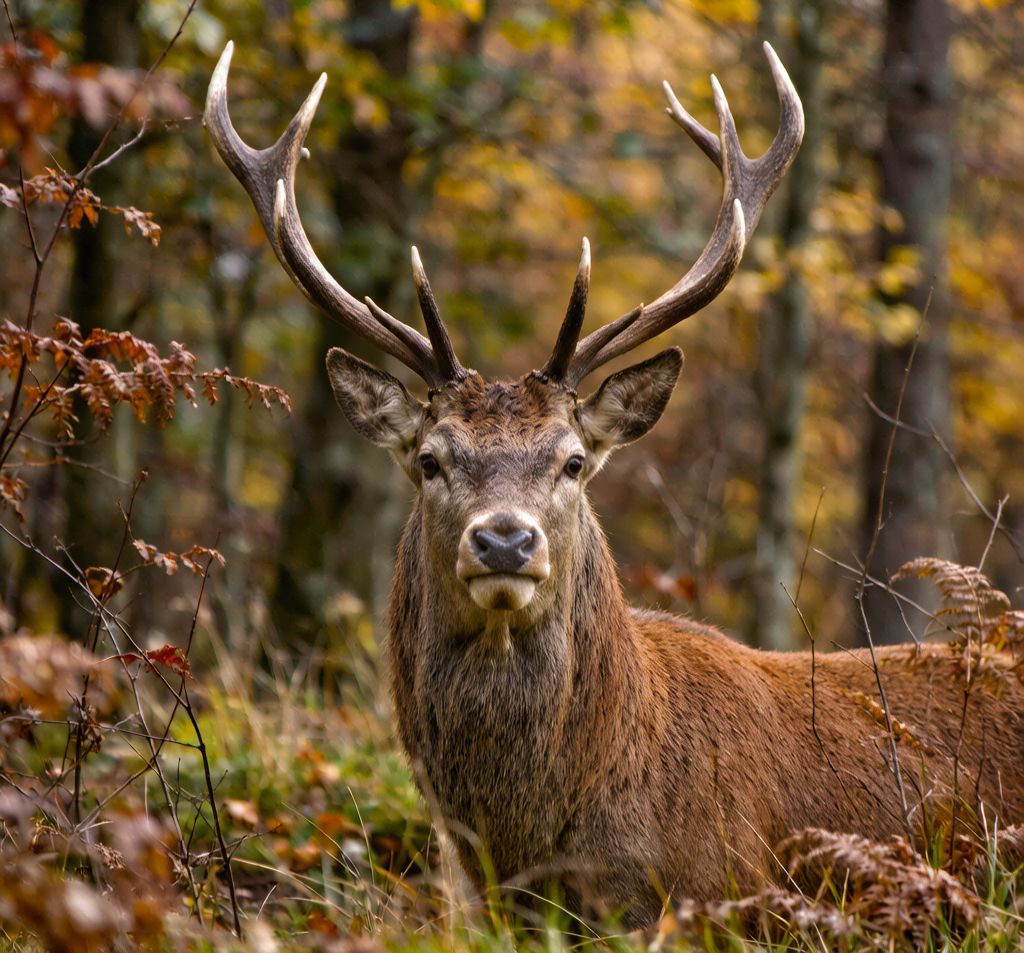
The red deer is the largest native land mammal in the British Isles and the fourth-largest deer species in the world after the moose, elaphus-group wapiti, and sambar deer. It is native across most of Europe, Anatolia, the Caucasus, and parts of western and central Asia. The red deer’s iconic roar during the autumn rut, its magnificent branching antlers, and its cultural significance across European history make it one of the continent’s most iconic wild animals. Herds of red deer on open moorland and forest represent a flagship species for large-scale habitat conservation. The red deer shares its forest and moorland habitat with the red fox, and the aesculapian snake occupies similar woodland environments..
Taxonomy
The red deer (Cervus elaphus) belongs to the family Cervidae, order Artiodactyla. The genus Cervus contains approximately 10 species of medium to large deer found across Eurasia and North America. The taxonomic status of red deer and the North American elk (Cervus canadensis) has been contentious: while historically considered a single species, most modern authorities treat them as separate species. The red deer’s closest relatives include the sika deer (Cervus nippon) and the central Asian maral (Cervus maral). The species was formally described by Carl Linnaeus in 1758.
Physical Characteristics
Adult males, known as stags, stand 107-137 cm at the shoulder and weigh 90-190 kg, while females, known as hinds, stand 97-122 cm and weigh 63-120 kg. The coat is reddish-brown in summer and duller greyish-brown in winter. The most iconic feature is the branching antlers of males, which are grown and shed annually, reaching up to 100 cm in length with a spread of 60-90 cm. Antler size peaks at six to eight years of age and reflects individual health and nutritional status. Males have a characteristic dark mane on the neck during the rut. The tail is short and barely visible.
Habitat
The red deer occupies a wide range of temperate habitats including deciduous and coniferous forests, open moorland, meadows, and mountains. In the British Isles, red deer are found predominantly in Scotland, the Lake District, Exmoor, and parts of Ireland. On the continent, they inhabit the great forests of Germany, Poland, and the Carpathians. Red deer are highly adaptable and populations have expanded in many areas following centuries of decline and subsequent protection and reintroductions. They migrate seasonally between summer grazing grounds at altitude and winter shelter in lower valleys and forest cover.
Diet
Red deer are ruminant herbivores, feeding primarily on grasses, heathers, rushes, and sedges in open habitats, and incorporating browse including tree shoots, leaves, buds, and bark in forested areas. Acorns, beechnuts, chestnuts, and fallen fruit become seasonally important. Red deer are selective feeders, choosing plants and plant parts based on nutritional content and digestibility. During winter when grass quality declines, they rely more heavily on woody browse and evergreen vegetation. In farmland areas, they cause significant conflict by feeding on crops.
Reproduction
The mating season, or rut, occurs from late September to November. Males compete for access to groups of females through roaring contests, parallel walking, and antler fighting, which can result in serious injury or death. After a gestation of approximately 234 days, females give birth to a single calf in May to June, usually in tall vegetation that provides concealment from predators. Calves are weaned at 8-10 months but remain with their mothers until the birth of the next calf. Females reach sexual maturity at 2-3 years, males at 5-6 years. Maximum lifespan is approximately 18-20 years in the wild.
Conservation
The red deer is listed as a species of Least Concern by the IUCN globally, with an estimated European population of approximately 1.5 million individuals and stable or increasing trends in most areas. However, in parts of its range the species has become overabundant due to lack of natural predators, causing overgrazing damage to forests and moorland. In Britain, red deer management is a complex balance between maintaining viable populations for conservation and limiting damage to forestry and agriculture. Large predators such as wolves and lynx historically regulated deer populations across Europe, and their restoration in some areas is being studied for ecological benefits.
Fun Facts
The red deer’s roar can be heard at up to 3 km away and is one of the most iconic sounds of autumn in Europe. In Celtic mythology, the red deer was associated with the otherworld, and the god Cernunnos was depicted wearing antlers. Red deer antlers grow faster than any other mammal bone, sometimes reaching 2.5 cm per day during peak growth in summer. The species is one of the oldest game animals hunted by humans, and cave paintings of red deer appear in prehistoric European cave art dating back more than 30,000 years.
[…] Its order is Artiodactyla, the even-toed hoofed mammals. Its closest familiar relative here is the Red Deer of Europe and Asia. That deer shares the same antlered, herd-living way of life. The white-tailed […]