 By st20113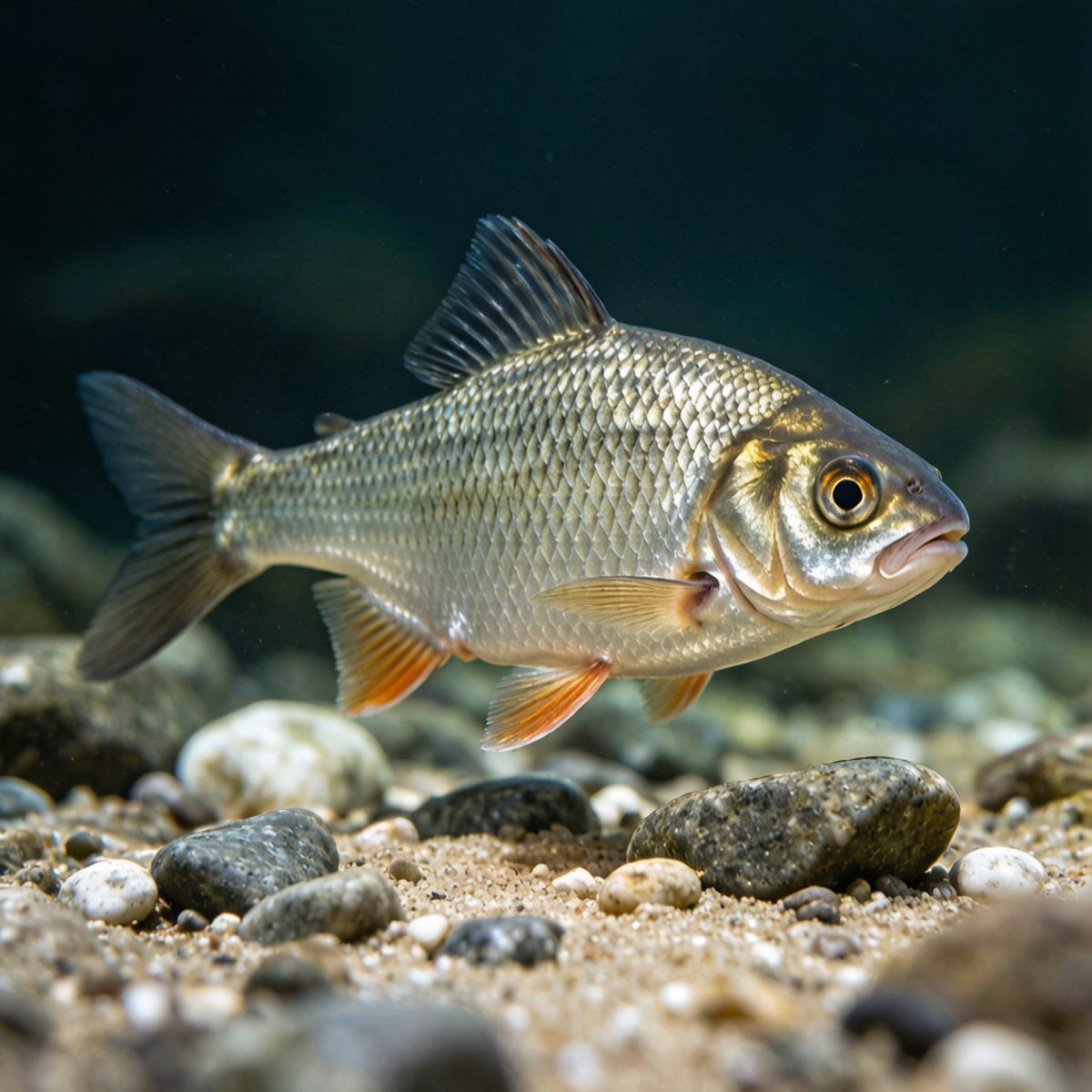
Introduction
The common bream, scientifically Abramis brama, is a deep-bodied freshwater fish of the carp family found across Europe’s lakes, slow rivers, and canals. A familiar target for anglers, it is known for its silver-bronze flanks and surprisingly tall, flattened shape. It thrives in calm, warm waters with soft bottoms, where it feeds by sifting through mud and silt. Schools of bream are a common sight in lowland waterways throughout the continent. In warm summer evenings they often rise to the surface in loose groups, dimpling the water as they feed on drifting food. Anglers have pursued them for centuries, and old recipes across Europe celebrate bream as a humble but tasty table fish. Their tolerance of murky, low-oxygen water lets them flourish where trout and salmon could never survive.
Taxonomy
The common bream belongs to the family Cyprinidae, the carps and minnows, within the genus Abramis. It is a relative of many other European coarse fishes and shares its lakes with large fish-eating birds such as the great white pelican and the osprey, both of which may take bream from the surface or shallows when the opportunity arises.
Physical Characteristics
Adults usually measure 30 to 50 centimeters, though old fish can exceed 60 centimeters and several kilograms. The body is strongly compressed sideways and deep, with a small head and a downward-pointing mouth suited to bottom feeding. Coloration ranges from silvery in youth to bronze or gold in older fish from warm, murky water. The single dorsal fin is long, and the scales are large, giving the flank a neatly tiled appearance along the rounded belly.
Habitat
Bream favor standing or slowly flowing waters such as lakes, reservoirs, flooded gravel pits, and the lower reaches of rivers. They prefer depths with muddy or sandy substrate where food is abundant and where they can school in safety. In winter they move to deeper water and become sluggish, while in summer they roam shallows in loose groups. They tolerate low oxygen better than many fish, allowing them to inhabit warm, productive ponds that other species avoid.
Diet
Adult bream feed mainly on the bottom, sucking up larvae of midges and other insects, small molluscs, worms, and plant material from the mud. Their protruding mouth acts like a vacuum, stirring the silt and filtering edible items. Young fish eat tiny plankton until they grow large enough for bottom prey. By stirring the substrate, bream help recycle nutrients but can also cloud water and disturb plants when present in huge numbers. Careful anglers return bream to the water so that lakes keep their natural balance and future generations can still enjoy the same plentiful shoals.
Reproduction
Spawning takes place in late spring or early summer when water warms. Females release adhesive eggs among submerged plants or on flooded vegetation in shallow bays, and males fertilize them in the open water. A large female can shed hundreds of thousands of eggs, which hatch within days. The fry feed on plankton before taking to bottom feeding. Bream mature at three to four years and can live for more than a decade in suitable lakes.
Conservation
The common bream is widespread and classified as Least Concern, valued both ecologically and as a recreational fish. It adapts well to a range of lowland waters, though heavy pollution and the loss of spawning vegetation can harm local stocks. Because it is a generalist feeder, it often remains common even where more sensitive species disappear. Sensible management of lakes and rivers keeps bream populations healthy without harm to biodiversity.
Fun Facts
Old bream from tannin-rich water can turn a deep golden bronze, leading anglers to call them “golden bream.” They often feed noisily at night, grubbing in the mud and leaving trails of bubbles. Large bream are surprisingly strong fighters on a line, diving and rolling to throw the hook. They school by size, with bigger fish forming separate groups from the juveniles. In winter they may lie nearly motionless in deep holes for weeks at a time.
[…] Chondrostoma nasus belongs to the carp family Cyprinidae and is the namesake of the genus Chondrostoma, the “noses” whose members share the downturned mouth. It is one of several similar nase species across Europe and was long confused with them until genetics clarified the boundaries. It sits alongside the Common Roach and other cyprinids of the same rivers, but its horny lower lip sets it apart as a stone-grazer rather than a general feeder. […]