 By st20113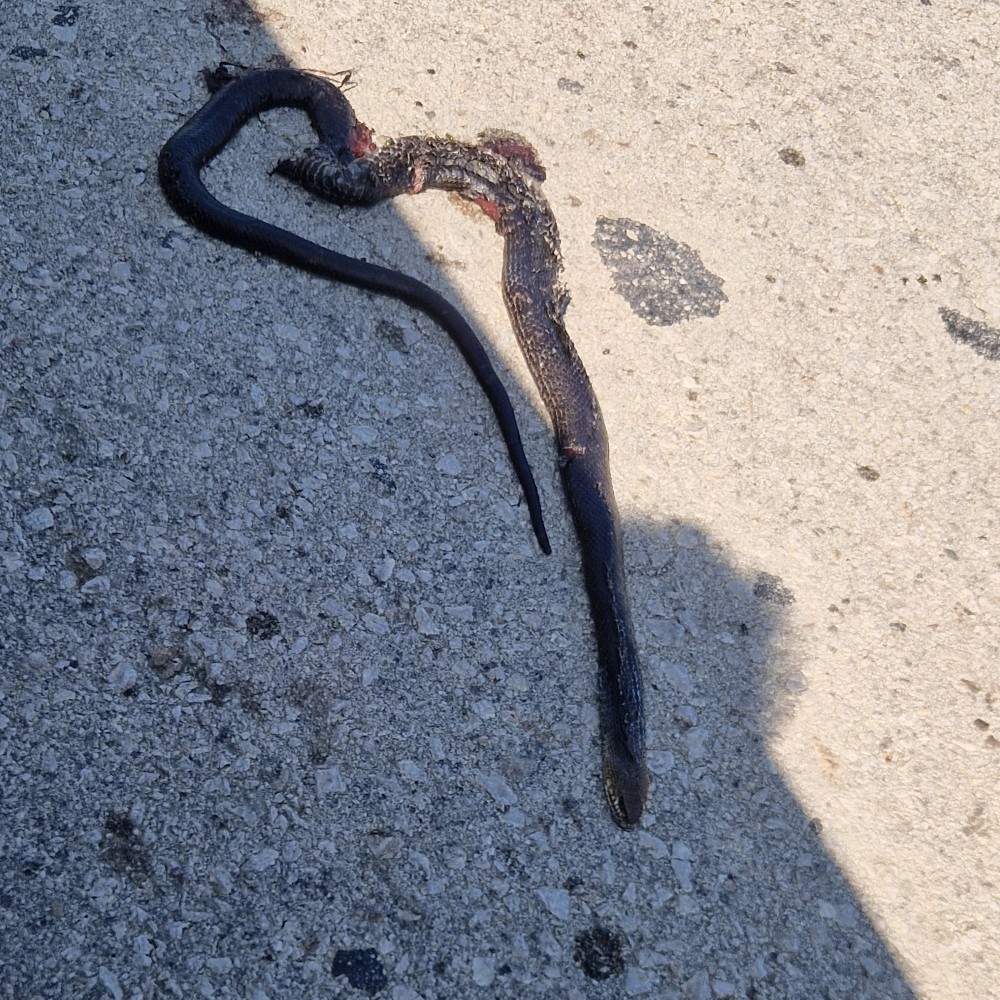
Introduction
The Caspian Whip Snake (Dolichophis jugularis) is a large fast-moving non-venomous colubrid snake of the Balkans and eastern Mediterranean, famous for its remarkable speed both on the ground and in the trees. Reaching up to 2.5 meters in length it is one of the longest snakes in Europe and a formidable predator of lizards, small mammals, and birds. Despite its impressive size and aggressive defensive displays it is completely harmless to humans, lacking venom and using speed and constriction to subdue prey.
Taxonomy and Evolution
The Caspian Whip Snake belongs to the family Colubridae and the genus Dolichophis, the whip snakes, a group of large fast-moving racers. Until recently it was classified as Coluber jugularis and some older literature still uses this name. Two subspecies are recognized: D. j. jugularis in the Balkans and western Turkey, and D. j. caspius in eastern Turkey and the Caucasus. Molecular studies place Dolichophis as sister to the North American whip snakes of the genus Masticophis, suggesting a complex biogeographic history involving dispersal across the Bering land bridge during the Miocene.
Physical Characteristics
Caspian whip snakes are among Europes largest snakes with adults typically measuring 1.5 to 2.0 m and exceptional specimens reaching 2.5 m. The body is slender and cylindrical with a long whip-like tail that gives the group its name. Coloration in adults is uniformly dark brown to blackish on the upper surface sometimes with faint darker spots and lighter cream to pale yellow on the belly. The head is only slightly distinct from the neck and the eyes are large with round pupils. As a constrictor the species lacks the triangular head shape and heat-sensing pits of vipers.
Habitat and Distribution
Caspian whip snakes inhabit rocky hillsides, dry scrubland, old olive groves, stone walls, and ruins in warm lowland and Mediterranean regions from sea level to about 1,000 m. Their range centers on the Balkans, Greece, and Turkey with isolated populations on several Aegean islands. They are strongly associated with warm south-facing rocky terrain that provides both basking sites and shelter in crevices. In agricultural landscapes they are found in old terraces, stone walls, and overgrown field margins. The wild boar disturbs snakes from cover while foraging and whip snakes are frequently encountered in areas where wild boar activity creates open patches in vegetation.
Diet and Feeding Behavior
An active predator, the Caspian whip snake hunts primarily during the day using its exceptional speed to chase down prey across open ground and up trees. Prey includes lizards, small mammals, birds and their eggs, and occasionally other snakes. It kills by constriction wrapping its body around prey and squeezing until the prey suffocates. The long slender body allows it to climb trees to raid birds nests and it can move at remarkable speed along the ground giving rise to the common name whip snake. On the ground it can reach speeds of 4 to 5 km per hour for short bursts.
Reproduction and Life Cycle
Breeding occurs in spring following emergence from brumation. Males engage in dramatic combat dances intertwining and wrestling with rival males in a spectacular display of strength. Females lay 5 to 12 elongated eggs in June or July deposited in warm crevices in stone walls, compost heaps, or burrows in sun-exposed locations. The eggs incubate for 6 to 8 weeks and hatchlings of 25 to 35 cm emerge in late summer. Sexual maturity is reached at 3 to 4 years. Like most colubrids the species is an egg-layer, a trait shared with the grass snake but not with the vipers and adders of Europe which give birth to live young.
Conservation Status
Listed as Least Concern across its wide range with a stable population. The species has expanded in some parts of its range particularly in the Balkans as agricultural abandonment creates more rocky habitat and scrubland. Primary threats include persecution by humans who confuse it with the venomous Montpellier snake or with vipers, and road mortality on highways that cross rocky Mediterranean terrain. Like many snakes it is killed deliberately in rural areas despite being harmless and beneficial to humans through its consumption of rodents.
Fun Facts
The Caspian whip snakes speed is legendary: in some parts of its range it is called the Turkish racer and it can outpace a running human over short distances. When cornered it raises the front of its body in a distinctive S-shaped coil and hisses loudly vibrating the tail rapidly against dry leaves to produce a rattlesnake-like warning sound. Despite its name it is not closely related to the American coachwhip snakes which are in the genus Masticophis, and the similarity in appearance and behavior reflects convergent evolution driven by similar ecological niches. In Greek folklore it was considered a guardian of the house and killing one was thought to bring misfortune.
[…] horseshoe whip snake shares the family with the caspian whip snake. That is a very close relative of the same family and the same habit. The two are told apart by the […]