 By st20113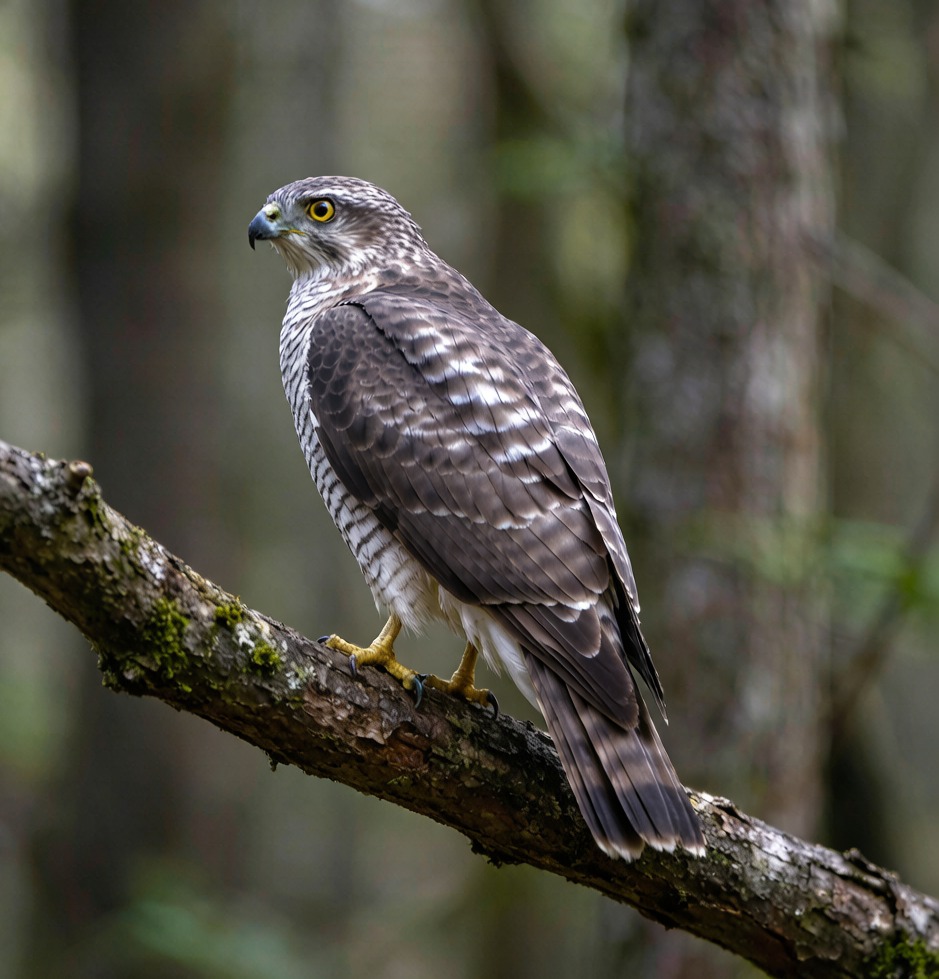
Introduction
The European Honey Buzzard (Pernis apivorus) is a medium-sized raptor that breeds across temperate Europe and winters in sub-Saharan Africa. Unusually among European birds of prey it is a specialist predator of wasp and hornet nests, adapted with dense plumage and scale-like leg scales that protect against stings. Its migratory route across the Strait of Gibraltar is one of the great raptor spectacles of the Western Palearctic, rivalling that of the peregrine falcon.
Taxonomy and Evolution
The European Honey Buzzard belongs to the family Accipitridae. Despite its name it is not closely related to true buzzards of the genus Buteo but sits in its own genus Pernis, close to kites and sea eagles. Two subspecies are recognized: P. a. apivorus across Europe to western Russia and P. a. orientalis from central Russia to the Pacific. The Asian Honey Buzzard, which overlaps in Central Asia, is a separate species and potential vagrant to Europe. The genus name Pernis derives from the Latin for honey kite, reflecting its unusual diet.
Physical Characteristics
European honey buzzards measure 52 to 60 cm in length with a 135 to 150 cm wingspan, similar in size to the common buzzard. They have a longer tail and more slender rounded wings. Plumage is highly variable, from pale morphs with pale throats and barred underwings to dark morphs with uniformly dark underparts. All morphs share six blackish bars on the underside of each wing, visible in flight. The head is small and owl-like with close-set eyes and a rounded crest. The bill is relatively weak, adapted for extracting insects rather than vertebrate prey, and the cere is small.
Habitat and Distribution
Breeding habitat consists of large continuous tracts of mature deciduous or mixed forest with adjacent open areas for foraging. They require large trees for nesting and nearby abundance of ground-nesting wasps and hornets. They range from the British Isles east across central Europe to western Russia. Autumn migration concentrates at Gibraltar, where over 50,000 birds cross in a single season. Wintering grounds lie in the humid savannas of central Africa from Senegal to Kenya, spanning a 4,000 kilometer migration that takes them across the Sahara.
Diet and Feeding Behavior
As a wasp specialist the honey buzzard has remarkable adaptations. Dense feathering extends over the eyes and forehead, while thickened scale-like leg scales protect against stings. It locates nests by watching wasp activity, then digs them out with its claws, often working more than an hour. It consumes both adults and larvae, crushing them in its bill before swallowing. On migration it also eats other insects, small birds, and carrion, while wintering birds take a broader diet including beetles and fruit. A single nest can yield thousands of larvae rich in fat and protein.
Reproduction and Life Cycle
Honey buzzards return to European breeding grounds in May. They build large stick nests in the crowns of mature trees, often reusing old nests of other large birds. Clutches of 2, rarely 3, eggs are laid in June and incubated 35 to 42 days by both parents. Chicks fledge at 40 to 44 days and remain dependent for several weeks. They employ a unique anting behavior, crushing ants and rubbing them through the plumage to help control parasites. Like many migratory raptors they return to the same breeding territory year after year, showing strong philopatry.
Conservation Status
Classified as Least Concern with a European breeding population of 55,000 to 84,000 pairs, the honey buzzard is secure though trends vary by region. In Britain it is a rare Amber List species with only 20 to 60 breeding pairs, threatened by illegal persecution on grouse moors where it is mistakenly blamed for reducing game bird numbers. Across its European range primary threats include loss of old-growth forest, illegal shooting during migration, and poisoning from pesticides that reduce wasp prey availability. Protected under the EU Birds Directive.
Fun Facts
The European Honey Buzzard’s migratory journey of over 6,000 km each way is among the longest for any European raptor. During the autumn crossing of Gibraltar hundreds of thousands of birds can be seen from coastal watchpoints in a single day, soaring on thermals in spectacular kettles. Despite their dietary specialization they are adaptable foragers and feed on fruits and honey when wasp nests are scarce. Their tongue is unusually long and brush-tipped for a raptor, an adaptation for lapping larval brood from comb. Ornithologists once believed they ate honey exclusively because of their unusual diet.