 By st20113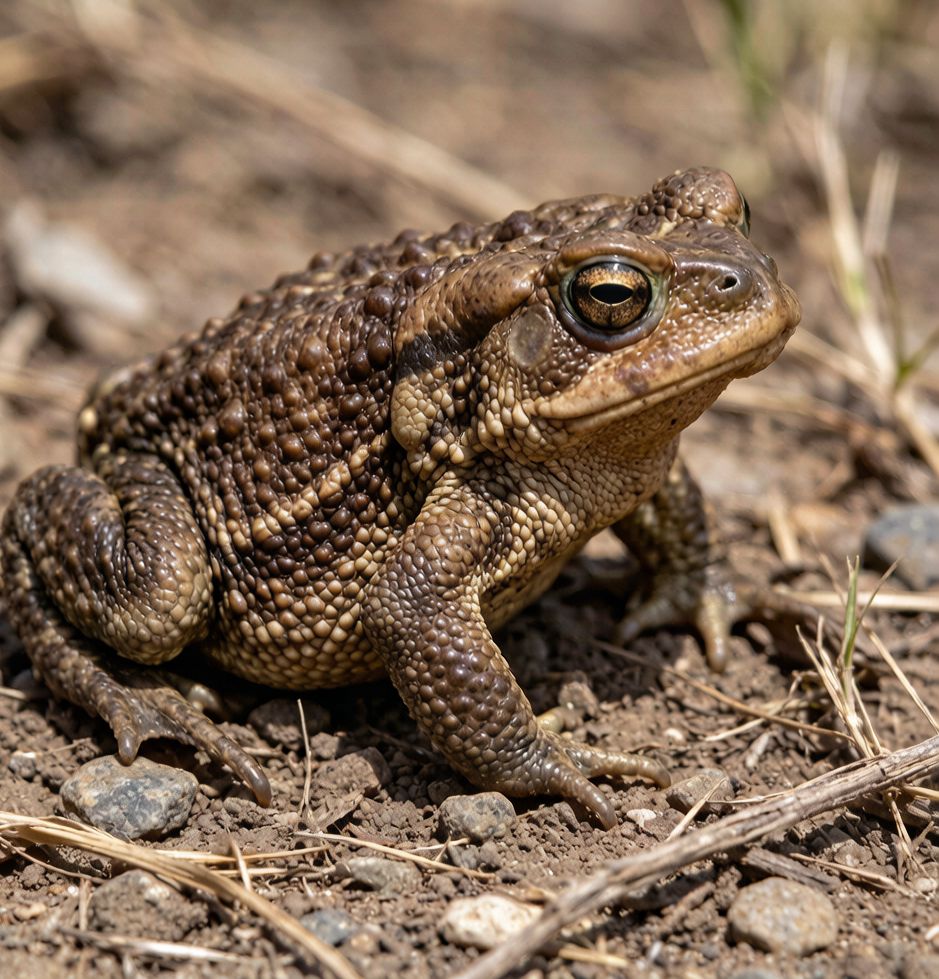
Introduction
The Cane Toad, also known as the giant neotropical toad, is one of the largest toads in the world, native to the Americas from the southern United States to the Amazon basin. It was famously and disastrously introduced to Australia and other regions to control agricultural pests, where it became a notorious invasive species. Stocky and warty, it secretes potent toxins from glands on its shoulders that can kill predators that try to eat it, making control extraordinarily difficult wherever it establishes.
Taxonomy
Rhinella marina belongs to the true toad family Bufonidae, the same family as the common toad, though the two are distinct genera separated by ocean and millions of years. The genus Rhinella comprises dozens of South American toads, and the cane toad is among the most widespread of them all. Once placed in the genus Bufo, it was moved to Rhinella as taxonomic understanding improved through molecular study. Its species name marina references early suggestions it was associated with coastal or marine environments, though it is thoroughly terrestrial in habits and biology.
Physical Characteristics
Adult cane toads are robust, with females larger than males, reaching ten to fifteen centimetres and over one kilogram in large individuals. The skin is dry and warty, usually grey, brown, olive or reddish with darker blotches, and the belly is pale. Prominent parotoid glands sit behind the eyes and produce bufotoxin, a milky poison that is lethal to many would-be predators. They have short legs, broad bodies and golden irises. Tadpoles are small, black and school in dense, shimmering masses in warm, still water.
Habitat
Cane toads occupy a wide range of open and disturbed habitats: grasslands, agricultural land, gardens, floodplains and edges of forests, usually near water for breeding purposes. They tolerate heat and dryness better than many amphibians and are active mainly at night when temperatures fall. In invaded Australia they have spread across the tropical north into a variety of ecosystems, often thriving in human-modified landscapes such as cane fields, suburbs and cleared pastoral country where native predators have no defence against their toxins.
Diet
Adults are opportunistic, almost indiscriminate feeders, taking insects, other arthropods, small vertebrates and even pet food left outdoors. Their voracious appetite was the original rationale for their ill-fated release as agricultural pest control agents. Tadpoles feed on algae and organic debris in the water. Because they lack natural predators in invaded ranges, their appetite gives them a competitive edge over native amphibians and can deplete local invertebrate prey, disrupting food webs wherever they become abundant and spread through the landscape.
Reproduction
Cane toads breed explosively in warm wet conditions, laying long chains of thousands of eggs in still or slow-moving water. Tadpoles hatch within days and transform in as little as a month in warm conditions, allowing multiple generations per season in the tropics. High fecundity and rapid development are key to their invasive success, letting populations explode after rains and colonize new areas with astonishing speed. A single female may therefore seed an entirely new outbreak of toads in a single productive breeding season.
Conservation
Native to the Neotropics, the cane toad is not globally threatened, but it is one of the world’s worst invasive species where introduced, devastating native predators such as quolls, monitors and snakes that die after attempting to eat it. Control efforts include physical removal, barriers and research into biological controls that target the toad alone. Its story is a cautionary tale about moving species beyond their natural range without understanding the consequences for native ecosystems and the animals that live within them.
Fun Facts
Cane toads can puff up and excrete poison when grabbed, often killing the predator that attacked them. A single female can lay more than thirty thousand eggs in a single year of breeding. They were introduced to Australia in 1935 to eat beetle pests—and instead became a widespread plague. Their toxin is so strong it can kill crocodiles that swallow them whole. Tadpoles are tiny and black, schooling in warm ponds by the thousands after heavy rains.