 By st20113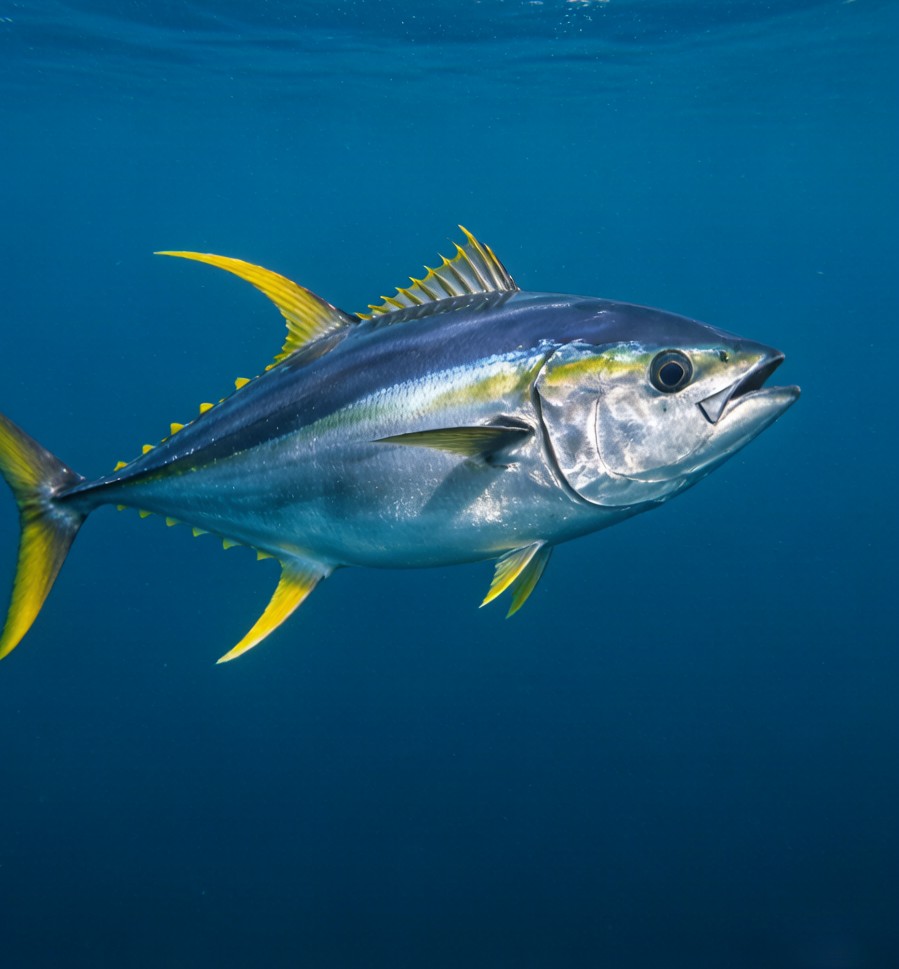
Introduction
The yellowfin tuna (Thunnus albacares) is a large, fast-swimming predatory fish of tropical and subtropical oceans, prized worldwide for its firm, flavourful flesh and famed as a premier game fish. Recognisable by its long, bright-yellow finlets and streamlined metallic-blue body, it forms large schools often associated with dolphins and other tunas. A highly migratory species, it undertakes vast movements across ocean basins in pursuit of prey. Its commercial importance has led to intense fishing pressure, making careful management essential for the species’ future, alongside other ocean predators such as the swordfish.
Taxonomy
The yellowfin tuna is a member of the family Scombridae, the mackerels and tunas, within the order Perciformes. The genus Thunnus contains the true tunas, with Thunnus albacares described by Bonnaterre in 1788. It is closely related to the albacore, bigeye, and bluefin tunas. Tunas are remarkable among bony fishes for their streamlined form, high metabolic rate, and partial endothermy, which allow sustained vigorous swimming. The species name “albacares” derives from a Latin term for a white-fleshed fish, referencing its pale meat.
Physical Characteristics
Yellowfin tuna are robust, torpedo-shaped fish with a metallic dark-blue back fading to silver-white below, marked by a lateral band of yellowish colour. They are distinguished by their long, sickle-shaped yellow dorsal and anal fins and bright-yellow finlets. Adults commonly reach 1 to 2 metres and 40 to 100 kilograms, with exceptional individuals exceeding 180 kilograms. Like other tunas, they possess a keeled tail, retractable fins, and a specialized vascular system that retains body heat near the brain and muscles, supporting rapid, endurance swimming in cool waters.
Habitat
Yellowfin tuna inhabit the epipelagic, or sunlit surface layer, of tropical and warm-temperate oceans worldwide, generally preferring water temperatures above 18 degrees Celsius. They are oceanic, rarely approaching shore except near upwellings and islands, and form schools by size and often with dolphins or other tuna species. They undertake extensive horizontal migrations and may dive to several hundred metres. Their distribution is strongly tied to sea-surface temperature and the availability of schooling prey, making them sensitive to ocean warming and shifting productivity patterns.
Diet
Yellowfin tuna are apex predators feeding on schooling fishes such as mackerel, flying fish, and sardines, supplemented by squid and crustaceans. They hunt cooperatively in schools, herding prey into tight balls near the surface where they feed voraciously. Their speed and endurance allow them to pursue fast-moving prey across open water. As both predator and prey, they sit centrally in pelagic food webs, linking smaller forage fish to large sharks, billfish, and toothed whales. High metabolic demands require substantial daily feeding, and they are themselves a key target of industrial fisheries.
Reproduction
Yellowfin tuna are highly fecund, broadcasting eggs and sperm into the open water rather than guarding nests. Spawning occurs in warm waters year-round in many regions, with peak seasons varying by area. A single large female can release millions of eggs per season, which drift in the plankton and hatch into larvae that join the drifting community. Growth is rapid, with individuals reaching several kilograms within their first year. They mature at around two to three years and may live up to six to seven years. This high reproductive output helps sustain populations despite heavy fishing, if mortality is controlled.
Conservation
Yellowfin tuna is currently assessed as Least Concern by the IUCN, though some regional stocks face overfishing from industrial purse-seine and longline fisheries. Bycatch of dolphins, sea turtles, and sharks remains a serious concern, mitigated through dolphin-safe practices and gear modifications. Regional fishery management organisations set quotas and closures to prevent depletion. The species’ value has driven both overexploitation and strong management incentives. Consumers can support sustainability by choosing tuna certified by credible fisheries programmes that monitor stock health and bycatch.
Fun Facts
Yellowfin tuna can swim at sustained speeds exceeding 50 kilometres per hour, using their conical muscle and heat-retention system for endurance. Their long, bright-yellow finlets earned them the name and make them easy to distinguish from other tunas at the surface. Yellowfin often school with dolphins in the open ocean, a behaviour that historically led to dolphin bycatch in purse-seine nets. They can dive deeper than 500 metres in search of prey, exploiting cooler layers below the warm surface. A single large female may release several million eggs in a single spawning season, a strategy that buffers against heavy natural and fishing losses.