 By st20113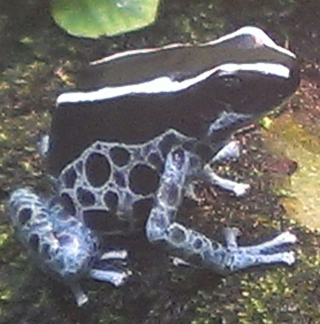
Introduction
The dyeing poison dart frog (Dendrobates tinctorius) is a strikingly colourful amphibian native to the humid forests of the Guiana Shield in South America, including parts of Guyana, Suriname, French Guiana, and northern Brazil. Renowned for its vivid blue, yellow, and black patterns, it is one of the larger and most variable poison dart frogs. Like its relatives, it derives skin toxins from its arthropod diet, a defence advertised by its bright warning colours. Popular in the pet trade and among hobbyists, it has become an ambassador for rainforest conservation, alongside other vivid amphibians such as the red-eyed tree frog.
Taxonomy
The dyeing poison dart frog belongs to the family Dendrobatidae, the poison dart frogs, within the order Anura. The species Dendrobates tinctorius was described by Cuvier in 1798. The genus Dendrobates includes several charismatic toxic species, though some formerly included forms are now placed in separate genera. Dendrobatids are endemic to Central and South America, with the most toxic species historically used by Indigenous peoples to poison blowdart tips. Genetic and colour-pattern studies continue to clarify species boundaries within this diverse group of diurnal frogs.
Physical Characteristics
Dyeing poison dart frogs are robust, terrestrial frogs reaching 4 to 6 centimetres in length, with females generally larger than males. Their skin is smooth and glossy, displaying extraordinary colour polymorphism: individuals may be cobalt blue with black spots, yellow with black markings, or green and black, depending on locality. The name “dyeing” refers to an old belief that their toxins could dye parrot feathers. They have large, dark eyes, toe pads suited to climbing, and a deliberate, daytime-active gait. In captivity, where diet lacks wild alkaloid sources, their toxicity diminishes markedly, though colours remain.
Habitat
These frogs inhabit tropical rainforests, particularly the floor and lower vegetation of primary and secondary forest across the Guiana Shield. They prefer humid, shaded environments with leaf litter, fallen logs, and access to small pools or bromeliads for breeding. They are diurnal and territorial, often seen perched on leaves during the day. Moisture is critical, as their permeable skin desiccates rapidly in dry conditions. They use a network of microhabitats among roots and debris, and their presence indicates healthy, intact rainforest with stable humidity.
Diet
In the wild, dyeing poison dart frogs feed on small arthropods, especially ants, mites, termites, and tiny beetles, which supply the alkaloid compounds that make their skin toxic. They are active foragers that hunt by sight, using a projectile tongue to capture prey. In captivity, a diet of fruit flies and springtails lacks these alkaloids, so captive-bred frogs are harmless. Their toxicity is therefore a product of diet rather than genetic manufacture, much like the common toad that also relies on skin defences.
Reproduction
Breeding occurs in the wet season when males call from leaf litter or low perches to attract females. After mating, the female lays a small clutch of eggs on a moist surface, and the male guards and keeps them humid until they hatch. Tadpoles are then transported on the parents’ backs to small water bodies such as bromeliad axils or tree holes. The male or female tends the tadpoles, and in some cases feeds them unfertilised eggs as nourishment. Metamorphosis takes several weeks, after which miniature froglets emerge. Sexual maturity is reached within a year under favourable conditions.
Conservation
The dyeing poison dart frog is listed as Least Concern, with a relatively wide range and stable wild populations. However, it faces pressure from habitat loss due to logging, mining, and agriculture, as well as collection for the international pet trade. Because it depends on intact, humid forest, local declines can follow deforestation. Sustainable captive breeding programmes supply the pet trade and reduce pressure on wild populations. Protected areas across the Guiana Shield safeguard important habitat, and the species’ popularity helps raise awareness of rainforest conservation needs.
Fun Facts
The frog’s toxicity comes entirely from its diet of alkaloid-rich ants and beetles, so captive-bred individuals raised on fruit flies are completely harmless. No two localities produce exactly the same colour pattern, making some regional forms highly prized by collectors. Indigenous peoples of the Guianas once used related dart frogs’ toxins on blowdarts, though this species’ name derives from a myth about feather dyeing. Parents carry tadpoles one at a time on their backs to safe pools, a remarkable feat of amphibian childcare. Their brilliant colours are aposematic, warning predators that a bitter, toxic meal awaits.