 By st20113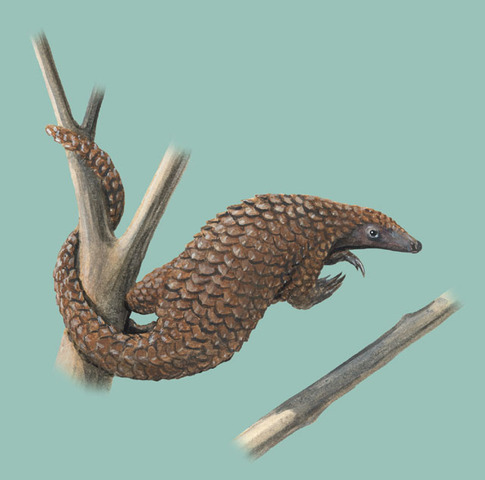
Introduction
The tree pangolin (Manis tricuspis), also called the African tree pangolin, is a small, nocturnal mammal found in the rainforests and moist woodlands of west and central Africa. Covered in overlapping, keratin scales that protect it from predators, the pangolin is the only truly scaly mammal on Earth. It spends much of its life in the trees, using a long prehensile tail to anchor itself while foraging for ants and termites. Globally, pangolins are the most trafficked mammals in the world, and the tree pangolin faces intense pressure from the illegal wildlife trade, alongside larger threatened species such as the African elephant.
Taxonomy
The tree pangolin belongs to the order Pholidota, the pangolins, within the class Mammalia. The genus Manis contains the Asian and African pangolin species, with the tree pangolin described as Manis tricuspis by Rafinesque in 1820. Three African pangolin species are recognised, distinguished by habitat and scalation. Molecular studies place pangolins as close relatives of carnivores within the superorder Laurasiatheria, despite their anteater-like appearance. Their lineage is ancient, with fossil pangolins known from the Eocene epoch more than 40 million years ago.
Physical Characteristics
Tree pangolins are relatively small, weighing 2 to 3 kilograms and measuring up to about 90 centimetres including the tail. Their body, limbs, and tail are covered in sharp, overlapping scales made of keratin, the same protein as human fingernails. The underside, face, and inner limbs are soft and furred. They have a small conical head with no teeth, a long sticky tongue that can extend far beyond the head, and powerful clawed forelimbs for tearing into insect nests. Their prehensile tail, longer than the body, is essential for arboreal life, allowing them to hang and manoeuvre among branches with remarkable agility.
Habitat
Tree pangolins inhabit tropical and subtropical rainforests, gallery forests, and moist savanna woodlands across a broad band of west and central Africa. They are strongly arboreal, sheltering by day in tree hollows or curled in branch forks, and emerging at night to forage in the canopy. They prefer areas with abundant ant and termite colonies and dense, connected canopy that offers both food and refuge. Deforestation and the fragmentation of forest cover pose serious threats, as they reduce both feeding areas and safe denning sites for this tree-dependent species.
Diet
Tree pangolins are specialist myrmecophages, feeding almost exclusively on ants and termites. Using their keen sense of smell, they locate insect nests and tear them open with strong claws before extracting prey with a long, sticky, saliva-coated tongue that can reach lengths greater than the body. Their stomach, muscular and lined with keratinous spines, grinds food in the absence of teeth. They consume thousands of insects nightly, playing a valuable role in controlling ant and termite populations within their forest ecosystems. Water is obtained largely from prey and dew.
Reproduction
Tree pangolins are generally solitary, coming together only to mate. After a gestation of roughly 150 days, the female gives birth to a single offspring, occasionally twins, in a tree hollow or sheltered den. The newborn is born with soft, pale scales that harden within a few days. Young pangolins ride on the mother’s tail or back during the first weeks and begin sampling solid food at about one month, remaining dependent for several months. Sexual maturity is reached at about two years. Because reproduction is slow and offspring few, populations recover poorly from exploitation or habitat loss.
Conservation
The tree pangolin is listed as Endangered by the IUCN, with populations declining sharply across its range. The primary threat is poaching for the international trade in scales, used in traditional medicine, and for bushmeat. Habitat loss from logging and agricultural expansion further compounds the pressure. International commercial trade is banned under CITES Appendix I, yet enforcement remains difficult across remote forest regions. Conservation measures include anti-poaching patrols, community education, and habitat protection, though demand-driven trafficking continues to threaten the species’ survival.
Fun Facts
When threatened, a tree pangolin rolls into a tight, scale-armoured ball, leaving only sharp scales exposed to deter predators. Its scales make up roughly 20 percent of its total body weight, a remarkable natural armour. The pangolin’s tongue can be longer than its entire body, stored in a sheath that extends into the chest cavity. Despite a superficial resemblance to reptiles, pangolins are true mammals most closely related to carnivores. A startled pangolin may also release a foul-smelling secretion from glands near the anus, an added defence against would-be attackers.