 By st20113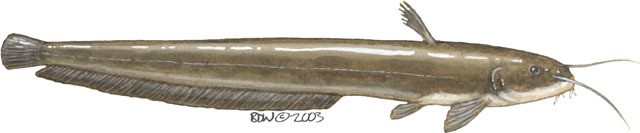
Introduction
The wels catfish (Silurus glanis), also called the European catfish or sheatfish, is the largest freshwater fish native to Europe, reaching lengths over two metres and weights exceeding 100 kilograms. Native to large rivers and lakes from the Balkans to the Caspian basin, it has been widely introduced across western Europe for sport fishing. An ambush predator with a vast mouth and sensitive whisker-like barbels, the wels is a formidable apex predator of continental waters. Its size and behaviour have made it both a prized trophy fish and a subject of ecological concern where introduced. stingray carp
Taxonomy
The wels catfish belongs to the family Siluridae, the sheatfishes, within the order Siluriformes, the catfishes. The species Silurus glanis was described by Linnaeus in 1758. It is the only member of its genus found in Europe, representing an ancient lineage of primarily Asian freshwater fishes. Catfishes as a whole are among the most diverse groups of vertebrates, but the wels is unusual among them for its enormous adult size and fully scaleless, elongate body adapted to a predatory lifestyle in large warm rivers.
Physical Characteristics
The wels catfish has a long, cylindrical, scaleless body with a broad flattened head and a huge terminal mouth armed with rows of small teeth. It bears two long maxillary barbels (whiskers) at the corners of the mouth and four shorter ones on the lower jaw, used to locate food by touch and taste in turbid water. The dorsal fin is short, and there is a long anal fin running much of the body length, aiding slow propulsion. Coloration is typically dark olive to black on the back, fading to pale yellow-white below. Adults can exceed 2.5 metres and 130 kilograms, though most individuals are considerably smaller. The skin is smooth and mucus-covered, lacking scales entirely.
Habitat
Wels catfish inhabit large, slow-moving rivers, deep pools, reservoirs, and warm lakes with soft bottoms and abundant cover such as submerged logs, vegetation, or undercut banks. They prefer warm, productive waters and avoid fast currents and cold highland streams. During daylight they remain concealed in cover, becoming active at night to hunt. Introduced populations in France, Spain, and Italy have colonised river systems and connected waterways, sometimes spreading rapidly. They require large, connected water bodies to support viable populations and are sensitive to heavily regulated, fragmented rivers lacking refuge.
Diet
The wels catfish is a voracious, opportunistic predator and scavenger. Small individuals feed on invertebrates, while adults take fish, amphibians, crustaceans, and increasingly birds and small mammals at the water’s surface. They are ambush hunters, lying motionless in cover and lunging at passing prey, using their enormous mouth to engulf victims whole. In introduced ranges they have been documented capturing ducks and other waterfowl, behaviour that has drawn ecological concern. They also consume carrion and detritus, contributing to nutrient cycling. Feeding peaks at night and during warm seasons when metabolism is highest.
Reproduction
Spawning occurs in late spring to early summer when water temperatures rise above roughly 18 to 20 degrees Celsius. Males select and prepare a nest site in a sheltered cavity, often under roots or rocks, where the female deposits tens of thousands to hundreds of thousands of eggs. The male guards the nest fiercely, fanning the eggs and defending them from predators until they hatch in about three to ten days. The larvae then disperse, feeding on plankton before shifting to benthic invertebrates and eventually fish. Wels catfish are long-lived, reaching sexual maturity at three to four years and potentially surviving more than two decades in favourable conditions.
Conservation
In its native range the wels catfish is generally secure, though localized declines have occurred from habitat degradation, dam construction, and pollution. As an introduced species in western Europe, it is not a conservation priority but an invasive concern, with potential impacts on native fish, amphibians, and waterfowl through predation. Management varies by country, with some regions promoting it as a sport fish and others monitoring ecological effects. Maintaining natural river connectivity and water quality benefits native aquatic communities regardless of catfish presence.
Fun Facts
The wels catfish holds the record as Europe’s largest strictly freshwater fish, with unconfirmed historical reports of specimens exceeding five metres. Its barbels are equipped with taste receptors, allowing it to “taste” the water around it to locate hidden prey. Wels catfish have been observed lunging from the water to grab birds resting on the surface, a behaviour captured in remarkable wildlife footage. Despite their fearsome size, they are prized by anglers for their fighting ability and are the focus of a dedicated recreational fishery. They can survive in low-oxygen conditions by gulping air at the surface thanks to a modified swim bladder.
[…] Salvelinus, and the grayling’s large fin and gentle habits set it apart from the predatory Wels Catfish and other coarse fish of European rivers. Several related Thymallus species occur across Siberia […]