 By st20113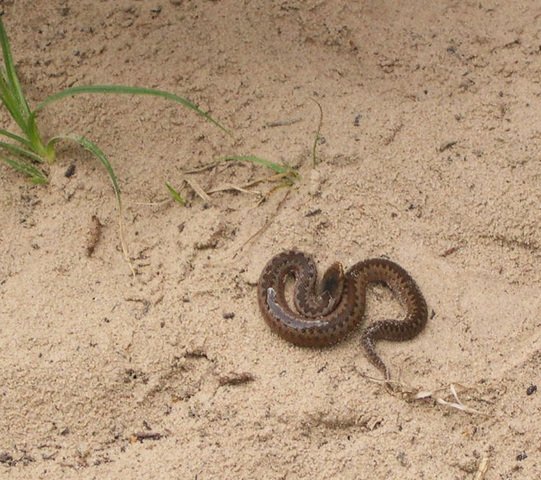
Introduction
The common adder (Vipera berus), also called the European viper or common European viper, is the only venomous snake native to much of its range across northern Europe and Asia. Despite its venomous nature, the adder poses minimal risk to humans as it is generally docile and bites only in self-defence when stepped on or handled. The adder occupies a remarkable geographic range for any snake, extending farther north than any other viperid and farther north than any other snake in Europe. Its characteristic dark zigzag dorsal pattern makes it readily identifiable, and its presence is often an indicator of healthy heathland, moorland, and woodland edge habitats.
Taxonomy
The common adder belongs to the family Viperidae within the order Squamata. The species Vipera berus was first described by Linnaeus in 1758, establishing one of the earliest scientifically named snake species. Two subspecies are recognized: the nominate V. b. berus distributed across most of Europe, and V. b. bosniensis restricted to the Balkans. Despite being called “common,” genetic studies reveal significant population structure across the adder’s range, with isolated populations showing distinct mitochondrial lineages. The adder’s evolutionary history traces to ancestors that colonised Europe from Asia Minor following glacial retreats.
Physical Characteristics
The common adder is a relatively stout-bodied viper with adults typically measuring 60 to 90 centimetres in total length, with females generally larger than males. The most diagnostic feature is the distinctive dark zigzag pattern running along the dorsal surface, set against a background that may be grey, brown, olive, or reddish-brown. Some individuals, particularly in northern Europe, exhibit a melanistic (all-black) colouration. The head is clearly distinguishable from the neck and bears a characteristic dark marking shaped like an X, V, or crescent on the crown. The eyes have vertically elliptical pupils characteristic of all vipers. The species possesses hollow, hinged fangs in the upper jaw, which can be folded back against the roof of the mouth when not in use.
Habitat
Adders occupy a diverse range of habitats across their extensive range, with a preference for areas offering a mosaic of open sunny spots for basking and dense vegetation for cover. Prime habitats include heathlands, moorlands, rough grasslands, sunny woodland edges, and rocky south-facing slopes. In northern parts of their range, adders are commonly found in coastal dune habitats and bog margins. They require suitable hibernation sites such as rodent burrows, rock crevices, or stone walls where they can avoid freezing temperatures during their winter torpor, which may last six to seven months in Scandinavia. Adder populations are highly sensitive to habitat fragmentation and the loss of open sunny basking sites adjacent to dense cover.
Diet
The adder’s diet consists primarily of small mammals, particularly voles, mice, and shrews, which constitute the vast majority of prey items in most populations. Small birds, including nestlings and fledglings, are consumed when available, especially in spring when adders emerge from hibernation. Earthworms and lizards may form a minor part of the diet in some areas. Adders are ambush predators, lying motionless in vegetation or along game trails until prey comes within striking range. After injection of venom, the snake tracks the incapacitated prey by scent. A single substantial meal may sustain an adder for several weeks, and digestion requires several days of uninterrupted warmth and inactivity.
Reproduction
Adders are viviparous, giving birth to live young rather than laying eggs. Mating occurs in spring shortly after emergence from hibernation, often with multiple males competing for access to females in dramatic “combat dances.” After a gestation of approximately three to four months, females give birth to litters of four to twenty live young, each measuring approximately 15 to 23 centimetres at birth. Neonates are independent from birth and must immediately begin hunting for small invertebrates and young mice. Female adders have a low reproductive frequency, typically producing litters only every second or third year due to the high energy costs of gestation and the long period required to rebuild energy reserves. Sexual maturity is reached at three to five years of age.
Conservation
Despite being the most widely distributed snake in the world, adder populations have declined significantly in many parts of Western and Central Europe due to habitat loss, agricultural intensification, and deliberate persecution. Road mortality represents a particularly significant source of mortality, especially in regions where roads bisect prime habitat. In Britain, the adder is a protected species under the Wildlife and Countryside Act, and it is considered a species of conservation concern. Conservation efforts focus on habitat management to maintain the open, diverse mosaic habitats that adders require, including sympathetic management of heathlands, the creation of wildlife corridors connecting fragmented populations, and public education to reduce fear-driven persecution.
[…] species is one of the closest relatives of the common adder, the widespread viper of northern Europe. The two belong to the same genus and meet along a broad […]