 By st20113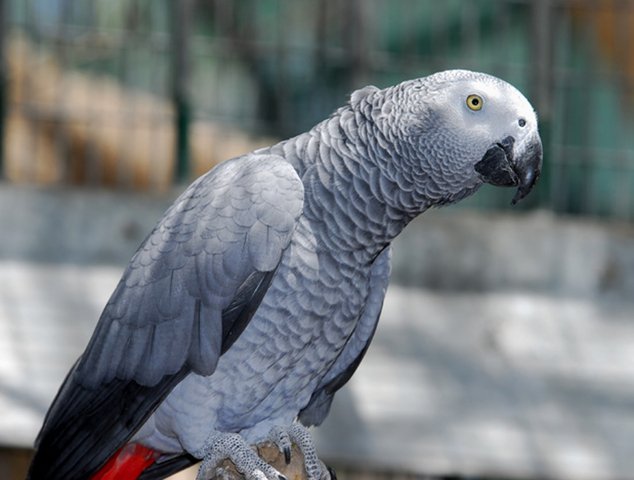
Introduction
The African gray parrot (Psittacus erithacus), also known as the Congo gray parrot, is widely regarded as one of the most intelligent and articulate of all bird species. Native to the rainforests of West and Central Africa, this medium-sized parrot has captivated humans for centuries with its remarkable ability to mimic human speech and sounds with extraordinary accuracy. In the wild, gray parrots live in complex social flocks and are known for their distinctive harsh screeching calls. Their popularity in the pet trade, however, has driven them to become one of the most heavily traded wild birds globally, contributing to significant population declines.
Taxonomy
The African gray parrot belongs to the family Psittacidae within the order Psittaciformes. The species Psittacus erithacus includes two recognized subspecies: the Congo gray parrot (P. e. erithacus), larger and lighter grey with a black beak, and the Timneh gray parrot (P. e. timneh), slightly smaller with a darker maroon tail and horn-coloured upper mandible. Recent molecular studies have refined understanding of their evolutionary relationships within the Psittacidae family, confirming their distinct lineage from other African parrots such as the Senegal parrot.
Physical Characteristics
African gray parrots measure approximately 33 centimetres in length and weigh 400 to 490 grams, with the Congo subspecies being slightly larger. Their plumage is predominantly a distinctive ash-grey, with a pale edging to feathers creating a scalloped appearance. The most striking feature is the bright red tail feathers, which contrast sharply with the grey body plumage in the Congo subspecies. The species possesses a large, powerful black beak adapted for cracking nuts and seeds, and notably large eyes surrounded by a distinctive white patch of bare skin. Their feet have a zygodactyl arrangement with two toes forward and two backward, providing exceptional grip for climbing and manipulating objects.
Habitat
African gray parrots are native to the dense rainforest regions of West and Central Africa, with the Congo subspecies ranging from southeastern Ivory Coast through Kenya and Tanzania to northwestern Angola and Uganda. The Timneh subspecies occupies a more restricted range in the upper Guinean forest region from Ivory Coast through Sierra Leone. Gray parrots require large tracts of intact rainforest and are considered an indicator species for forest health. They are commonly found in the canopy and edges of primary and secondary forests, as well as in forest clearings, galleries, and sometimes cultivated areas adjacent to forest.
Diet
In the wild, African gray parrots feed primarily on fruits, nuts, seeds, and leafy matter. Oil palm nuts constitute a particularly important food source in many parts of their range. They also consume flowers, bark, insects, and snails, demonstrating opportunistic feeding behaviour. Gray parrots typically forage in the canopy during morning and late afternoon hours, often travelling significant distances to established feeding grounds. In agricultural areas they may feed on cultivated crops including maize, which can bring them into conflict with farmers. Their strong beaks allow them to access hard-shelled fruits and nuts that many other birds cannot open.
Reproduction
African gray parrots are monogamous and form lifelong pair bonds. They nest in natural tree cavities, typically high in old-growth forest trees, where females lay two to four eggs. The incubation period lasts approximately thirty days, during which the male provides food for the incubating female. Chicks are altricial and require extensive parental care, remaining in the nest for about sixty days before fledging. Young parrots may remain with their parents for extended periods following fledging, learning critical survival skills. Gray parrots reach sexual maturity at three to five years of age and have low reproductive rates, contributing to their vulnerability to overharvesting.
Conservation
The African gray parrot is classified as Endangered by the IUCN, primarily due to unsustainable trapping for the international pet trade and habitat loss across its African range. An estimated two to three million individuals have been traded internationally since records began, making it one of the most heavily traded wild bird species. The species is listed under CITES Appendix I, which prohibits international commercial trade. Conservation efforts include habitat protection in key forested areas, community-based alternatives to trapping, and strict enforcement of trade regulations. Reintroduction programmes have had mixed success due to the complex social needs of the species.
Fun Facts
African gray parrots are among the few non-human animals documented to engage in true referential labelling, using human words with consistent meaning to communicate about specific objects or events. Studies have demonstrated they can understand concepts including colour, shape, number, and the absence of information. Alex, the most famous gray parrot studied by Dr. Irene Pepperberg, acquired a vocabulary of over one hundred words and demonstrated cognitive abilities comparable to those of dolphins and great apes. Wild gray parrots produce contact calls that are unique to individual birds, much like human names, allowing them to identify and locate specific flock members in dense rainforest environments.