 By st20113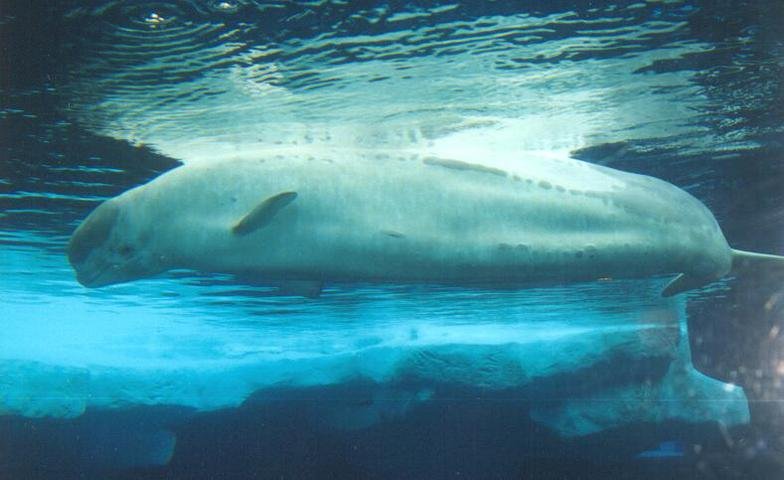
Introduction
The beluga whale (Delphinapterus leucas) is a small, distinctive white toothed whale endemic to Arctic and sub-Arctic waters. Known as the “sea canary” for its complex, high-pitched vocalizations, the beluga is among the most vocal of all cetaceans. Unlike most whales, belugas can rotate their heads and necks extensively, a trait unique among modern whales. They are highly social, living in groups called pods that may number from a few individuals to thousands during summer aggregations in shallow coastal waters.
Taxonomy
Belugas belong to the family Monodontidae, a small family of whales that also includes the narwhal. Despite their common name containing “whale,” belugas are more closely related to dolphins than to the great whales. The species Delphinapterus leucas translates to “finless white flipper,” referring to the animal’s lack of a dorsal fin and striking all-white coloration as adults. Genetic studies have identified several distinct populations with limited gene flow between them.
Physical Characteristics
Adult belugas are unmistakable for their pure white to cream-coloured skin, which provides camouflage in Arctic ice environments. Calves are born dark gray and gradually lighten over their first five to eight years. Adults measure three to five metres in length and weigh 500 to 1,500 kilograms, with females slightly smaller than males. The most distinctive features include a large, flexible forehead called the “melon,” which is used for echolocation, and a short, stubby dorsal ridge in place of a fin. Their six-to-ten-centimetre-thick blubber layer provides insulation in frigid Arctic waters.
Habitat
Belugas inhabit cold Arctic and sub-Arctic waters, with major populations in the Beaufort Sea, Hudson Bay, Baffin Bay, and along the coasts of Greenland and Russia. They are remarkable for their seasonal migrations, moving southward as Arctic ice forms in autumn and returning north as ice melts in spring. During summer, belugas congregate in thousands in warm, shallow estuaries and river deltas where they moult, give birth, and socialize. These seasonal aggregation sites are passed down across generations and are culturally significant to Arctic indigenous peoples.
Diet
Belugas are opportunistic feeders with a diet that varies by region and season. Primary prey includes various fish species such as salmon, cod, herring, and capelin, as well as squid, shrimp, and other crustaceans. During winter in icy regions, belugas feed extensively on fish living under sea ice. They employ diverse hunting strategies including cooperative hunting in groups, echolocation to detect prey under sediment, and even the ability to swallow prey whole at depths. Daily food intake can reach 2 to 3 percent of body weight during feeding seasons.
Reproduction
Belugas have a long reproductive cycle with females giving birth to a single calf every two to three years after a gestation of approximately fourteen months. Calving occurs primarily during summer when females congregate in warm estuaries. Newborn calves measure about 1.5 metres and are initially dark gray, gradually lightening over years. Lactation lasts twelve to twenty months, and calves remain with their mothers for extended periods, learning critical survival skills including migration routes, feeding grounds, and social behaviours within the pod structure.
Conservation
Beluga populations face multiple anthropogenic threats including climate change, which is rapidly altering Arctic sea ice habitats crucial for their survival. Entanglement in fishing gear, ocean noise pollution that disrupts echolocation and communication, and pollution bioaccumulation in their fatty tissues represent additional serious concerns. Some populations remain listed as endangered or of special concern. Indigenous subsistence hunting continues in some communities and is carefully managed under co-management agreements. Marine protected areas in key habitats represent one conservation strategy alongside monitoring and pollution reduction efforts.
Fun Facts
Belugas can change the shape of their facial bump, the “melon,” by blowing air around internal sacs, which aids in sound production for echolocation and communication. Their extremely flexible necks allow approximately 180-degree head movement, unlike most other whales. Belugas have been observed playing with objects, passing items between individuals, and even spitting water at one another, suggesting complex social intelligence. Several belugas have been recorded mimicking human speech patterns after interaction with trainers, making them among the most vocally flexible whales known.
[…] the rorquals, in the family Balaenopteridae, the grooved whales. It is a close relative of the Delphinapterus leucas (Beluga Whale) and other cetaceans within the order Artiodactyla’s whale branch, sharing the baleen-feeding […]