 By st20113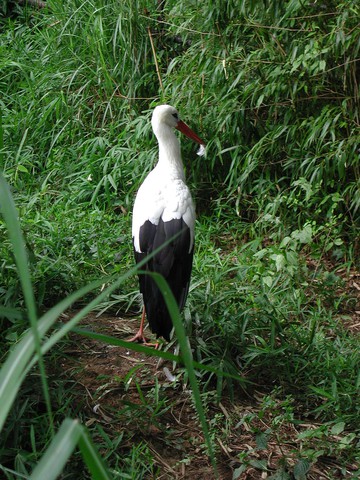
Introduction
The white stork is a large, striking wading bird that breeds across Europe, North Africa, and western and central Asia, and winters in sub-Saharan Africa and India. Instantly recognizable by its snowy white body, black flight feathers, and vivid red legs and bill, it is among the most beloved birds of the Old World. For centuries it has been a symbol of good fortune and, in European folklore, the bringer of newborn babies delivered to family homes. Its noisy rooftop nests have made it a familiar neighbor to millions of people.
Taxonomy
The white stork belongs to the family Ciconiidae, which includes all true storks, and it was formally described by Carl Linnaeus in 1758. Two subspecies are generally recognized: the nominate form breeding in Europe and western Asia, and a slightly smaller Asian race found from Central Asia eastward. Storks are related to herons, ibises, and spoonbills among the larger wading birds; in North America, a similar ecological role is played by the great blue heron, though the two species are not closely related.
Physical Characteristics
Standing up to 115 centimeters tall with a wingspan that can exceed 2 meters, the white stork is an imposing bird, with adults weighing between 2 and 4.5 kilograms. The plumage is predominantly white, with black flight feathers on the wings that are clearly visible in flight. The long legs and straight bill are bright red, while juveniles show duller, dark-tipped bills and browner tones. Storks are almost completely silent as adults, communicating instead by clattering their bills together, a sound that carries across fields and rooftops.
Habitat
White storks favor open country, including grasslands, pastures, wetlands, and farmland, where they can stride through shallow water or short vegetation in search of food. They avoid dense forest and steep terrain. Unlike most birds, they readily nest on human structures, including chimneys, roofs, telegraph poles, and purpose-built platforms, as well as in large trees. During the non-breeding season they gather in flocks across African wetlands, where they roost and feed in vast numbers alongside other migratory waterbirds such as snow geese.
Diet
The white stork is an opportunistic carnivore. Its diet includes insects, earthworms, amphibians, reptiles, small mammals, and fish, supplemented by carrion and even human refuse. It forages by walking steadily through fields and marshes, stabbing prey with its long bill. Grasshoppers and locusts can make up a large part of the diet during the African winter, and flocks may follow fires or plows to capture the insects and rodents they disturb. In agricultural areas, storks are welcomed by farmers as natural pest controllers.
Reproduction
White storks form long-term pair bonds and return to the same nest year after year, adding sticks until the platform can grow to over two meters across and weigh hundreds of kilograms. A clutch of one to seven eggs, typically four, is laid in spring and incubated by both parents for about 33 days. Chicks fledge at roughly two months of age but remain dependent on their parents for several more weeks. Nestlings face predation from climbing mammals such as foxes, and pairs may raise a single brood each year, with wild birds living two decades or more.
Conservation
The white stork is listed as Least Concern by the IUCN, with a population that has recovered strongly in many regions after historical declines. Reintroduction programs in Switzerland, the Netherlands, and Sweden helped restore vanished populations, and the European population has grown steadily since the 1990s. Modern threats include habitat loss, collisions with power lines, pesticide use, and drought in the Sahel wintering grounds. Conservationists continue to erect artificial nesting platforms to compensate for the loss of traditional nesting sites, and many countries now protect stork nests by law.
Fun Facts
The legend that storks deliver babies dates back centuries and was popularized across northern Europe. A stork’s bill-clattering is a greeting, not a call. Some European populations have abandoned migration entirely and now winter near rubbish dumps in Iberia. A single nest may be reused by generations of storks for decades, growing into a local landmark, and the longest migrations of these birds can cover more than 10,000 kilometers each year.
[…] in 1758. It belongs to the family Ciconiidae and the genus Ciconia, which also includes the White Stork. The two species share the same general form but differ sharply in colour and tolerance of people, […]