 By st20113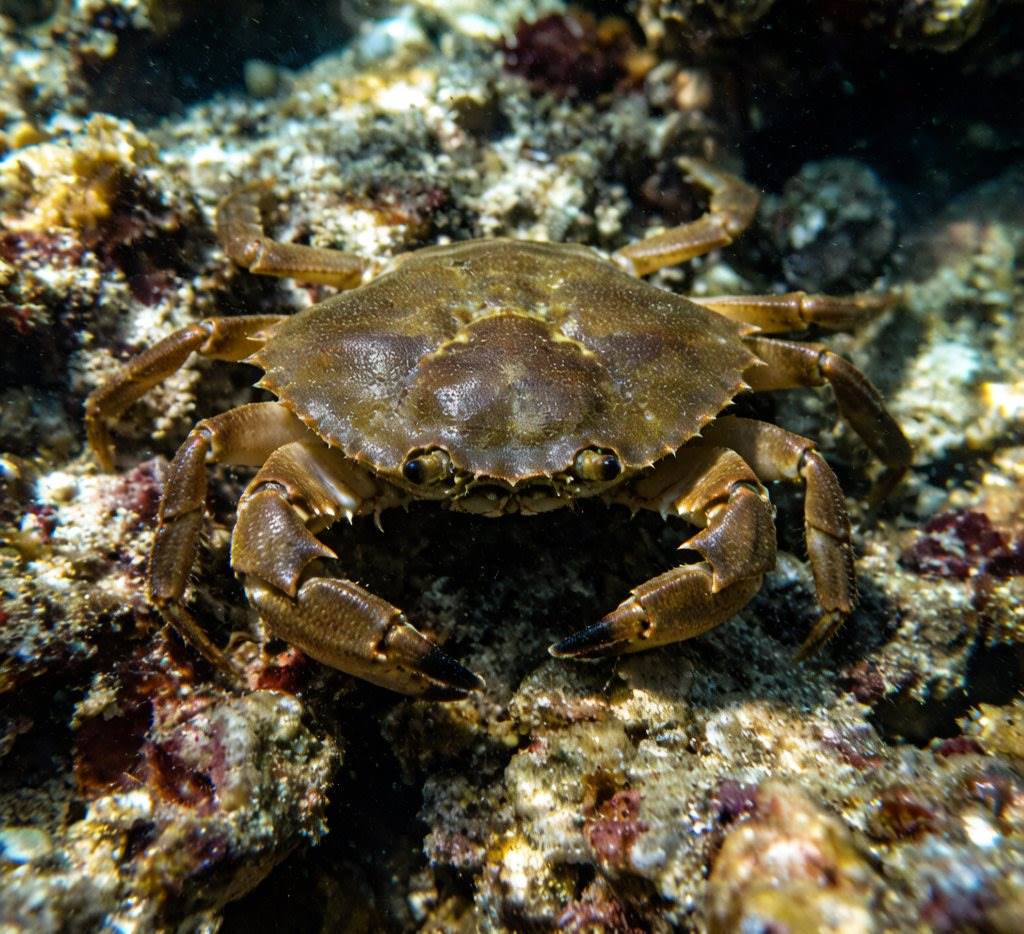
Introduction
The Atlantic Rock Crab, Cancer irroratus, also known as the Atlantic Jonah crab, is a commercially important crustacean found along the western Atlantic seaboard from Newfoundland to South Carolina. Smaller than the prized Maine lobster, the Atlantic Rock Crab has become increasingly significant to Atlantic fisheries as consumer interest in sustainable seafood has grown. Its rounded, rock-hard carapace and powerful claws make it a formidable resident of the rocky bottoms of the Gulf of Maine and Georges Bank. Ecologically, the crab plays a dual role as predator of benthic invertebrates and scavenger that recycles nutrients on the seafloor. Its market has expanded in recent decades, particularly for its sweet, tender claws, often sold as “Maine crab claws.”
Taxonomy
The Atlantic Rock Crab belongs to the family Cancridae, order Decapoda, class Malacostraca, phylum Arthropoda. The genus name Cancer is Latin for “crab” and is the root of the zodiac sign of the same name. The species name irroratus means “sprinkled” in Latin, referring to the speckled orange spots on the carapace. It is closely related to the European Shore Crab of the eastern Atlantic. Like all decapod crustaceans, it possesses a hard chitin exoskeleton that must be periodically shed to allow growth. The Japanese Spider Crab, the world’s largest crab, belongs to the same order Decapoda but represents a dramatically different body plan evolved for deep-water environments.
Physical Characteristics
The Atlantic Rock Crab has a smooth, rounded carapace with distinctive orange to reddish spots on the upper surface and a creamy white underside. Adults range from 8 to 17 centimeters in width, with males generally larger. Its two large front claws are muscular and powerful, used to grip and crush the shells of prey, and are the most commercially prized part of the animal. The four hind pairs of legs are adapted for walking on the seafloor, and the last pair is flattened for swimming and maintaining water flow over the gills. Like all true crabs, it has a reduced abdomen tucked flat beneath the carapace.
Habitat
The Atlantic Rock Crab inhabits rocky coastlines and gravel bottoms from Newfoundland and Labrador south to North Carolina, with its center of abundance in the Gulf of Maine and Georges Bank. It lives from the low intertidal zone down to about 90 meters, most commonly between 10 and 50 meters. During the day it shelters in crevices and under boulders, emerging at night to forage. Its preference for rough, rocky habitat rather than soft mud gives it the common name “rock crab.” Like the Green Sea Turtle, the Atlantic Rock Crab is sensitive to water temperature, with activity peaking in the warmer summer months.
Diet
The Atlantic Rock Crab is an opportunistic omnivore and scavenger, feeding on mollusks, small fish, seaweed, carrion, and a variety of benthic invertebrates. Its powerful claws crush the shells of clams, mussels, and small oysters to access the soft flesh inside. It actively hunts at night, venturing from shelter to capture prey and scavenge on dead animals. Its feeding activities help aerate and turnover sediments on the seafloor.
Reproduction
Atlantic Rock Crabs mate from spring through fall, with peaks in late spring and early autumn. During courtship, males carry females beneath their bodies for days before the female molts, the final step in her preparation for mating. After the female’s new shell begins to harden, the male transfers sperm packets using specialized limbs called gonopods. The female broods the fertilized eggs as a bright orange egg mass, called a sponge, containing 500,000 to 2 million eggs. The eggs hatch into planktonic larvae that drift for several weeks before settling to the bottom as juvenile crabs. Larval survival varies considerably from year to year depending on oceanographic conditions.
Conservation
The Atlantic Rock Crab is classified as Least Concern with stable populations throughout much of its range. Management regulations include minimum size limits and seasonal closures that help sustain the fishery. The species supports important commercial fisheries in New England and Atlantic Canada. Short-lived and fast-growing, it recovers quickly from fishing pressure, making it a more sustainable option compared to longer-lived marine species. Like the Atlantic Horseshoe Crab, it faces indirect pressure from coastal development and water pollution.
Fun Facts
The Atlantic Rock Crab’s first line of defense is to autotomously shed a claw and flee—the severed claw twitches to distract the predator while the crab escapes, and the limb regenerates over subsequent molts. Crabs have been documented living for over eight years in the wild. The claws generate crushing forces sufficient to break the shell of a thick-shelled clam. They communicate using chemical signals in their urine, detected with sensory hairs on their antennae—a sophisticated language guiding them toward food, mates, and away from threats. The claws, often labeled “Maine crab claws,” are prized by chefs for being sweeter and more tender than those of larger king crab species.