 By st20113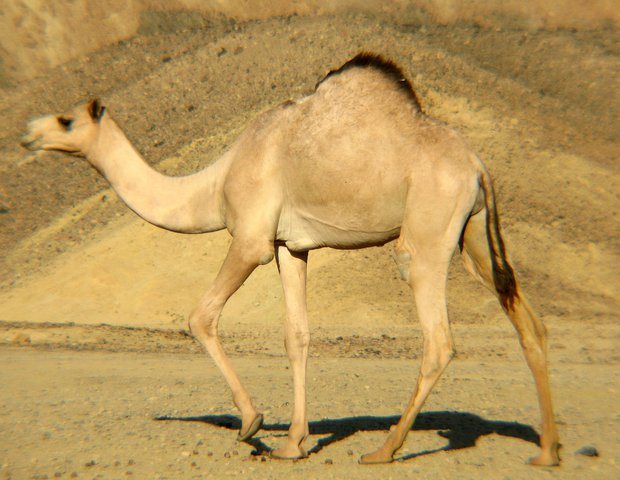
Introduction
The Dromedary Camel, Camelus dromedarius, is the world’s most iconic desert mammal and the largest member of the camel family. With its single hump, elongated neck, and extraordinary tolerance for heat and dehydration, this domesticated species has served human populations across the arid regions of North Africa, the Arabian Peninsula, and the Horn of Africa for over 5,000 years. Originally domesticated in southern Arabia, the dromedary became the backbone of trade and travel along ancient caravan routes. Introduced to Australia in the 19th century, it has since established large feral populations in the outback. Its cultural and economic significance remains profound, providing milk, meat, leather, and transport across some of the most inhospitable terrain on Earth.
Taxonomy
The dromedary belongs to the family Camelidae, order Artiodactyla. Its genus name Camelus derives from the Greek kamelos, while dromedarius comes from the Greek dromas, meaning “runner.” Domesticated around 3,000 BCE, it diverged from its wild ancestor Camelus ferus, which is now critically endangered. Unlike the two-humped Bactrian Camel, which inhabits the cold steppes of Central Asia, the dromedary is exclusively adapted to hot, arid environments. Camelids represent an ancient lineage within the even-toed ungulates, having diverged from other artiodactyls tens of millions of years ago.
Physical Characteristics
The dromedary stands 1.8 to 2 meters at the shoulder and weighs 300 to 700 kilograms, with males substantially larger. Its most recognizable feature is the single hump, which stores fat—not water—and serves as an energy reserve during food scarcity. Thick eyelashes and slit-like nostrils that close against sand provide protection from desert storms. Broad, leathery feet prevent sinking into sand, and long legs elevate the body above the scorching ground. The coat ranges from creamy white to dark brown. Remarkably, the dromedary can lose up to 25 percent of its body water without ill effect and can drink over 100 liters in minutes when water becomes available.
Habitat
Natural and feral populations occur across the Horn of Africa, the Arabian Peninsula, and North Africa, with the largest feral populations in the Australian outback. The dromedary inhabits rocky mountains, arid plains, and scrubland where sparse vegetation persists. It is highly mobile, often traveling many kilometers daily in search of water and browse. Its tolerance for extreme heat allows activity during the day when other large mammals retreat to shade. The species thrives in environments where surface water may be absent for months at a time.
Diet
As a browser, the dromedary feeds on trees, shrubs, dry grasses, and succulent plants, including thorny Acacia species that few other large animals can consume. Unlike true ruminants, it has a three-chambered stomach and can extract moisture from vegetation. It can stand on its hind legs to reach tree foliage nearly three meters high. When water is available, it may drink over 100 liters in a single session. In the Australian outback, feral dromedaries browse on more than 80 plant species, demonstrating their remarkable dietary adaptability.
Reproduction
Dromedaries reach sexual maturity between three and five years. Males become aggressive during the rut, inflating a soft palate sac and competing fiercely for mates. Gestation lasts approximately 15 months, after which a single precocial calf is born—the youngster can stand and walk within hours. The mother nurses the calf for over a year while it learns to navigate the desert environment. The species produces one offspring every two to three years and has a lifespan of 40 to 50 years in captivity.
Conservation
Classified as a domesticated species, the dromedary is not globally threatened. However, populations in the Horn of Africa face pressure from habitat degradation, prolonged drought, and competition with expanding livestock herds. In Australia, feral populations have grown significantly and are now managed commercially for meat and leather. As with the African Elephant, the dromedary shapes its landscape through its foraging patterns, maintaining ecological balance in arid regions.
Fun Facts
The dromedary can carry loads exceeding 200 kilograms and walk up to 40 kilometers in a single day. Its milk is richer in vitamin C, iron, and minerals than cow’s milk and has been consumed in the Arabian Peninsula for millennia. Its dry feces burn even when fresh, providing a practical cooking fuel in fuel-scarce environments. Like the Fennec Fox, the dromedary has evolved oversized ears to dissipate body heat—an example of convergent evolution among unrelated desert mammals facing identical environmental pressures.
[…] reached north Africa from Arabia in about the 3rd century AD. The dromedary camel can go for days without a drink. It carries a heavy load and copes with great heat. Without it the […]