 By st20113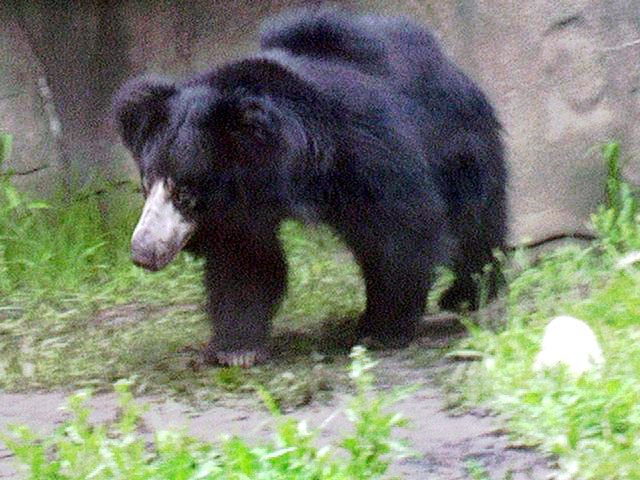
Introduction
The sloth bear, Melursus ursinus, is a shaggy, insect-eating bear endemic to the Indian subcontinent, instantly recognizable by its long black coat, pale muzzle, and mane of hair framing its face. Despite its name, the sloth bear is neither slow nor related to tree sloths — the name likely originated with early observers who noted its unusual shambling gait and habit of hanging from branches. It is the only bear species that is primarily insectivorous, and its vacuum-suction feeding technique for raiding termite mounds has made it one of the most specialized bears on Earth. Classified as Vulnerable with fewer than 20,000 individuals remaining, the sloth bear inhabits the forests of India, Sri Lanka, and Nepal.
Taxonomy
The sloth bear belongs to the family Ursidae and is classified in its own genus Melursus, though some taxonomic systems place it within Ursus. Molecular analyses place the sloth bear as a sister lineage to the sun bear of Southeast Asia, with both species sharing a common ancestor that diverged during the Miocene epoch. The sloth bear’s closest ecological competitor is the Bengal tiger, which shares the same forest habitats and occasionally preys on sloth bear cubs.
Physical Characteristics
Adult sloth bears weigh 55 to 145 kilograms, with males roughly 30 percent larger than females. The most distinctive feature is the long, shaggy black coat with a conspicuous pale chest patch — unique among bears. The hair on the neck and shoulders forms a mane-like ruff that can be erected when the bear feels threatened. The sloth bear’s muzzle is long and mobile with bare, protruding lips adapted for vacuum-sucking insects. Unlike most bears, it has only two upper incisors, leaving a gap that facilitates the suction mechanism. Its front claws exceed 7.5 centimeters — perfectly suited for ripping open rock-hard termite mounds.
Habitat
The sloth bear inhabits a range of forest types across the Indian subcontinent, including tropical evergreen, moist deciduous, dry deciduous, and the tall grass meadows of the terai. It is primarily a lowland forest dweller, rarely found above 1,500 meters. Grasslands adjacent to forests are important foraging areas during the fruiting season. The Indian mongoose shares the forest understory with the sloth bear, though it occupies a different ecological niche. Range contraction driven by habitat loss has fragmented sloth bear populations, making the preservation of connected forest corridors a conservation priority.
Diet
The sloth bear is primarily insectivorous, with termites and ants comprising the bulk of its diet. Using its powerful claws to tear open termite mounds and its vacuum-suction mouth to ingest insects, a single sloth bear can consume up to 30,000 termites in one night. The sense of smell is extraordinarily developed, allowing detection of termite galleries beneath the soil from a distance. In addition to insects, sloth bears consume quantities of fruit including mangoes and figs, which they digest efficiently enough to disperse seeds through their scat.
Reproduction
Sloth bears are solitary except during mating and cub-rearing. Breeding peaks between April and June, with births between November and January after a gestation of roughly 190 to 210 days. Litter size is typically one to three cubs, born in a sheltered den or cave. Newborns are extremely small — about 400 grams — with closed eyes. Cubs ride on their mother’s back, a behavior unusual among bears possibly serving to protect them from ground-level threats including infanticidal males. Cubs remain with their mother for 2 to 3 years, learning foraging skills before dispersing. This extended maternal dependency makes sloth bear populations particularly sensitive to adult female mortality.
Conservation
The sloth bear is classified as Vulnerable by the IUCN, with populations declining across its range. Primary threats include habitat loss from agriculture, infrastructure development, and mining that fragments forest habitat. Human-wildlife conflict is a serious and growing problem — sloth bears occasionally attack humans when surprised at close range, and such incidents are increasing as human settlements expand into bear habitat. Historically, sloth bears were captured in large numbers for “dancing bear” entertainment, a practice now largely suppressed through conservation efforts. The species is protected under India’s Wildlife Protection Act, and key populations are conserved within national parks and wildlife sanctuaries.
Fun Facts
The sloth bear’s feeding technique is one of the most specialized of any mammal: it can generate suction pressures of minus 20 atmospheres by closing its mouth around a termite mound opening and creating a vacuum with its tongue and flexible lips — effectively a living vacuum cleaner for insect colonies. Its long, curved claws can tear through the rock-hard crust of termite mounds in minutes. The sloth bear’s loud, pig-like grunts and slurping sounds while feeding can be heard from a considerable distance. The species is more aggressive when cornered than almost any other bear, making surprise encounters genuinely dangerous.