 By st20113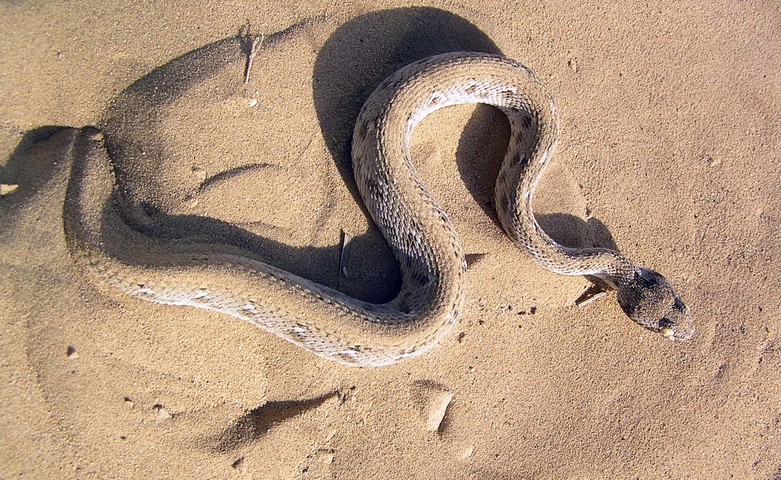
Introduction
The saw-scaled viper (Echis carinatus) is a small but highly venomous snake of the family Viperidae. Despite its modest size, it is considered one of the most medically important snakes in the world because of the sheer number of bites it inflicts across Africa, the Middle East, and the Indian subcontinent. Its name comes from the distinctive rasping sound it produces by rubbing sections of its body together when threatened, a warning that has saved many attentive travellers from a careless step.
Taxonomy
The species sits in the genus Echis, a group of small vipers sometimes called carpet vipers. Echis carinatus was first described by the German naturalist Edward Eversmann in 1831. Several subspecies are recognised across its range, each adapted to local arid conditions. The genus is most diverse in Africa and the Arabian Peninsula, where related species occupy similar dry habitats, and the group as a whole illustrates the success of vipers in hot, open environments.
Physical Characteristics
Adults usually measure 40 to 60 centimetres, with some individuals reaching 80 centimetres. The body is stout, with a broad, triangular head and small eyes with vertical pupils. Its most distinctive feature is the keeled, serrated scales along the flanks, which produce the species’ signature warning sound when rubbed together. Coloration is a cryptic sandy, grey, or buff pattern with darker blotches, providing excellent camouflage against dry soil and rock where the snake waits in ambush.
Habitat
Saw-scaled vipers occupy arid and semi-arid environments: sandy desert, rocky scrub, dry grassland, and the margins of cultivated land. They are often found near human settlements, where rodents attracted to stored grain provide abundant prey. Primarily nocturnal in the hottest months, they may bask during the day in cooler seasons. Their tolerance of dry, open country makes them one of the most widespread vipers of the region and brings them into frequent contact with people.
Diet
These vipers are ambush predators that feed on small mammals, lizards, frogs, and large insects such as scorpions and centipedes. They rely on a potent haemotoxic venom delivered through hollow fangs to subdue prey quickly. After striking, the snake tracks the wounded animal by scent and swallows it whole. Because they consume so many rodents, saw-scaled vipers play an important role in controlling pest populations around farms and reducing the spread of crop damage. A single large meal can sustain the snake for weeks during cool weather, allowing it to wait patiently between hunts.
Reproduction
Like most vipers, Echis carinatus is ovoviviparous: the young develop inside the mother and are born live. A single litter can contain between eight and twenty offspring, depending on the size and condition of the female. Births occur during the warmer, wetter part of the year when food is most abundant. The newborn vipers are independent from birth and are already equipped with functional venom, able to fend for themselves within hours of being born. The young measure only about 10 centimetres at birth and grow rapidly through their first year.
Conservation
The saw-scaled viper is listed as Least Concern, reflecting its very wide distribution and large, stable population. It tolerates human-altered landscapes better than many snakes and remains common across its range. The main threat to the species is local persecution by people who fear its bite. Public education about first-aid and the snake’s ecological value is important where it lives alongside dense human populations, since unnecessary killing reduces natural rodent control.
Fun Facts
When alarmed, the saw-scaled viper coils its body and rubs the keeled scales on its sides together, producing a sharp “sizzling” noise that warns predators to keep away. It can also move with a rapid sidewinding motion across loose sand. Although small, its venom can cause severe bleeding and, without treatment, death, so it is respected alongside larger reptiles such as the Nile crocodile and the Komodo dragon. Large mammals including the lion occasionally share its dry habitats, though the two rarely interact.