 By st20113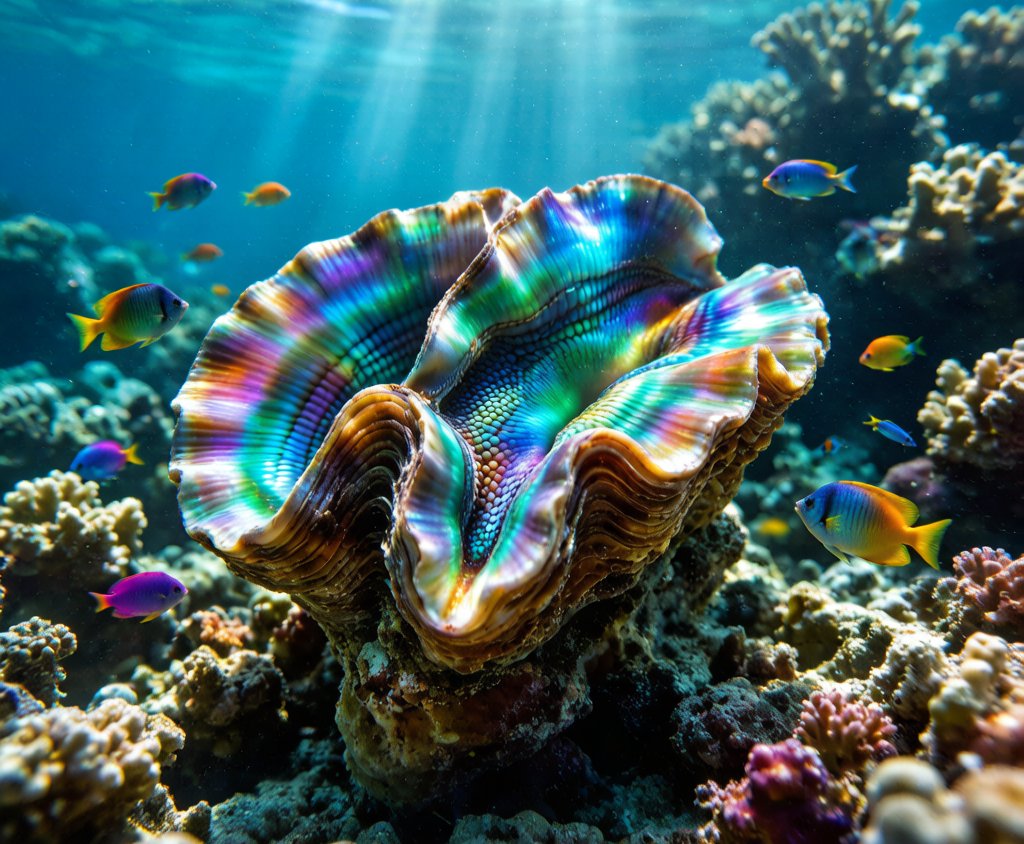
Introduction
The giant clam is the largest living bivalve mollusc in the world, capable of growing shells more than 1.2 metres across and weighing over 200 kilograms. Native to the warm coral reefs of the Indo-Pacific, it is a familiar and iconic inhabitant of tropical seas. Despite its fearsome size, the giant clam is a peaceful filter feeder that forms a remarkable partnership with microscopic algae. The starfish and other reef dwellers share its sunlit shallow waters, but few match its scale.
Taxonomy
Giant clams belong to the genus Tridacna within the family Cardiidae, the cockles, though they were once placed in their own family Tridacnidae. Tridacna gigas is the largest of roughly a dozen Tridacna species found across the Pacific and Indian Oceans. As molluscs, they are invertebrates related to oysters, mussels, and scallops. Their evolutionary success on reefs is tied to a unique symbiosis with photosynthetic algae living in their tissues.
Physical Characteristics
The giant clam’s shell is thick, heavy, and folded into a series of scaly ridges, usually grey, brown, or greenish in colour. The soft mantle tissue that lines the shell is vividly coloured in blues, greens, purples, and golds, displaying intricate patterns unique to each individual. The mantle is exposed to light and hosts symbiotic algae called zooxanthellae. A large muscle, the adductor, snaps the shell shut when the clam is disturbed. The gaping shells of giant clams can be mistaken for a hazard, but they close far too slowly to trap a swimmer. Beside the jellyfish, few reef animals are as visually striking.
Habitat
Giant clams live on coral reef flats and lagoons in the Indo-Pacific, typically in clear, shallow water less than 20 metres deep where sunlight penetrates easily. They anchor themselves to the reef substrate, often partly buried, and remain fixed in place for life once mature. Warm, nutrient-rich, well-lit waters are essential for the algae they depend on. They are found from the Red Sea and East Africa across to Polynesia and northern Australia.
Diet
Although giant clams filter plankton from the water with their siphons, most of their nutrition comes from the algae living in their mantle tissue. Through photosynthesis, the zooxanthellae convert sunlight into sugars and proteins that the clam absorbs directly. In return, the clam provides the algae with a safe home and access to sunlight and nutrients. This partnership allows the giant clam to thrive in nutrient-poor tropical waters where filter feeding alone would be insufficient. They open their mantles widest during the day to capture maximum light.
Reproduction
Giant clams are broadcast spawners, releasing vast clouds of eggs and sperm into the water column simultaneously during spawning events, often triggered by the full moon. A single large female can release over a billion eggs in a season. Fertilised larvae drift as plankton for several weeks before settling onto the reef and metamorphosing into miniature clams. They begin life relying on plankton, then gradually acquire the algae that will sustain them as adults. Survival to maturity is low, with many larvae eaten by other reef organisms.
Conservation
The giant clam is listed as vulnerable by conservation authorities, threatened by overharvesting for food, the ornamental shell trade, and damage to coral reefs from warming and bleaching. Because the algae depend on sunlight and stable temperatures, climate change poses a serious risk. Marine protected areas and aquaculture programmes now breed giant clams for reef restoration and the aquarium trade, reducing pressure on wild populations. Unlike the more mobile lobster, the clam cannot flee degraded habitat, making protection especially important.
Fun Facts
The giant clam can live for more than 100 years, making it one of the longest-lived invertebrates. Its brilliant colours come from combinations of algae and structural pigments, not paint or decoration. A mature giant clam can filter dozens of litres of water an hour, helping keep reefs clear. The “man-eating clam” legends of old sailors were pure myth—the clam’s closing reflex is far too slow to endanger a person. Each clam’s colour pattern is as individual as a fingerprint.