 By st20113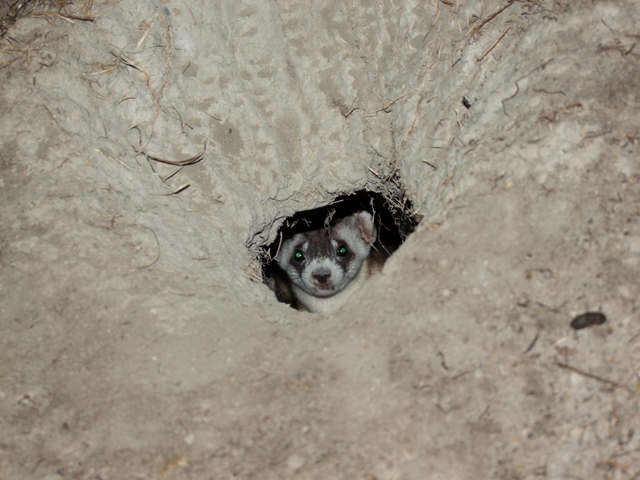
Introduction
The black-footed ferret (Mustela nigripes) is one of the rarest and most dramatic conservation stories in North American wildlife history. This slender, nocturnal mustelid, recognized instantly by its creamy body and striking black bandit mask across the eyes, was the first species to be officially declared extinct in the wild — only to be rediscovered barely two years later. As an obligate predator of prairie dogs, the black-footed ferret’s entire existence is intertwined with the fate of the vast prairie dog colonies that once carpeted the American Great Plains, making its recovery a testament to the power of ecosystem-based conservation.
Taxonomy
The black-footed ferret belongs to the genus Mustela in the family Mustelidae, which also includes weasels, otters, badgers, and minks. Its closest relative is the Siberian polecat (Mustela eversmanii), with which it can produce viable hybrid offspring in captivity. Molecular dating suggests that the black-footed ferret lineage diverged from a common ancestor with the Siberian polecat approximately 1.5 to 2 million years ago. Two historical subspecies were recognized, though M. n. nigripes is the only extant one following the extinction of the Mexican subspecies M. n. al上新icas in the early twentieth century.
Physical Characteristics
Adult black-footed ferrets have an elongated, sinuous body measuring 38 to 50 centimetres in body length, with a distinctive 13 to 15 centimetre tail tipped in black. They weigh between 650 and 1,400 grams, with males slightly larger than females. Their fur is pale yellow-buff to cream along the flanks and belly, contrasting sharply with the jet-black colouration of the feet, lower legs, tail tip, and the defining dark mask that runs across the forehead and around both eyes. The dark eye mask is thought to function similarly to athletic “black-out” paint, reducing glare during nocturnal and crepuscular hunting excursions. Their short, powerful limbs are adapted for burrowing, with non-retractable claws designed for excavation.
Habitat
Black-footed ferrets are obligate inhabitants of prairie dog towns across the western Great Plains of North America. They are entirely dependent on prairie dog colonies for three essential resources: food, shelter, and protection from predators. Prairie dog burrows provide shelter during harsh weather, serve as natal dens for raising young, and offer refuge from raptors and larger mammalian predators. The species historically ranged across 300,000 square kilometres of prairie grassland, but massive reductions in prairie dog populations through poisoning, shooting, and disease have confined remaining ferret populations to isolated pockets of suitable habitat in Wyoming, South Dakota, Arizona, and New Mexico.
Diet
The black-footed ferret is an obligate predator of prairie dogs, with prairie dogs constituting over 90 percent of its diet by frequency and biomass. A single ferret requires approximately one prairie dog every three to four days, consuming roughly 50 to 70 grams of food daily. They are nocturnal hunters, entering prairie dog burrows at night to dispatch their prey with a swift bite to the neck or skull. In lean periods, they supplement their diet with ground squirrels, mice, rabbits, and birds, but attempts to establish ferret populations in areas without adequate prairie dog densities have consistently failed.
Reproduction
Mating occurs in late winter and early spring, with litters of one to seven — typically three to four — kits born in May and June after a gestation of 44 to 45 days. Kits are born blind, deaf, and helpless, covered in fine white fur. Their eyes open at approximately 34 to 37 days, and they begin eating solid food around two months of age. By late summer, the kits are accompanying their mother above ground on hunting expeditions, learning the skills necessary for independent life. Females are solely responsible for raising the young; males provide no parental care and may occasionally prey on kits if encountered.
Conservation
The black-footed ferret represents one of the most dramatic conservation recoveries of any species. Following its rediscovery in 1981, a comprehensive captive breeding program was initiated, with all living individuals descended from just seven founders. Reintroduction programs have now established self-sustaining populations in eight US states and Mexico, with the current wild population exceeding 1,000 individuals. Despite this success, the species remains listed as Endangered, as all wild populations are maintained through active management and remain vulnerable to disease outbreaks, habitat loss, and the continuing decline of prairie dog populations.
Fun Facts
The black-footed ferret is the only ferret species native to North America; the domestic ferret (Mustela putorius furo) was introduced from Europe and is descended from the European polecat. The species was the first animal to be officially listed as Extinct in the Wild under the US Endangered Species Act. Its scientific name Mustela nigripes translates directly to “black-footed weasel.” Their dark eye mask is a remarkably consistent feature across all individuals, unlike the variable chest patches of other mustelids such as sun bears or giant otters.