 By st20113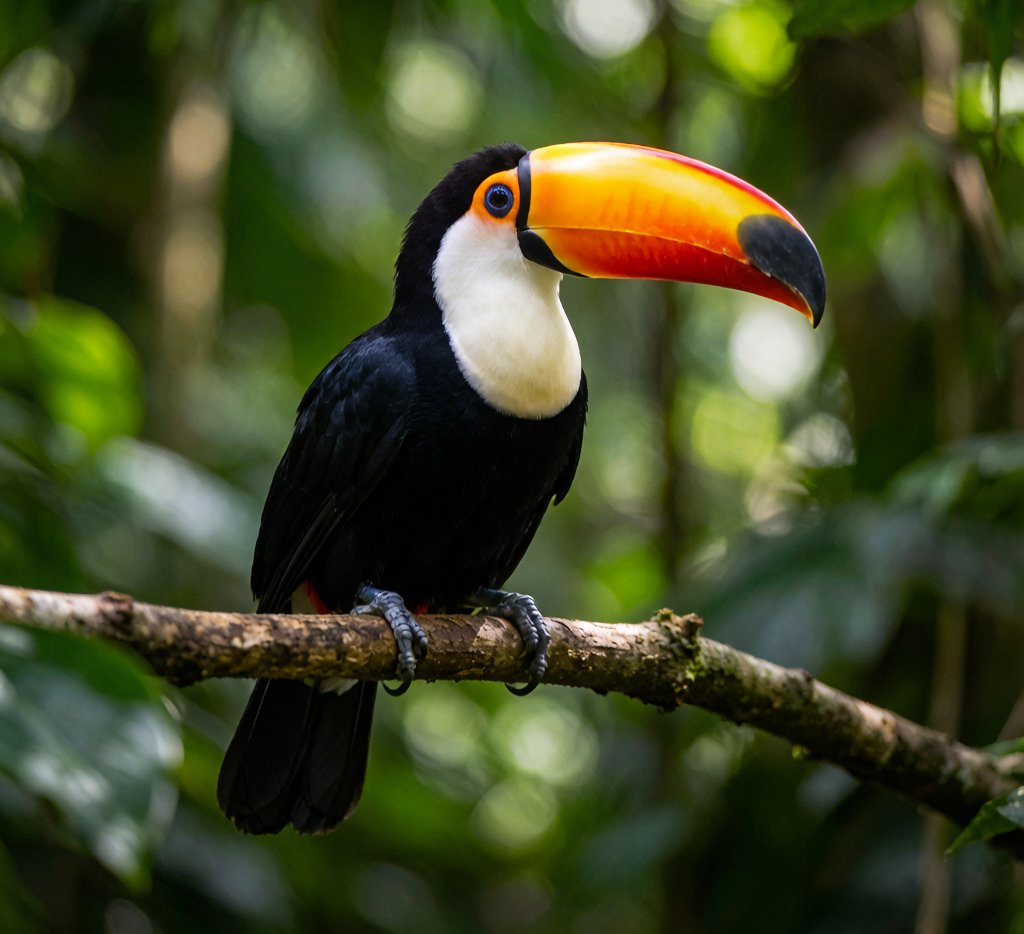
Introduction
The toco toucan is the largest and most recognizable of all toucans, famous for its enormous orange bill and bold black-and-white plumage. It is the most widespread toucan species and a familiar sight across much of South America. With its oversized beak and playful behavior, the toco toucan has become a beloved symbol of the tropical forests and savannas it calls home.
Taxonomy
The toco toucan belongs to the family Ramphastidae, the toucan family, and its scientific name is Ramphastos toco. It is one of about forty toucan species found in the Americas. The genus Ramphastos includes the large toucans with black plumage and brightly colored bills. The toco toucan is distinguished from its relatives by its white throat and the orange patch of bare skin around its eye. Fossil and genetic evidence place the toucan family in the order Piciformes, making toucans distant relatives of woodpeckers, though their appearance is very different.
Physical Characteristics
The toco toucan is a large bird, measuring about 55 to 65 centimeters in length, with males slightly larger than females. Its most striking feature is the bill, which can reach 20 centimeters long and is bright orange with a black tip. Despite its size, the bill is surprisingly light, made of a honeycomb of thin bone with a hard outer shell of keratin. The bird’s body is mostly black, with a white throat, chest, and upper tail coverts, and a red band at the tip of the tail. Its blue eyes are surrounded by bare orange skin. The bill helps with feeding, display, and heat regulation, allowing the toucan to shed excess body heat.
Habitat
The toco toucan is found in central and eastern South America, from Bolivia and Brazil to Argentina and Paraguay. Unlike many toucans that live deep in dense rainforest, the toco toucan prefers open woodland, savanna, gallery forest along rivers, and forest edges. It is often seen perched in the tops of tall trees or flying in small groups across open country. The species has adapted well to human-modified landscapes and is frequently observed in orchards, parks, and gardens. Its range overlaps with many other South American birds and mammals, including the blue-and-yellow macaw.
Diet
The toco toucan is omnivorous and eats a wide variety of foods. Fruit makes up the largest part of its diet, and the toucan uses its long bill to reach fruit at the tips of thin branches that could not support its body weight. It also eats insects, spiders, eggs, small reptiles, and the nestlings of other birds. The toucan plucks food with the tip of its bill and tosses it backward into its throat. Flocks often forage together, and individuals occasionally steal food from one another. Water is obtained mainly from the fruit and prey it consumes.
Reproduction
Toco toucans are monogamous and nest in tree cavities, often using holes originally made by woodpeckers or created by natural decay. Both parents incubate the eggs, and the chicks are born blind and naked. The parents feed the young by passing food with the tips of their bills, and the chicks develop their own bills gradually, reaching full size after several weeks. Young toucans fledge after about six weeks and remain with their parents for some time, learning to find food. Breeding usually occurs during the rainy season, when fruit is most abundant. Pairs often use the same nesting site year after year.
Conservation
The toco toucan is classified as Least Concern by the International Union for Conservation of Nature, thanks to its wide range and large population. However, local populations face threats from deforestation, capture for the pet trade, and persecution by fruit farmers. Habitat loss in parts of Brazil is a growing concern, and the species depends on the survival of wooded savannas and gallery forests. As a large, conspicuous bird, the toco toucan is also hunted in some areas. Protecting woodland corridors and limiting illegal trapping are important steps for maintaining healthy populations.
Fun Facts
The toco toucan’s bill looks heavy but weighs almost nothing, making up only about five percent of its body mass. The toucan sleeps with its bill tucked beneath its wing and its tail folded over its back, forming a compact ball of feathers. Its long tongue is nearly as long as its bill and helps it manipulate food. Toco toucans are not strong fliers and mostly glide from tree to tree. They sometimes bathe in rainwater collected in tree hollows. Although they rarely fall prey to predators in the wild, their eggs and chicks are vulnerable to snakes and small mammals, while adult toucans may be hunted by jaguars and large birds of prey.