 By st20113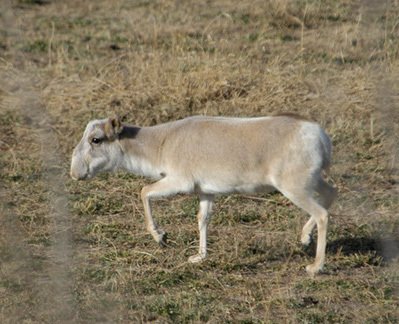
Introduction
The saiga is a remarkable antelope of the Eurasian steppe, instantly recognizable by its swollen, trunk-like nose. Once numbering in the millions, this nomadic grazer undertakes some of the longest migrations of any land mammal. Its unusual appearance and dramatic population history make it one of the most fascinating and vulnerable animals in the world.
Taxonomy
The saiga belongs to the family Bovidae, the group that includes cattle, sheep, goats, and other antelopes. Its scientific name is Saiga tatarica, and it is the only living member of its genus. Two subspecies are recognized: the Russian saiga, Saiga tatarica tatarica, which lives in Central Asia and Mongolia, and the Mongolian saiga, Saiga tatarica mongolica, which is restricted to western Mongolia. Fossil evidence shows that saigas once roamed across Europe and North America during the last ice age, alongside mammoths and woolly rhinoceroses. Today the saiga survives in only a small fraction of its former range.
Physical Characteristics
The saiga is a medium-sized antelope, standing about 60 to 80 centimeters at the shoulder and weighing between 21 and 51 kilograms. Both sexes carry horns, but those of males are larger and more strongly curved, reaching up to 30 centimeters in length and pale amber in color. The most famous feature is the enlarged, flexible nose, which hangs over the mouth like a short trunk. This nose contains a complex system of nasal passages that warm and moisten cold winter air and filter dust raised by the herd in summer. The saiga’s coat changes with the seasons: it is short and sandy-tan in summer, and thick, pale, and woolly in winter.
Habitat
Saigas inhabit open grasslands, semi-deserts, and steppes of Central Asia, including parts of Kazakhstan, Russia, Uzbekistan, and Mongolia. They avoid forests and mountains, preferring flat, open country where they can spot predators from a distance. The steppe climate is extreme, with scorching summers, freezing winters, and strong winds. Saigas are highly nomadic and move constantly in search of fresh pasture and water. In spring, vast herds gather and migrate northward, covering hundreds of kilometers in a single season before returning south in autumn.
Diet
The saiga is a herbivore that feeds on a wide variety of steppe plants, including grasses, herbs, and shrubs. It is an opportunistic grazer and will eat more than a hundred different plant species, many of which are toxic to livestock. The saiga’s ability to digest these plants allows it to use pastures that other herbivores cannot. It drinks water when available but can survive long periods without it, obtaining moisture from succulent vegetation. During winter, saigas dig through snow with their hooves to reach buried grass.
Reproduction
Saigas are seasonal breeders, and mating occurs in December. Males compete fiercely for females, sometimes locking their horns in violent contests, and a successful male may gather a harem of up to fifty females. After a gestation period of about five months, females give birth in May, and remarkably, most births in a herd occur within the same week. Newborn calves are able to stand within an hour of birth and follow their mothers within days. This synchronized birthing overwhelms predators, ensuring that enough calves survive despite heavy losses to eagles, wolves, and foxes.
Conservation
The saiga has suffered one of the most dramatic population crashes of any mammal in modern history. Hunting for its horns, which are used in traditional medicine, drove numbers down from more than a million to a few tens of thousands. Mass mortality events caused by bacterial disease have also struck herds, killing more than 200,000 animals in a single outbreak. The species is listed as Critically Endangered by the International Union for Conservation of Nature. International cooperation, anti-poaching patrols, and protected reserves in Kazakhstan have helped some populations recover, but the saiga remains dependent on continued conservation efforts.
Fun Facts
The saiga’s swollen nose is so flexible that it can be moved in different directions, helping the animal sniff out predators and locate fresh pasture. Its nasal passages also act like an air-conditioning system, cooling overheated blood during summer runs. Saiga herds were once so vast that early travelers described them as rivers of animals flowing across the steppe. A female saiga often gives birth while the herd is still migrating, and the calf must catch up within days. In some years, nearly all the calves in a region are born within a single week, a strategy known as synchronous birthing. The saiga is also an excellent swimmer and will cross rivers during migration.