 By st20113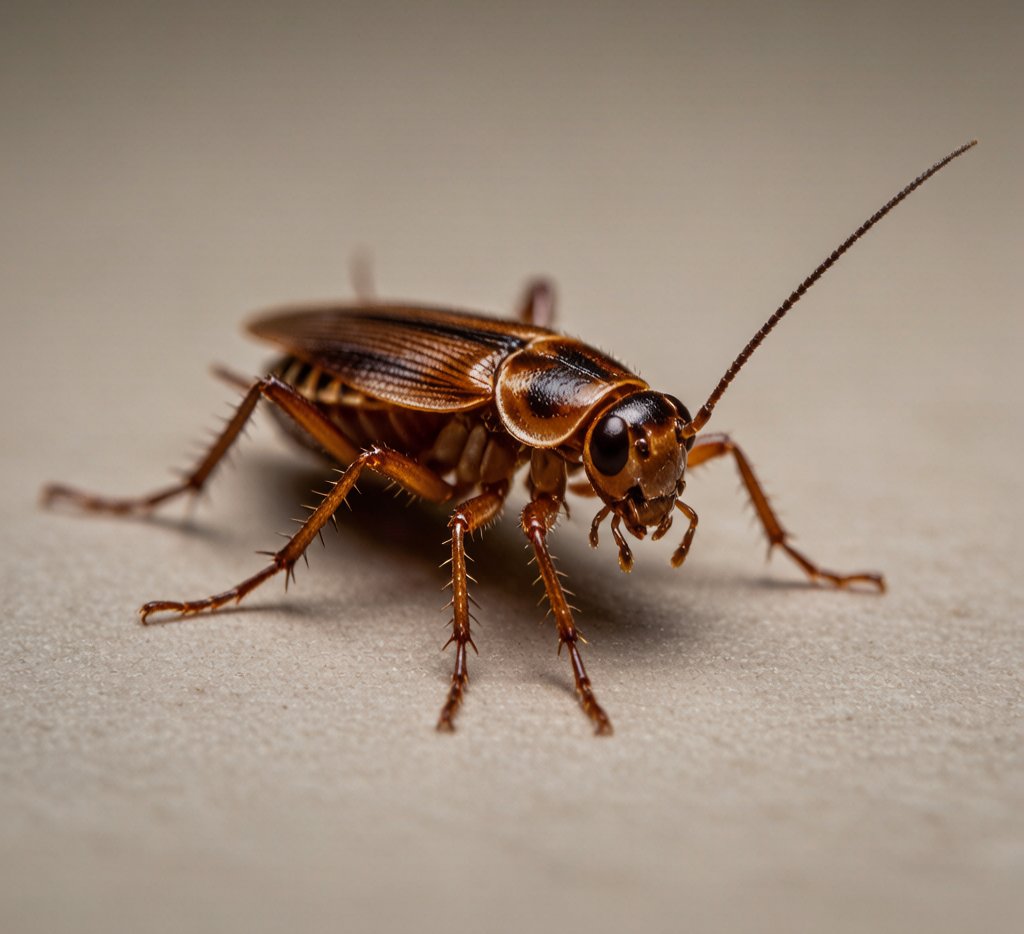
Introduction
The German cockroach, Blattella germanica, is a small but highly successful insect that lives in close association with humans across the globe. Measuring roughly 1.3 to 1.6 centimeters in length, it is among the most common household pests found in kitchens, restaurants, and apartments. Despite its name, it is not native to Germany but was likely first described from specimens collected in Europe. The species thrives in warm, humid indoor environments where food and water are readily available. Its rapid reproduction and adaptability have made it a persistent challenge for pest control. Although unwelcome indoors, it is a fascinating example of evolutionary success in human-dominated landscapes.
Taxonomy
Blattella germanica belongs to the order Blattodea, which also includes termites, and to the family Ectobiidae. It was first described by the Danish entomologist Johan Christian Fabricius in 1781. The genus Blattella contains many smaller cockroach species, of which the German cockroach is the most economically significant. Genetic and morphological work places it close to other tropical Blattella species, suggesting an origin in Africa or Southeast Asia. Unlike the larger American cockroach, it rarely lives outdoors in temperate climates. Its scientific name reflects historical confusion about its geographic roots. Modern taxonomy relies on both physical traits and DNA to distinguish it from look-alike relatives.
Physical Characteristics
The German cockroach is light brown to tan, with two dark parallel stripes running from behind the head down the wings. Adults possess wings but seldom fly, preferring to run quickly across surfaces. The body is flattened and oval, a shape that lets it squeeze into narrow cracks and crevices. Females are slightly broader than males and bear a slender, purse-like egg case called an ootheca. Nymphs resemble adults but lack wings and are darker in early stages. The antennae are long and sensitive, helping the insect navigate in low light. Sensory hairs on the legs detect air currents, allowing it to flee when a threat approaches.
Habitat
This species is synanthropic, meaning it depends on human dwellings for survival. It favors warm, moist spaces such as behind refrigerators, under sinks, inside cabinets, and around water heaters. German cockroaches are nocturnal, emerging at night to forage and returning to harborages before dawn. They seldom survive outdoors in cold regions, so infestations are concentrated inside buildings. High population densities can develop because of abundant food scraps and standing water. In multi-unit housing, they move between apartments through walls and utility lines. Sanitation and exclusion are the most effective ways to limit the spaces where they can establish.
Diet
German cockroaches are omnivorous scavengers that eat almost anything organic. They consume crumbs, grease, starch, sweets, meat residue, and even book bindings or soap. In homes they are drawn to kitchens and pantries where food is stored or prepared. They can survive on remarkably little sustenance, which helps them persist between cleanings. Like many insects, they require water and will die within days without it. Their feeding spreads bacteria and allergens that can affect human health. Groups communicate through chemical trails that mark productive feeding sites. This flexibility in diet is a major reason the species has spread to nearly every inhabited continent.
Reproduction
The German cockroach reproduces faster than almost any other household pest. A female produces an ootheca containing 30 to 40 eggs, which she carries attached to her abdomen until the nymphs are ready to hatch. She may generate several oothecae in her lifetime, yielding well over a hundred offspring. Nymphs pass through several molts over roughly two months before reaching adulthood. Warm indoor temperatures allow continuous breeding year-round. Because each generation matures quickly, populations can explode in a matter of weeks. This high reproductive output makes control difficult, since a few survivors can rebuild a colony rapidly after treatment.
Conservation
As a widespread pest, the German cockroach has no conservation status and faces no risk of extinction. Quite the opposite: human activity has expanded its range and numbers. Concern instead centers on managing infestations and limiting health impacts. Resistance to common insecticides has emerged in many populations, prompting integrated pest management that combines sanitation, traps, and targeted chemicals. Researchers study its genetics to develop smarter controls. While no one seeks to protect this species, understanding its biology helps reduce reliance on broad pesticides. From an ecological view, it persists as a decomposer in human waste streams, though its costs to health far outweigh any benefit.
Fun Facts
A German cockroach can run the equivalent of over 50 body lengths per second. It can survive being briefly submerged in water. The insect can live for about a week without its head. Females protect their eggs by carrying the ootheca everywhere they go. A single pair can theoretically produce thousands of descendants in a year. Cockroaches have existed for more than 300 million years, predating dinosaurs. These hardy survivors remind us that small creatures can outlast even the largest predators.
[…] experts now call them a branch of the cockroaches. One close relative is German Cockroach. That insect shares the order […]
[…] insect shares the family with the German Cockroach. That insect is small and pale brown. It runs fast and climbs smooth surfaces. Our insect is much […]