 By Iris
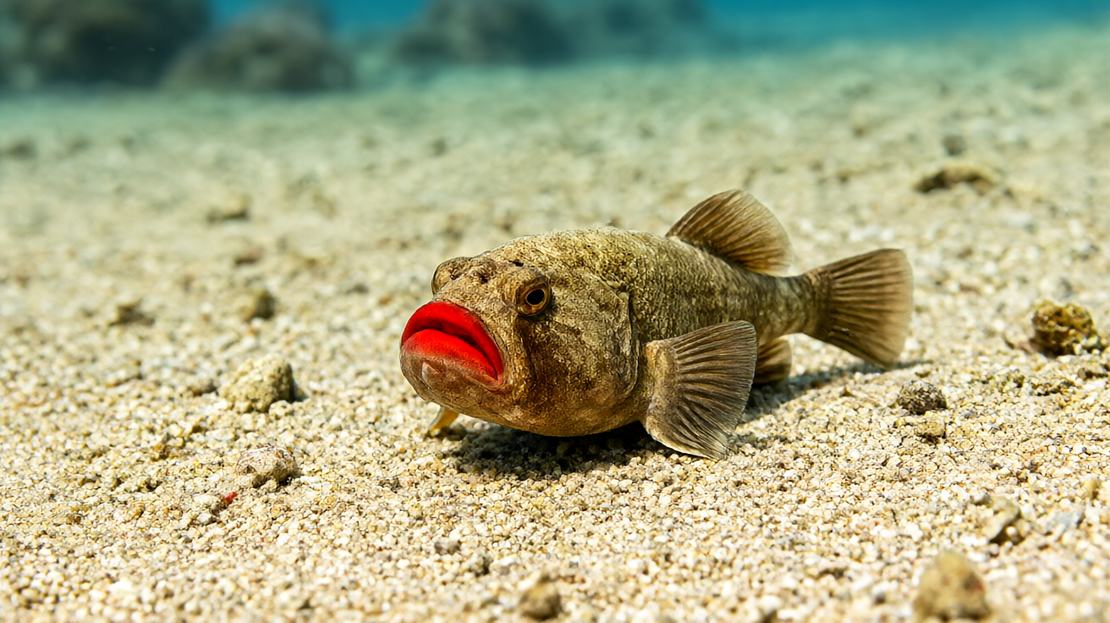
Ogcocephalus darwini | Red-lipped Batfish
Species Profile · Ogcocephalidae
Red-lipped Batfish
A flat fish rests on sand and looks up with a grumpy face.
Data Deficient
Length
Depth
Lips
Fins
Range
Rating
The Red-lipped Batfish
Red lips on the seabed
A flat fish rests on sand and looks up with a grumpy face. The lips are bright red. That colour is the only vivid thing about it.
It lives around the Galápagos Islands and almost nowhere else. Because its fins work like legs, it walks along the bottom instead of swimming, and it rarely leaves the sand. Divers travel a long way to see one.
Family tree
Ogcocephalidae, batfish that walk
Its proper name is Ogcocephalus darwini, and it belongs to the batfish family. Ogcocephalidae holds about 70 species, and most of them live in deep water. Its family sits among the anglerfishes, which explains the fishing rod on the snout.
A Anglerfish uses the same lure, though it waits in far deeper water. Its genus holds several species, and the red lips belong to this one alone. Scientists named it in 1958, well after Darwin’s visit.
Lips nobody can explain
How to tell one
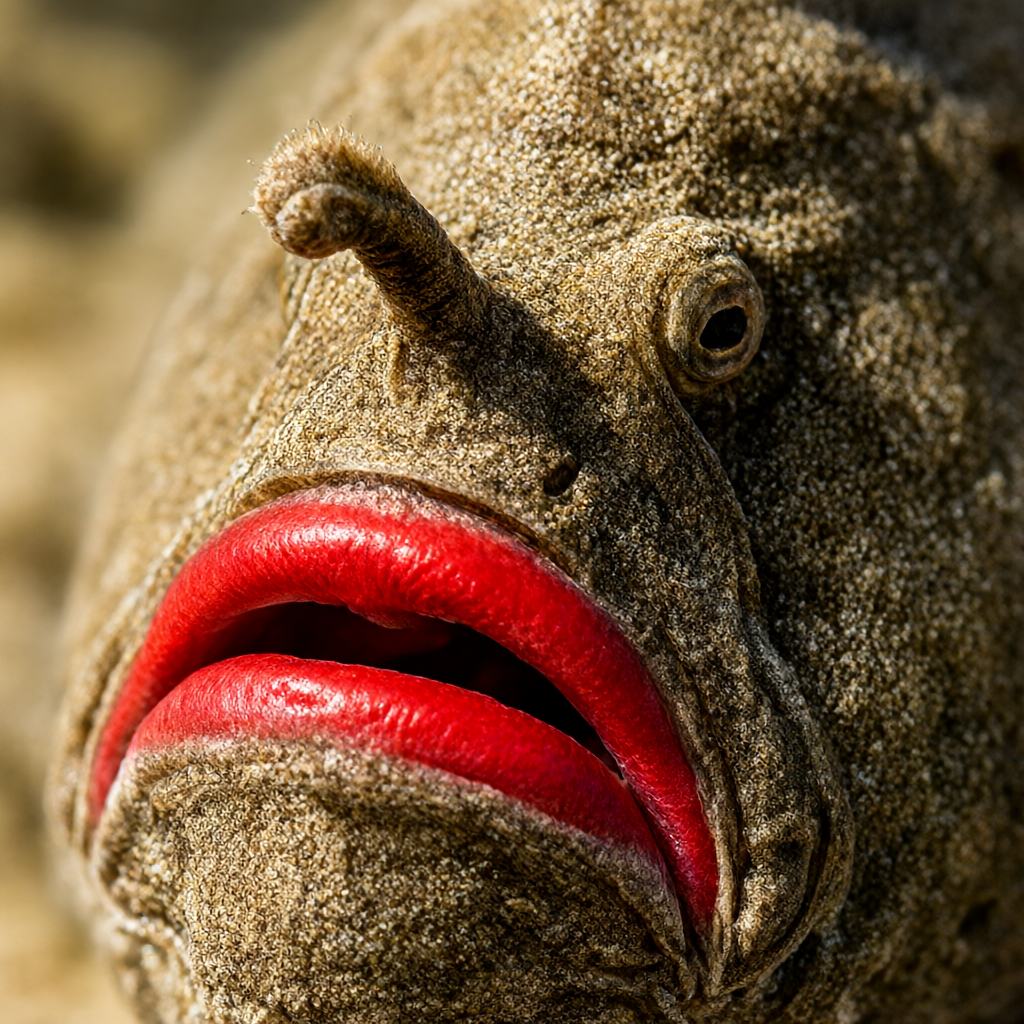
Length runs 20 to 40 cm, and the body is flat and wide. Weight stays modest for the size. Its skin is rough and covered with small spines.
The lips are thick and red, and they sit at the end of a pointed snout that looks almost like a beak. Because the fish has no swim bladder, it cannot hover in mid water and must rest on the bottom. A small horn sits on the snout, and that horn works as a lure.
Its pectoral fins bend like elbows, so the animal can prop itself up. Eyes sit on top of the head.
1
2
3
Open sand
Where it lives
Sandy and rubbly seabed around the Galápagos holds the species. Its range runs from about 3 m down to 76 m. It favours shallow flats near reefs. Because it walks rather than swims, it needs open sand with few obstacles.
Warmer water suits it, and cold upwellings push it deeper. Where divers visit often, the animal stays in the same small patch. Nothing records it outside the islands.
Small fish, ambushed
What it eats
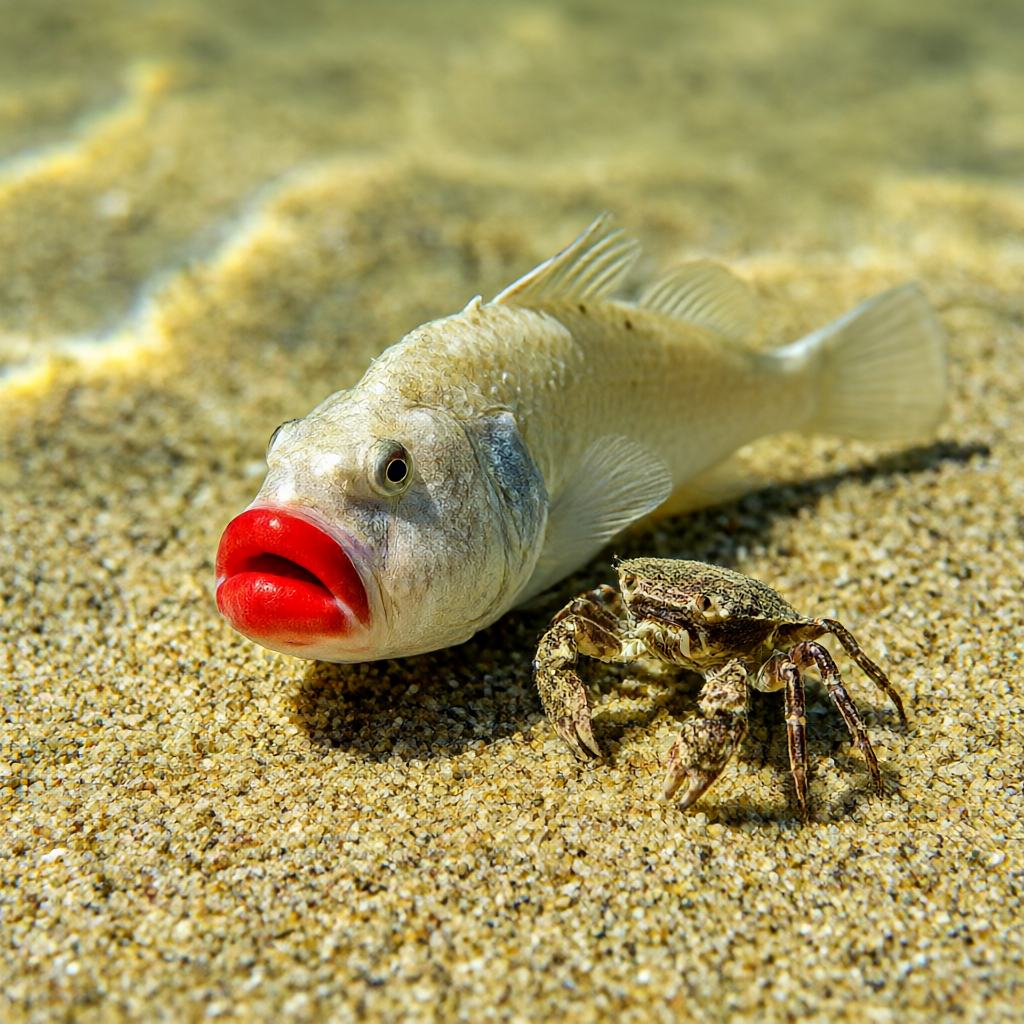
Small fish make up most of the food. Crustaceans, worms and shells add a share. Because the fish stays still, it waits whatever comes close.
That lure draws prey within reach. A strike takes a fraction of a second. Feeding happens mostly at night.
Nothing is chased, and nothing is taken in open water. Its teeth are small and pointed, which suits gripping.
Larvae drift for months
The breeding cycle
Very little is known. Eggs are laid on the bottom, and they float free after release. Because the young drift with the current, they can spread far from the islands. The larvae look nothing like the adults, and they carry long spines that vanish before the fish settles on the bottom.
Settling happens after several months. Nothing is logged about brood care. Nobody has measured the lifespan.
Data Deficient
Conservation
Red List status is Data Deficient. Its small range makes it exposed to any local change. Because the species lives in shallow water, divers and thieves can reach it easily, and neither is checked.
El Niño events warm the water and shift the food supply. Anchor damage breaks the sandy flats it uses. Collection for aquariums takes a few animals, though the species travels badly.
Numbers are unknown, so no trend can be drawn. Because the range is one islands, a single bad year could matter a great deal.
Side by side
How It Compares
| Trait | Red-lipped Batfish | Anglerfish |
|---|---|---|
| Family | Ogcocephalidae | Lophiidae |
| Depth | 3-76 m | 200 m and deeper |
| Lure | a short horn | a long rod with bait |
| Movement | walks on the seabed | waits buried in mud |
| Range | Galápagos only | worldwide |
| Rating | Data Deficient | Least Concern |
Common misreadings
What People Get Wrong
- Not a fish that swims well. It walks instead. The pectoral fins bend like elbows, and the animal props itself up and moves across sand rather than through water.
- Not a species found in many places. One archipelago holds it. Every record comes from around the Galápagos, and nothing confirms the animal anywhere else along the coast.
- Not a fish with an explained feature. The lips stay a puzzle. Bright red skin sits on the mouth of a species that lives in dim water, and no study has shown what the colour does.
Going further
Sources and Further Reading
Quick hits
Five things to remember
- Those red lips are not used for kissing, and their real function has never been settled.
- It walks on its pectoral fins, and the tracks it leaves look like small footprints.
- It is a poor swimmer, so it rarely leaves the seabed.
- A related species in the same family carries a much longer lure.
- It carries Darwin’s name, though he never saw a live one.