 By st20113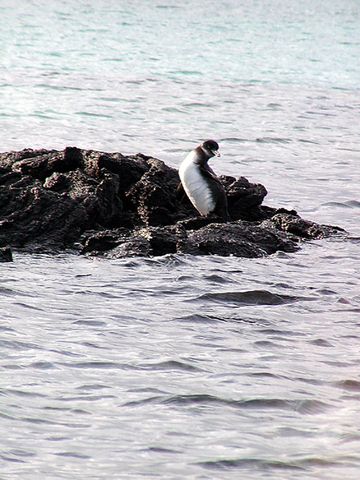
Introduction
The Galapagos penguin (Spheniscus mendiculus) is the only penguin species found north of the equator, living on the volcanic islands of the Galapagos archipelago off Ecuador. It is the smallest penguin in the genus Spheniscus and one of the most endangered penguins in the world. Unique among its kind, it survives in a tropical climate thanks to the cold Cromwell Current and upwelling waters that bring nutrient-rich food to its shores.
Taxonomy
Galapagos penguins belong to the family Spheniscidae and the banded penguin genus Spheniscus, which also includes the African, magellanic, and Humboldt penguins of the Southern Hemisphere. Genetic evidence suggests they are most closely related to the Humboldt penguin of the South American coast. They are thought to have colonized the islands by riding cold ocean currents northward, becoming isolated and evolving into a distinct species over many generations. Fossil and molecular studies indicate this colonization happened within the last few million years, after which the population adapted to the islands’ unusual seasonal climate.
Physical Characteristics
Adults reach about 48 to 50 centimeters in height and weigh roughly 2 to 2.5 kilograms, making them the second smallest penguin species. They have the classic black-and-white countershading, with a black head, white belly, and a thin white band running from the eye down the neck. A bare pink patch of skin around the eye and bill helps shed excess heat. Their flippers are modified wings used for swimming, and their dense feathers provide insulation in cool water.
Habitat
Galapagos penguins nest in crevices, caves, and shaded lava tunnels on islands such as Fernandina and Isabela. They favor areas with cold, productive waters where the marine iguana also forages along the rocky shoreline. Unlike polar penguins, they seek shade and can pant or spread their flippers to cool down. They are highly tied to ocean temperatures and breed only when food is abundant. Their entire global population is concentrated on just a handful of islands, so a single local disaster can affect the whole species at once.
Diet
These penguins feed primarily on small schooling fish such as sardines, anchovies, and mullet, supplemented by crustaceans. They hunt close to shore in shallow waters, often in groups, using pursuit diving to catch prey. Their survival depends on cold upwellings; during El Nino events, warming seas drive fish away and breeding collapses. They may travel several kilometers from their nesting sites to reach productive feeding grounds, returning to the same sheltered coves each day. They share the rich Galapagos waters with reptiles like the Galapagos giant tortoise on land and plentiful marine life at sea.
Reproduction
Galapagos penguins can breed multiple times per year if conditions allow, laying one to two eggs in sheltered nests. Both parents incubate the eggs for about 38 to 40 days and share feeding duties once chicks hatch. Nests are kept in shade to protect eggs from overheating. Chicks fledge at around seven to eight weeks but remain dependent on their parents for food for several more weeks. Because their range is so small, a single adverse climate event can wipe out a large fraction of the population, unlike the far more numerous emperor penguin of Antarctica.
Conservation
Listed as Endangered, the Galapagos penguin numbers only a few thousand individuals. Threats include climate-driven food shortages, introduced predators such as rats, cats, and dogs, and oil pollution. Conservation efforts by the Galapagos National Park and partner NGOs focus on predator control, nest-site protection, and population monitoring. Artificial nest boxes have been installed on some islands to increase breeding success where natural cavities are scarce. Tourism is tightly regulated to minimize disturbance to breeding colonies.
Fun Facts
The Galapagos penguin is the only penguin that lives in the Northern Hemisphere, even if only just above the equator. It can swim at speeds over 30 kilometers per hour when chasing fish. Pairs often mate for life and perform mutual bowing displays. They regulate body temperature by stretching out their flippers and exposing the pink skin patches to the breeze. Unlike Antarctic species, it breeds whenever food is plentiful rather than on a strict annual schedule.