 By st20113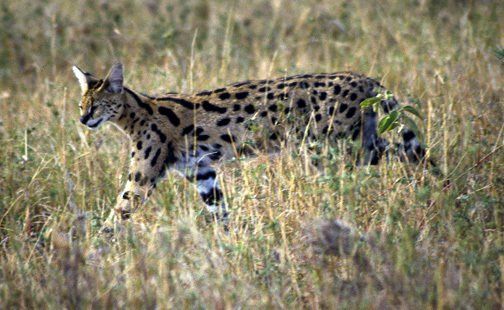
Introduction
The Serval is a graceful, medium-sized wild cat native to Africa, renowned for its exceptional hunting abilities and striking spotted coat. With the longest legs relative to body size of any cat, servals are perfectly adapted for hunting in tall grass savannas. Their large ears and.
Servals occupy a unique ecological niche as specialized rodent hunters. Their extraordinary leaping ability and precise pouncing technique allow them to catch prey that larger predators often overlook. Unlike the more famous African Lion, servals hunt alone and rely on stealth and agility rather than raw power.
Taxonomy
The Serval belongs to the family Felidae and is the sole member of the genus Leptailurus. Its scientific name, Leptailurus serval, reflects its classification as a distinct lineage within the cat family. Molecular studies have shown that.
Several subspecies of serval have been proposed based on geographic variation in coat patterns and size, though the exact number remains debated. The most recognized distinction is between the typical spotted serval and the melanistic serval, which appears almost entirely black due to excessive pigment. These dark individuals are more common in montane regions where darker coloration provides better camouflage.
Physical Characteristics
Servals are medium-sized cats with an unmistakable appearance. They stand about 54 to 62 centimeters at the shoulder and weigh between 9 to 18 kilograms, with females generally smaller. Their most distinctive feature is their extraordinarily long.
The coat pattern consists of a tawny or golden-yellow background marked with black spots and stripes. Their large, rounded ears are black on the back with a distinctive white bar near the tip. Unlike the uniformly colored Cougar, servals display elaborate patterned coats that provide excellent camouflage in grassland habitats.
Habitat
Servals inhabit a variety of habitats across sub-Saharan Africa, excluding tropical rainforests and true deserts. They prefer grasslands, savannas, woodland edges, and wetland areas where tall vegetation provides cover for hunting. Water availability is crucial, and servals are often found near rivers, marshes, and reed beds where rodent prey is abundant. The Cheetah shares parts of the serval’s range but occupies different ecological niches.
These adaptable cats have survived well in agricultural areas, particularly where farming practices maintain patches of tall grass and natural vegetation. They avoid dense forests and extremely arid regions. Territory size depends on prey availability, typically ranging from 10 to 32 square kilometers for females and up to twice that for males.
Diet
Servals are highly specialized rodent hunters with a hunting success rate approaching 50 percent, one of the highest recorded for any cat species. Small mammals, particularly rodents, comprise about 90 percent of their diet. They use their exceptional hearing to locate prey, sometimes stopping to listen before leaping high into the air and landing on their quarry with all four feet.
Beyond rodents, servals consume birds, frogs, lizards, and insects. They have been observed catching birds in mid-flight and can leap up to 3 meters vertically to pluck flying prey from the air. Their long legs allow them to reach down into burrows and extract hiding animals. Near waterways, they hunt fish and crustaceans.
Reproduction
Serval breeding occurs throughout the year, though peaks may coincide with periods of prey abundance. Males and females come together briefly for mating, after which the male has no further involvement in raising offspring. After a gestation.
Kittens are born blind and helpless, weighing about 250 grams each. Their eyes open at 9 to 12 days, and they begin eating solid food around three weeks. Mothers are dedicated parents, bringing prey to the den.
Conservation
The Serval is classified as Least Concern by the IUCN due to its wide distribution and relatively stable population. However, local threats include habitat loss due to agricultural expansion, degradation of wetland habitats, and persecution by farmers who consider them a threat to poultry. Trade in serval skins and capture for the exotic pet trade also impact some populations.
Conservation measures include protection in national parks and wildlife reserves across Africa. Education programs aim to reduce human-wildlife conflict and promote the ecological benefits servals provide through rodent control. In some regions, servals adapt well to agricultural landscapes where sustainable farming practices maintain natural vegetation patches.
Fun Facts
Servals can leap up to 3 meters horizontally and 1.5 meters vertically from a standing position. Their hunting success rate of nearly 50 percent far exceeds that of most other cats. When jumping for prey, servals can twist their flexible bodies mid-air to change direction. Ancient Egyptians revered servals and frequently depicted them in their art.
The white marking on the back of serval ears serves as a visual signal that helps kittens follow their mother through tall grass. Servals are excellent swimmers and readily enter water to hunt or escape danger. Hybridization between servals and.