 By st20113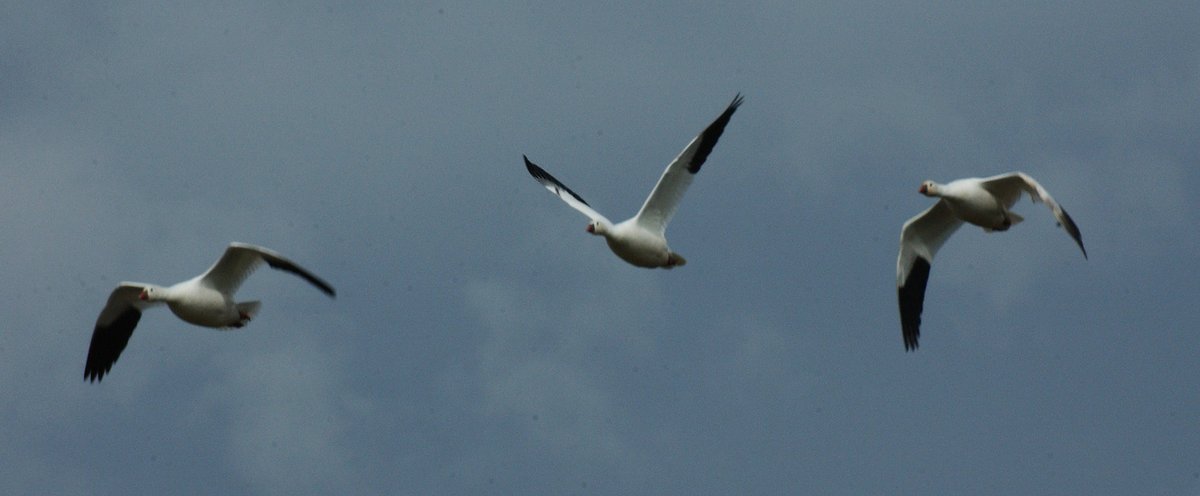
Introduction
The Snow Goose (Anser caerulescens) is one of the most abundant waterfowl species in North America. Famous for its white plumage and black wingtips, this medium-sized goose breeds on the Arctic tundra and undertakes one of the longest migrations of any bird on the continent. Highly social birds, Snow Geese feed, roost, and travel in enormous flocks, and the sight of tens of thousands of geese pouring across winter skies is one of the great spectacles of birdwatching.
Over the past half-century the population has boomed to several million birds, creating an ecological paradox: a species that was once rare now grazes its Arctic breeding grounds so heavily that it threatens the habitats of other tundra wildlife, and wildlife managers have been forced to think in new ways about how to restore balance.
Taxonomy
The Snow Goose belongs to the family Anatidae, the group that includes ducks, geese, and swans, and to the genus Anser. Two subspecies are recognised: the larger Greater Snow Goose (A. c. atlanticus) and the smaller Lesser Snow Goose (A. c. caerulescens). Molecular studies show that its closest relative is the Ross’s Goose (Anser rossii), with which it occasionally interbreeds where their ranges meet.
Physical Characteristics
Snow Geese measure 64 to 79 centimetres in length and weigh roughly 2.5 to 4 kilograms. Their white plumage is accented by black wingtips, and their bills, legs, and feet are pinkish. A dark “blue” colour morph, once treated as a separate species called the Blue Goose, occurs naturally in eastern populations. Males tend to be slightly larger than females, but the sexes look very much alike.
Habitat
In summer, Snow Geese nest on the low-lying, wet tundra of northern Canada and Alaska, usually near ponds and coastal marshes, where the open landscape lets them spot approaching predators such as Arctic Foxes and keeps them company with other Arctic breeders such as Snowy Owls. In winter they migrate south through the Mississippi and Atlantic flyways to coastal marshes, estuaries, and farmland across the United States and northern Mexico, gathering in flocks that may number in the tens of thousands. The availability of wetlands at both ends of the journey is critical to their survival.
Diet
Snow Geese are almost entirely herbivorous, grazing on grasses, sedges, leaves, stems, and roots. On the tundra they take mosses, lichens, and arctic plants, while in winter they flock to agricultural fields to eat waste rice, corn, and wheat, which sometimes brings them into conflict with farmers. Their serrated bills clip vegetation close to the ground, and an efficient digestive system extracts enough nourishment from fibrous plant material to fuel migrations of thousands of kilometres.
Reproduction
Snow Geese form pair bonds that usually last for life and nest in dense colonies on the open tundra. The female scrapes a shallow nest lined with plant material and down and lays three to five creamy eggs, incubating them for about 23 days while the male stands guard nearby. Goslings are precocial, able to walk, swim, and feed themselves within hours of hatching; the family stays together through the first winter, and the young become independent the following spring.
Conservation
Once reduced to low numbers by overhunting, the North American Snow Goose population now exceeds five million, boosted by abundant winter food on farmland and by protection of its breeding grounds. The recovery has created new problems: relentless grazing strips tundra vegetation, accelerates soil erosion, and threatens other Arctic species. Wildlife managers in Canada and the United States have responded with special hunting seasons and liberal bag limits intended to slow population growth and restore balance to the tundra ecosystem.
Fun Facts
Migrating Snow Geese may cover more than 5,000 kilometres between their Arctic breeding grounds and wintering areas, flying in energy-saving V-shaped formations and reaching speeds above 100 kilometres per hour. Individuals can live 20 years or more and often return to the same breeding territory each spring. The white and blue colour morphs interbreed freely, and their chicks may be either colour, or a blend of the two; a flock crossing a winter sunset remains one of North America’s most photographed natural scenes.