 By st20113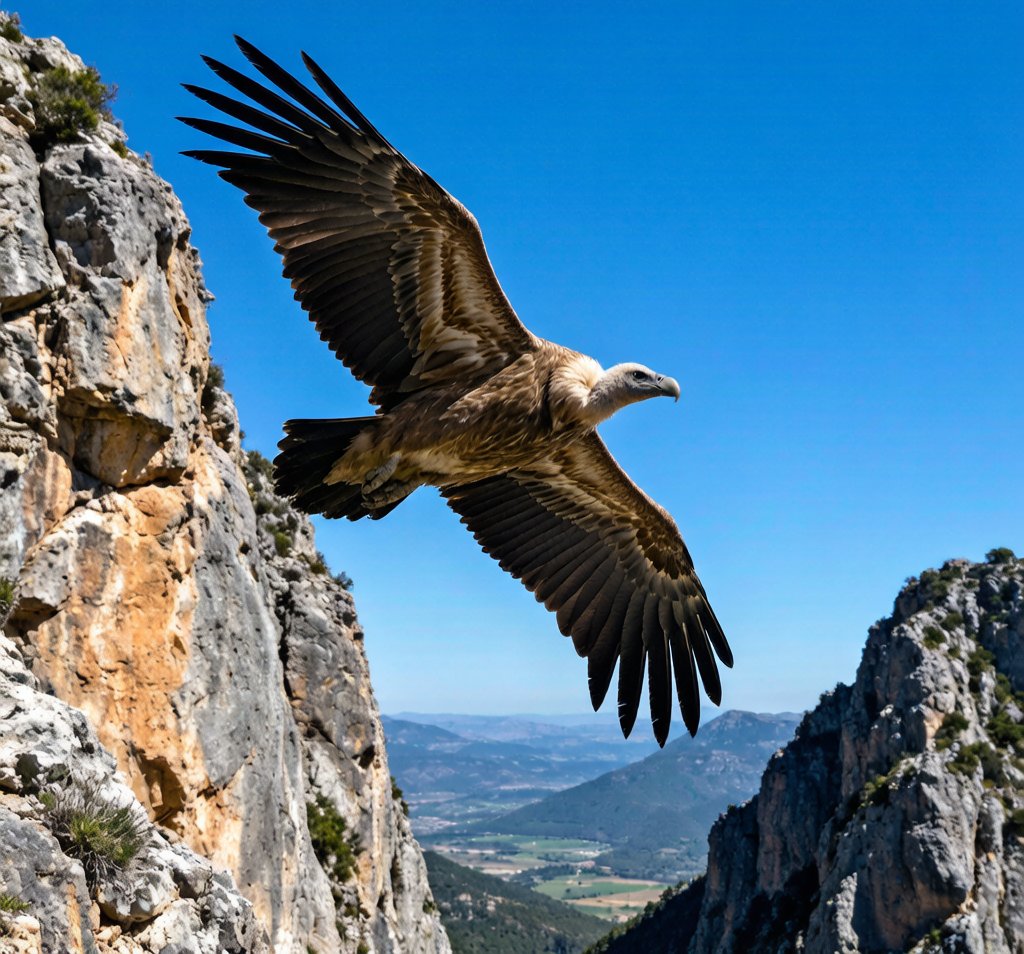
Introduction
The griffon vulture (Gyps fulvus) is a large Old World vulture found across southern Europe, North Africa, and central Asia. It is one of Europe’s largest birds of prey, with a wingspan that can exceed 2.8 meters, and it plays an essential role in ecosystems as a scavenger. Unlike the bald eagle, which hunts live prey, the griffon vulture feeds almost exclusively on carrion, cleaning the landscape of dead animals. Because of this, it has long been valued by people and features prominently in the folklore of the mountain regions it inhabits. Griffon vultures are highly social, gathering in large numbers at carcasses and nesting in noisy colonies on cliffs.
Taxonomy
The griffon vulture belongs to the family Accipitridae, within the genus Gyps, a group of Old World vultures specialized for feeding on the carcasses of large herbivores. Its scientific name, Gyps fulvus, refers to the tawny or fulvous coloring of its plumage. Several subspecies have been described across its wide range, with birds in the Himalayas sometimes treated as a separate species, the Himalayan griffon. Genetic studies show that the Gyps vultures form a closely related group whose members are difficult to tell apart in the field.
Physical Characteristics
Griffon vultures are massive birds. Adults measure 93 to 110 centimeters in length, weigh 6 to 11 kilograms, and have a wingspan of 2.3 to 2.8 meters. Their plumage is pale brown with darker flight feathers, and the head and neck are covered in fine white down rather than feathers, an adaptation that keeps them clean while feeding inside carcasses. The hooked beak is powerful enough to tear hide and muscle, while the feet are suited for gripping perches. Soaring on thermal updrafts, griffon vultures can remain aloft for hours with barely a wingbeat, a style of flight perfected to conserve energy.
Habitat
Griffon vultures favor open, mountainous country where updrafts are common, from the Iberian Peninsula and the Balkans to the Caucasus, the Middle East, and the Himalayas. They nest on inaccessible cliff ledges and forage over vast areas of grassland and scrub, sometimes traveling more than 100 kilometers in a single day to find food. The species requires both reliable sources of carrion and safe nesting sites, so it is most common in regions with traditional livestock farming. Where red foxes and other scavengers compete for carcasses, vultures usually dominate because of their size and numbers.
Diet
Griffon vultures are obligate scavengers that feed almost entirely on the carcasses of medium and large mammals, including sheep, goats, deer, and cattle. They locate food largely by eyesight, watching other vultures descend and following them to the feeding site. At a large carcass, dozens of griffons may gather, consuming kilograms of meat in minutes. Their stomach acid is so strong that it destroys many pathogens, allowing them to eat meat that would sicken most other animals. In some regions they also scavenge the leftovers of predators such as the cheetah, whose abandoned kills provide an important food source. A single carcass of a large herbivore, from a wild deer to an African elephant, can support an entire flock for days.
Reproduction
Griffon vultures form long-term pair bonds and nest on cliffs, building a loose platform of sticks lined with grass. A single egg is laid, and both parents incubate it for about 55 days. The chick is fed by regurgitation and stays in the nest for three to four months, after which it begins to explore the surrounding ledges. Young vultures remain dependent on their parents for several more months and do not breed until they are four to seven years old. Because each pair raises at most one chick a year, populations recover slowly from losses, which makes the conservation of adult birds especially important.
Conservation
Although the griffon vulture is listed as Least Concern overall, its European populations declined sharply during the twentieth century because of poisoning, shooting, and a shortage of carcasses as livestock farming changed. Reintroduction and supplementary feeding programs have helped numbers recover in Spain, France, and the Balkans. Poisoning, often from baits intended for other predators, remains the greatest threat, and in some areas birds collide with power lines. Because brown bears and other scavengers also benefit from the same carcass supplies, protecting vulture feeding grounds supports a whole community of wildlife.
Fun Facts
A griffon vulture can spot a carcass from several kilometers away and may soar for hours without flapping its wings. Its stomach acid is among the most corrosive in the animal kingdom, capable of dissolving bone and destroying anthrax bacteria. The species can eat up to a kilogram of meat in a few minutes. Young griffons spend weeks exercising their wings before their first flight. In the Himalayas, griffon vultures have been observed flying at altitudes above 7,000 meters.